Peppermint for IBS and bloating: capsules vs tea, the 180 mg trial dose and who should skip it
Peppermint is one of the few gut remedies where the form you pick matters almost as much as whether you take it. The IBS trials tested enteric-coated peppermint oil capsules, not tea, and the results are mixed rather than miraculous. This is the practical guide: which form to choose, the one dose a recent US trial used, how to run a fair few-week test at home, and who should talk to a clinician first. If you want the evidence debate in detail, we cover it separately in does peppermint oil work for IBS? what the trials show.
Pick your form: tea, capsules or oil
“Peppermint” covers very different products. A cup of tea, a coated capsule and a bottle of essential oil are not interchangeable, and only one of them is what researchers have tested in people with IBS. Use this table to choose.
| Form | What the evidence covers | Reasonable use | Watch out for |
|---|---|---|---|
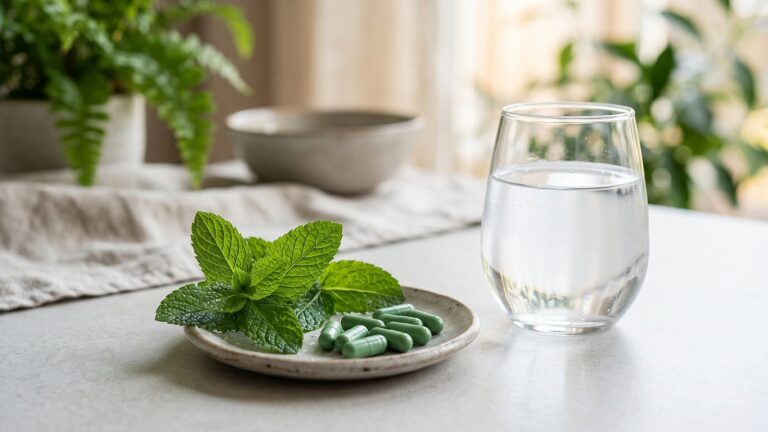
| Enteric-coated peppermint oil capsules | This is the form used in the IBS trials we reviewed. The coating is designed to open lower in the gut instead of in the stomach. | IBS-type cramping and abdominal pain, after a clinician has confirmed what you are dealing with. | Heartburn. Swallow whole; chewing or breaking a capsule defeats the coating. |
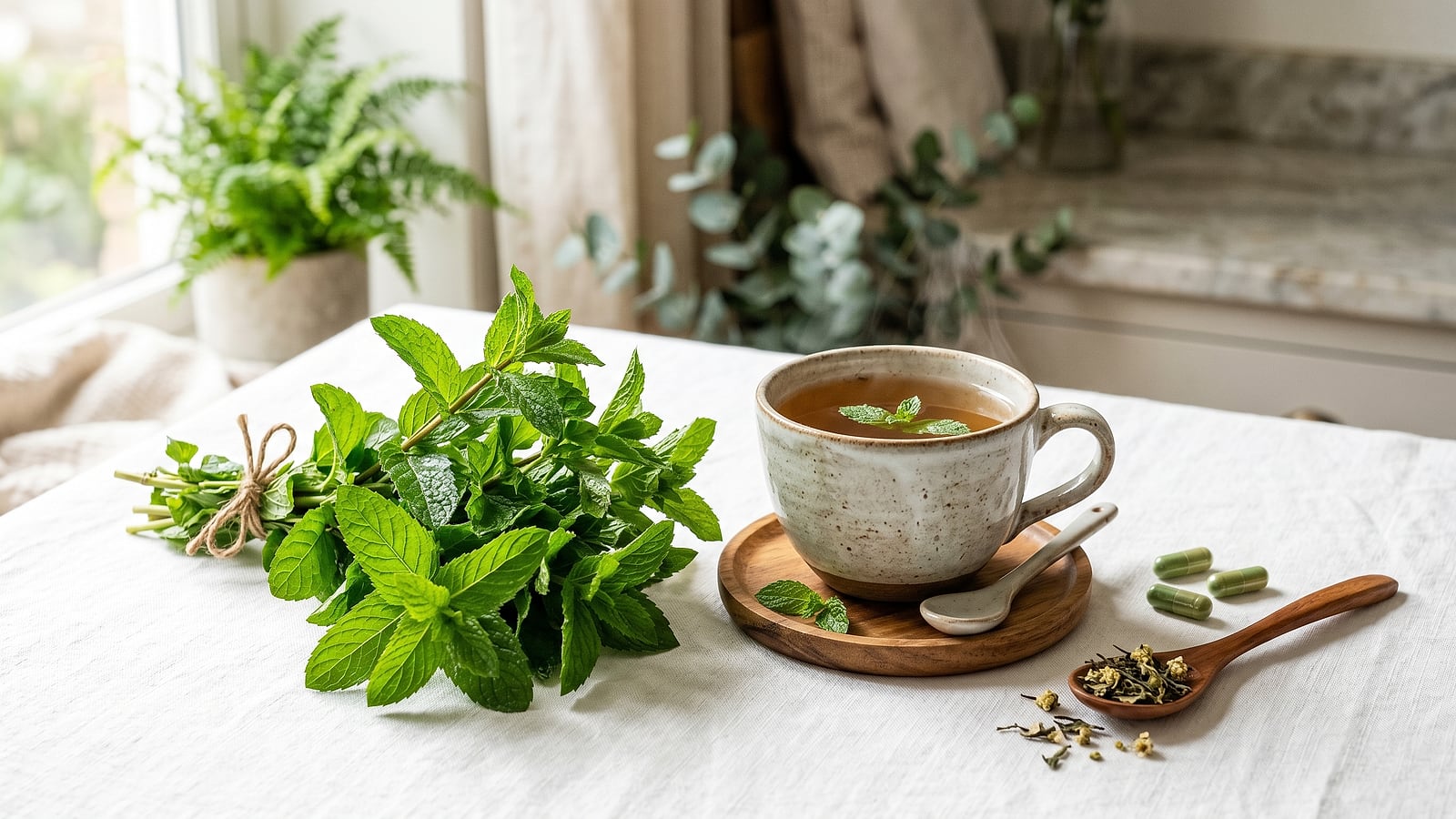
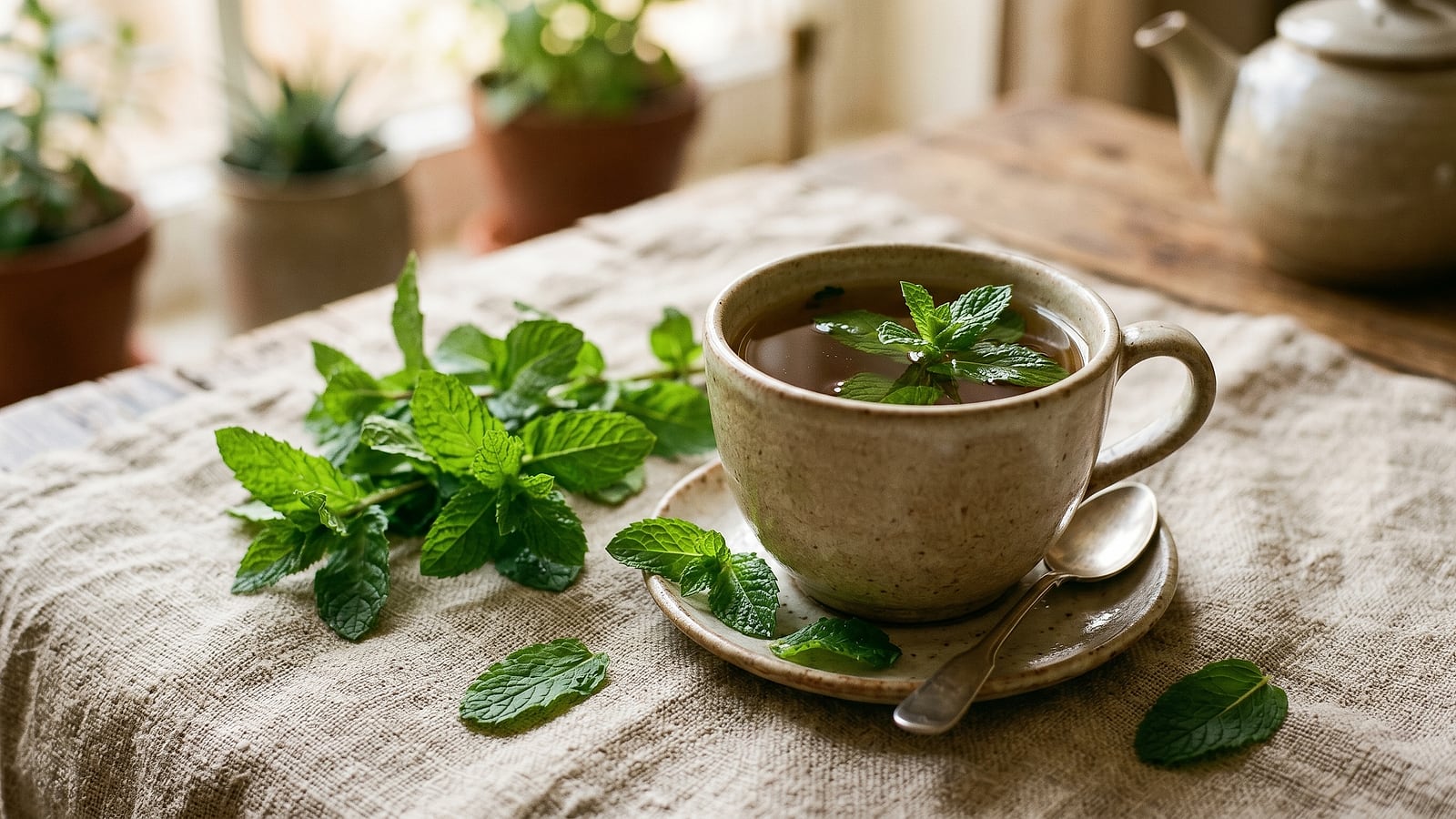
| Peppermint tea | No trial in the sources we reviewed tests tea for IBS. It has long traditional use as an after-meal drink. | A warm, low-risk option for mild fullness or a heavy feeling after a meal. | Still a peppermint product: if it brings on heartburn, stop. |
| Fresh leaves | Same as tea: traditional, not tested in the trials above. | A few leaves steeped in hot water or chewed after a meal. | Strength varies from plant to plant. |
| Essential oil (bottle) | Not a drinking product. | Not for swallowing. Use only as the label directs for aromatherapy or diluted skin use. | It is highly concentrated. Never take undiluted essential oil by mouth. |

What the studies actually gave people
The most useful number to take to the pharmacy shelf comes from a 6-week, randomized, double-blind trial at a US academic center. People with IBS (Rome IV criteria) and moderate to severe symptoms were given enteric-coated peppermint oil, 180 mg three times a day, or placebo [PMID: 34319275]. That is a trial dose, not a prescription, and the product you buy may be labeled differently, so read your label and follow the maker’s directions.
| Study | What people received | Length | Who took part |
|---|---|---|---|
| 2021 randomized trial, Am J Gastroenterol [PMID: 34319275] | Enteric-coated peppermint oil 180 mg three times daily vs placebo (1:2 ratio) | 6 weeks | Adults with IBS (Rome IV), moderate to severe symptoms |
| 2007 crossover study, J Gastroenterol [PMID: 17653649] | 0.64 ml of peppermint oil added to a 200 kcal test meal | One test meal, 4 hours of breath testing | 10 healthy male volunteers |
The second row is a lab-style experiment, not a dosing guide. In those 10 healthy men, the early phase of stomach emptying was faster after peppermint oil, which the authors suggested could be relevant to people with functional gut disorders [PMID: 17653649]. It is a very small study, so it explains why people reach for mint after a heavy meal. It does not prove it helps you.
How to run a fair few-week trial at home
In the 2021 trial, both groups improved a lot. The average improvement in the symptom score was 90.8 points with peppermint oil and 100.3 with placebo, and the difference was not statistically significant [PMID: 34319275]. That tells you something practical: feeling better after you start a remedy is not proof that the remedy did it. A simple diary protects you from fooling yourself.
- Confirm what you are treating. The American College of Gastroenterology guideline on IBS suggests a positive diagnostic strategy rather than ruling everything else out first, blood tests for celiac disease in people with IBS and diarrhea, and a fecal calprotectin test when inflammatory bowel disease is possible [PMID: 33315591]. A clinician can sort out which applies to you.
- Write a baseline for a week. Each evening, score belly pain and bloating from 0 to 10 and note stool pattern and big meals. Five lines a week is enough.
- Choose one product. Look for “enteric-coated” on the label, check the milligrams per capsule, and use the maker’s directions. Do not change your diet, other supplements and mint at the same time, or you will not know what worked.
- Swallow capsules whole with water. Do not open, chew or crush them.
- Give it weeks, not days. The trial ran 6 weeks. Plan a few weeks of consistent use, keep the diary going, then compare with your baseline.
- Decide with your numbers. A clear drop in pain scores you would still notice next month is a reason to continue and to tell your clinician. No change, or new heartburn, is a reason to stop and discuss other options.
What it can and cannot do for bloating
This is where the headline claims run ahead of the data. The pooled analyses measured two main things: overall IBS symptoms and abdominal pain. A 2019 meta-analysis of 12 randomized trials (835 patients) reported a risk ratio of 2.39 for global symptom improvement and 1.78 for abdominal pain, both favoring peppermint oil over placebo [PMID: 30654773]. A 2022 update of 10 trials (1,030 patients) also favored peppermint oil, with a number needed to treat of 4 for global symptoms and 7 for abdominal pain, but it flagged that the quality of evidence was very low and adverse events were more frequent [PMID: 35942669].
Notice what is missing: neither abstract reports a result for bloating on its own. Peppermint oil may ease the cramping that often travels with bloating, but we cannot promise it will flatten your belly, and a normal meal that leaves you distended every day is worth a conversation with a clinician. A broad 2025 review lists peppermint as potentially useful across several digestive problems, including IBS and dyspepsia, and that fits the picture of a promising remedy with uneven proof [PMID: 38168664].
It also is not a weight or “detox” tool. It is a muscle-relaxing herb that may take the edge off gut spasm for some people.
Why peppermint relaxes gut muscle
The reasoning behind using it is simple. The wall of your intestine is smooth muscle, and spasm in that muscle is one source of cramping. In lab work on guinea pig and rabbit gut tissue, peppermint oil relaxed intestinal smooth muscle by reducing calcium influx, an effect the authors said resembled calcium antagonist drugs [PMID: 1646142]. That is animal and cell research, so it shows a plausible mechanism, not a guaranteed result in a person with IBS.
The same relaxing action is why peppermint has a downside. Other muscles in the digestive tract may relax too, including the valve between the stomach and esophagus, which may let acid rise in some people. Read the next section if you have heartburn.
Side effects and the reflux problem
The 2022 meta-analysis found that adverse events were significantly more common with peppermint oil than with placebo (relative risk 1.57), and it specifically tracked reflux as a safety outcome [PMID: 35942669]. The 2019 meta-analysis, which pooled a different set of trials, saw no significant difference in adverse effects (9.3% vs 6.1%) [PMID: 30654773]. The two papers disagree, so plan for the possibility that you are one of the people who gets side effects.
- Heartburn or an acid taste is the one to watch for. It is a reason to stop and talk to your clinician, not to push through.
- Take it consistently, but do not keep raising the amount yourself. Follow the label.
- Keep it away from children. Do not give peppermint oil to babies or young children, and ask a pediatrician before using any mint product near them.
Who should skip it or ask first
- Frequent heartburn or GERD, or a hiatal hernia. Peppermint may make reflux worse. Ask first.
- Pregnant or breastfeeding. Ask your clinician before taking concentrated peppermint oil.
- Taking prescription medicines. Ask a pharmacist whether timing or interactions matter for you.
- Babies and young children. Do not give peppermint oil.
- Red flags. Blood in the stool, black stools, unexplained weight loss, persistent vomiting, fever, trouble swallowing, nighttime symptoms that wake you, or a sudden change in bowel habits all call for medical evaluation before any home trial.
- Never swallow undiluted essential oil.
If you eat a lot of fiber-rich food and are still uncomfortable, our piece on how much fiber is too much explains why people with IBS often need to go slowly.
Questions people ask
Does peppermint help IBS and bloating?
For IBS, pooled analyses of earlier trials favored peppermint oil over placebo for overall symptoms and abdominal pain [PMID: 30654773][PMID: 35942669], but a 2021 US trial found no significant difference from placebo [PMID: 34319275], and the 2022 analysis rated evidence quality as very low. For bloating alone, we found no direct trial result in these sources.
What dose did the studies use?
The 2021 US trial used enteric-coated peppermint oil, 180 mg three times a day, for 6 weeks [PMID: 34319275]. Follow the directions on the product you buy, and ask a clinician if you take other medicines.
Is peppermint tea as good as capsules?
Nobody has shown that from the studies we reviewed. The IBS trials used capsules. Tea is a gentle traditional choice for after-meal discomfort, but we cannot say it works like the capsules.
Why enteric-coated?
The coating is designed to open lower in the gut instead of in the stomach. The 2022 analysis, however, still found more adverse events with peppermint oil than with placebo overall, so the coating is not a guarantee against side effects [PMID: 35942669]. Do not chew or crush the capsules.
Can peppermint make things worse?
Yes. It may worsen acid reflux in some people because it relaxes smooth muscle, including the valve at the top of the stomach. Stop and talk to a clinician if heartburn appears.
How long should I try it?
The 2021 trial lasted 6 weeks. Plan a few weeks of consistent use with a simple symptom diary, then compare with your baseline before deciding.
Verified sources
- Nee J, Ballou S, Kelley JM, et al. Peppermint Oil Treatment for Irritable Bowel Syndrome: A Randomized Placebo-Controlled Trial. Am J Gastroenterol. 2021;116(11):2279-2285. PMID 34319275
- Ingrosso MR, Ianiro G, Nee J, et al. Systematic review and meta-analysis: efficacy of peppermint oil in irritable bowel syndrome. Aliment Pharmacol Ther. 2022;56(6):932-941. PMID 35942669
- Alammar N, Wang L, Saberi B, et al. The impact of peppermint oil on the irritable bowel syndrome: a meta-analysis of the pooled clinical data. BMC Complement Altern Med. 2019;19(1):21. PMID 30654773
- Inamori M, Akiyama T, Akimoto K, et al. Early effects of peppermint oil on gastric emptying: a crossover study using a continuous real-time 13C breath test (BreathID system). J Gastroenterol. 2007;42(7):539-542. PMID 17653649
- Hills JM, Aaronson PI. The mechanism of action of peppermint oil on gastrointestinal smooth muscle. Gastroenterology. 1991;101(1):55-65. PMID 1646142
- Kazemi A, Iraji A, Esmaealzadeh N, et al. Peppermint and menthol: a review on their biochemistry, pharmacological activities, clinical applications, and safety considerations. Crit Rev Food Sci Nutr. 2025;65(8):1553-1578. PMID 38168664
- Lacy BE, Pimentel M, Brenner DM, et al. ACG Clinical Guideline: Management of Irritable Bowel Syndrome. Am J Gastroenterol. 2021;116(1):17-44. PMID 33315591
Keep reading
This article is for education only and is not medical advice. Talk to a qualified clinician before changing your diet, supplements or treatment, especially if you have a medical condition, are pregnant, or take medication. These statements have not been evaluated by the Food and Drug Administration and are not intended to diagnose, treat, cure, or prevent any disease.
Still bloated, tired and fighting cravings? It’s probably not your willpower — it’s your gut.
Get The Gut Reset free: the simple, science-backed steps to feel lighter, clearer and more energized — starting in days, not months. Enter your email and we’ll send it right now.
No spam. Unsubscribe anytime. Educational content, not medical advice.