Your grandmother simmered bones for days for a reason — that collagen rebuilds the very joints and gut lining modern diets wear down
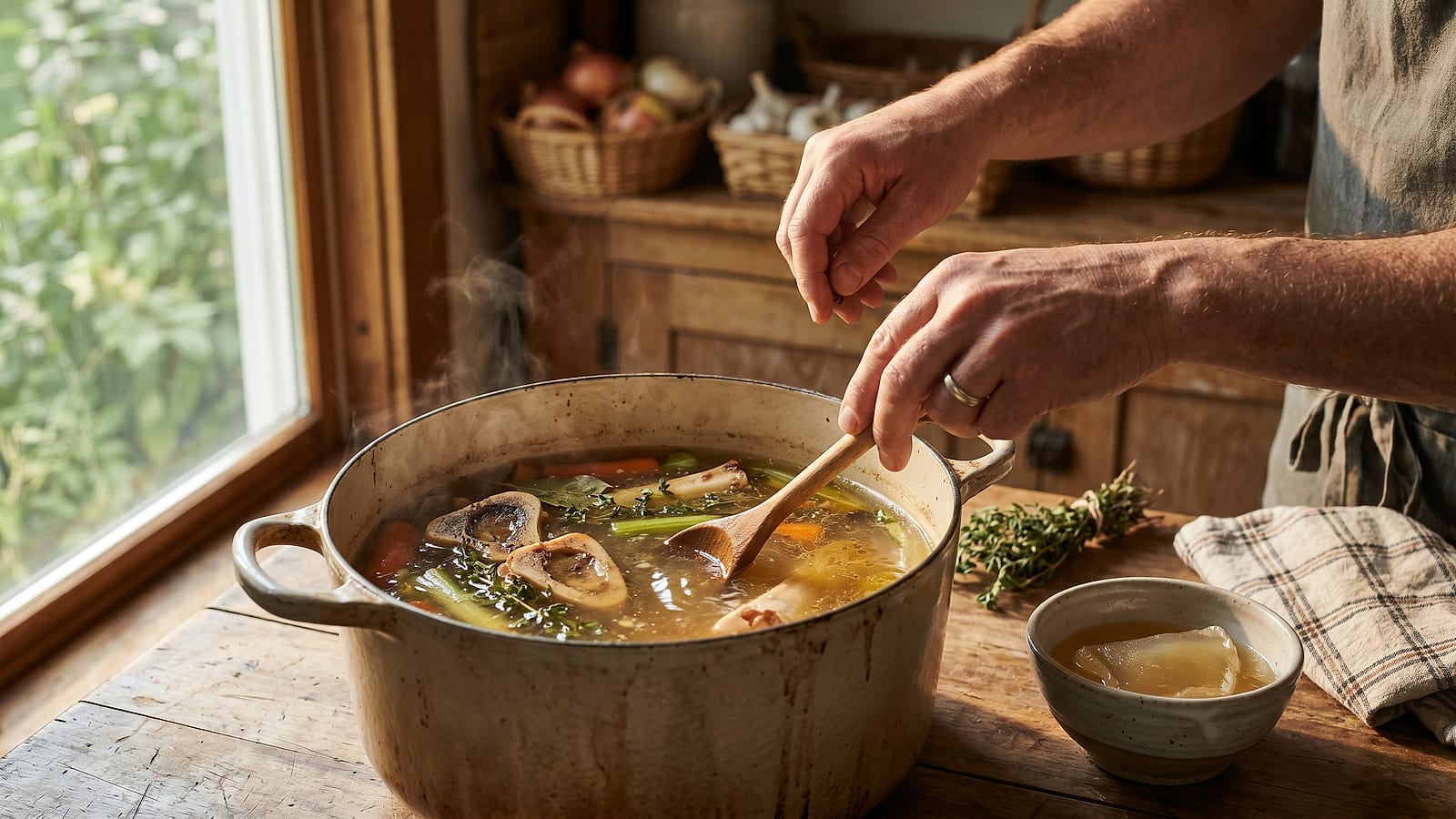
Your grandmother simmered bones for days for a reason. That collagen helps rebuild the very joints and gut lining that modern diets wear down. She didn’t have a biochemistry degree. But she had a stove and a deep, instinctive sense of what kept a family strong through a harsh winter.
Here is the catch: modern science shows that simply boiling bones in a pot doesn’t guarantee you get enough active peptides to support your joints. By the end of this article, you will know a two-part approach. It combines traditional slow-simmered broth with targeted collagen supplements, and may support your gut and joints with consistent use over time.
Why This Matters Today
The modern gut is under constant pressure from food additives, microplastics, and chronic stress. A damaged gut lining (the thin layer of cells separating your digestive tract from your bloodstream) may allow undigested food particles into the blood, which can contribute to low-grade, ongoing inflammation.
Joint conditions like osteoarthritis (wear-and-tear joint damage) affect tens of millions of adults. Traditional cultures that ate the whole animal — connective tissue, skin, and marrow — got nutrients that modern convenience foods largely lack. Morning joint stiffness is one general sign worth mentioning to your doctor.

The Science Behind It
When you eat collagen, your digestive enzymes break it into smaller pieces called peptides — mainly the amino acids (building blocks of protein) glycine, proline, and hydroxyproline. These may act as signals in different body tissues. A large review that combined results from 16 separate analyses, covering 113 controlled trials and nearly 8,000 patients, found that collagen supplements were consistently linked to better skin elasticity, hydration, and joint-related measures [PMID: 41809116].
Bone broth has a long history as a traditional remedy for digestive problems. A 2025 review notes that bone broth contains amino acids — including glutamine, glycine, proline, histidine, and arginine — as well as minerals. Evidence from animal and human studies suggests these components may support the gut lining and help calm gut inflammation, especially in people with inflammatory bowel disease [PMID: 40180691]. The authors note, however, that much of the supporting evidence comes from studies on individual ingredients rather than bone broth itself. More research is needed.
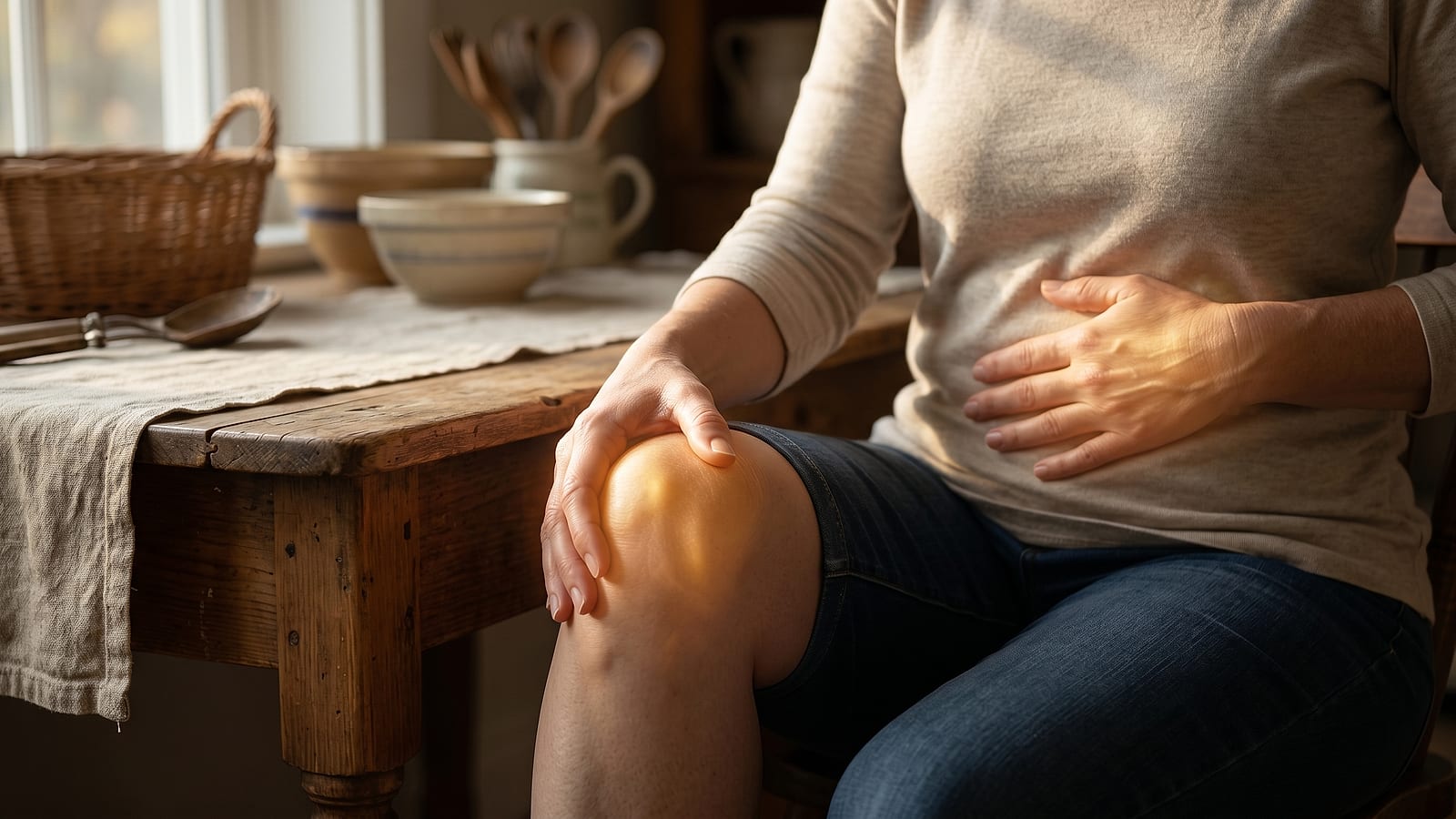
Here is an important reality check. Many people think they can ease joint pain by drinking a cup of homemade broth every morning. Research shows, however, that the amino acid levels in standard bone broth preparations are much lower than those in a potentially helpful dose of collagen supplements. Amino acid content also varies widely between homemade batches [PMID: 29893587]. Bone broth alone is unlikely to reliably reach the concentrations used in clinical collagen research.
For joint support, a standardized dose of hydrolyzed collagen (collagen that has been broken into smaller, easily absorbed pieces) may be more reliable. A randomized controlled trial (the strongest kind of study) in 250 people with knee osteoarthritis found that taking 10 g of collagen hydrolysate daily for six months was linked to meaningful improvement in knee comfort. The greatest benefit was seen in those with the most joint damage and the lowest usual meat intake [PMID: 19212858]. A review of clinical studies notes that taking about 10 g of pharmaceutical-grade collagen hydrolysate daily is linked to reduced pain in people with knee or hip osteoarthritis and to higher blood levels of hydroxyproline, though results have not always been consistent across all trial sites [PMID: 11071580]. Using broth to support gut health and standardized collagen peptides for joint support fits the available evidence.
The Complete Protocol
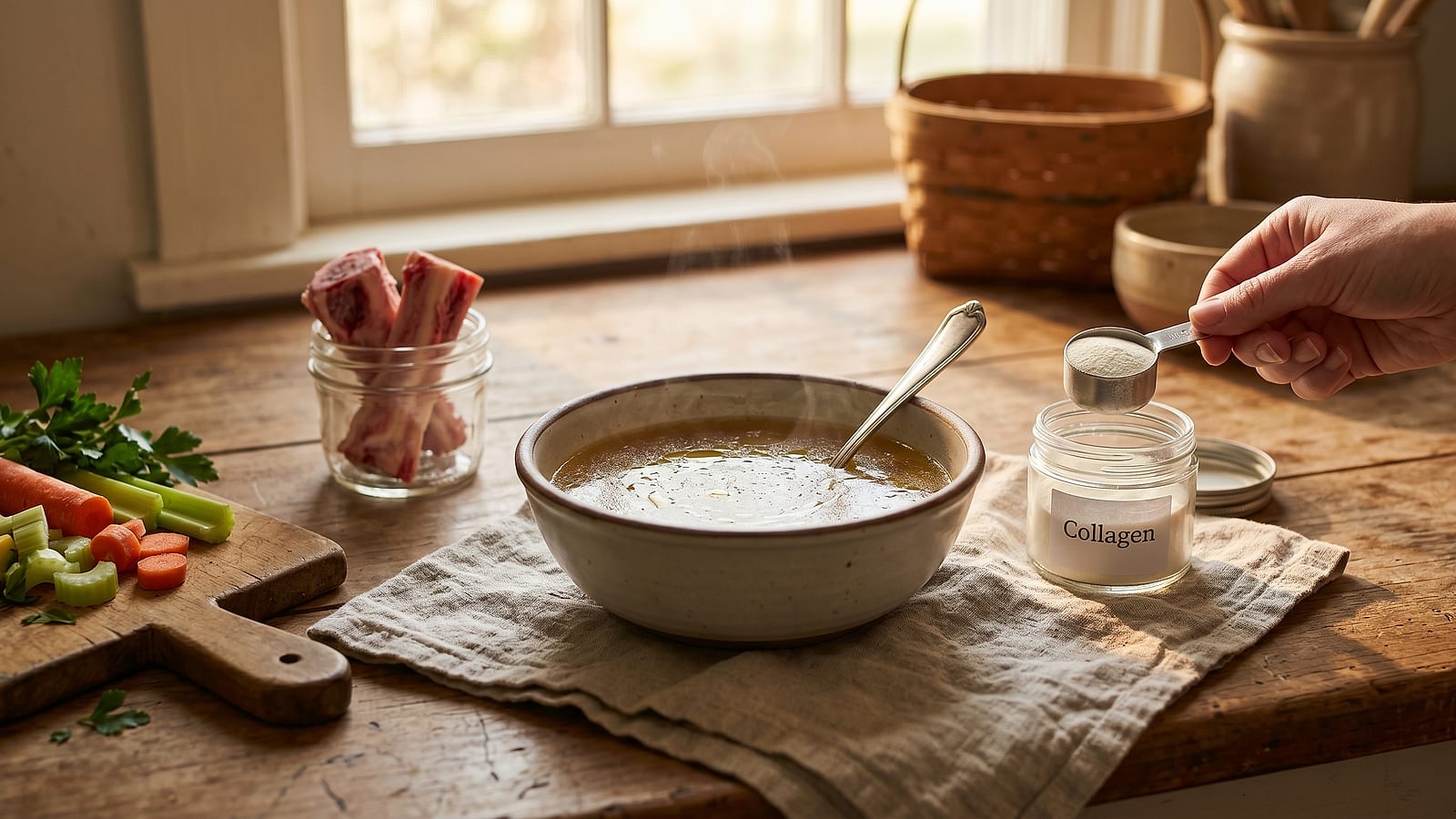
Pairing food sources with targeted supplements may help support your body’s structural proteins. The steps below are a general framework. Everyone’s needs are different, so talk to a healthcare provider before starting any new supplement routine.
Start with the food source
- Consider adding a regular serving (about 250 ml, or one cup) of slow-simmered beef or chicken bone broth to your daily routine.
- Adding an acid — such as apple cider vinegar — during cooking is a traditional practice thought to help draw out minerals. The exact effect on amino acid levels will vary by preparation.
- Many people drink broth in the morning. Timing relative to meals is a personal preference, not an established clinical rule.
Adding an acid (such as apple cider vinegar or lemon juice) to bones before cooking is a traditional technique thought to help draw out minerals and structural proteins. The exact yield will depend on variables like bone type and cooking time [PMID: 29893587].
Move to the concentrated natural form
- Gelatin powder — which comes from collagen — can be stirred into warm teas or used in cooking to increase your intake of collagen-related amino acids.
- Gelatin has been studied less than hydrolyzed collagen peptides. Its direct effect on joint or gut outcomes has not been as clearly evaluated in the clinical trials cited here.
Optional: the supplement form
- Clinical trials supporting joint comfort have used about 10 g of hydrolyzed collagen daily [PMID: 19212858, PMID: 11071580].
- A large review of combined analyses found that collagen supplements were consistently linked to better joint and skin outcomes across studies [PMID: 41809116].
- Because cartilage tissue rebuilds slowly, consistent use over several months is likely needed before joint-related benefits appear.
When NOT to do this
- Avoid this protocol if you have severe histamine intolerance (HIT) — a condition where the body reacts badly to histamine in foods. Long-simmered bone broth is high in histamines and can trigger reactions in sensitive people.
- Do not take high-dose gelatin if you have a history of oxalate kidney stones without talking to your doctor first. Glycine can partly convert to oxalate in the body.
If you get headaches, mental fogginess, or hives after drinking bone broth, you may have a histamine sensitivity. Talk to a healthcare provider, and consider a shorter-cooked meat broth as an alternative.
Frequently Asked Questions
Can I combine my collagen supplement directly with the bone broth?
Yes, but it is not necessary and might not be the best use of your money. Your body can only absorb and use a limited amount of amino acids at one time. Splitting them up — broth in the morning for your gut, and hydrolyzed collagen later in the day for your joints — means your body’s transport proteins are not overwhelmed. This can lead to better overall absorption.
What if I miss a day of the protocol — do I need to restart from the beginning?
No, do not restart. Just pick up where you left off. Consistency matters for building up your body’s amino acid supply, but missing a single day will not undo your progress. Simply resume your usual daily amounts the next morning.
Is the supplement form absolutely necessary if I drink homemade bone broth daily?
Yes, if your main goal is joint pain relief. Bone broth is beneficial for your gut, but its collagen content is too unpredictable to reliably deliver the 10-gram dose of specific peptides used in clinical trials studying cartilage support. Think of broth as your gut support tool, and the supplement as your joint-focused tool.
Can I use vegetable broth instead if I am vegetarian?
Unfortunately, vegetable broth contains no collagen or gelatin at all. It is rich in minerals, but it cannot provide the specific amino acids — glycine, proline, and hydroxyproline — needed to support the gut lining or joint tissue. If you do not eat beef or chicken, marine collagen is your next best option.
Verified Sources
- Bone Broth Unlikely to Provide Reliable Concentrations of Collagen Precursors Compared With Supplemental Sources of Collagen Used in Collagen Research. — International journal of sport nutrition and exercise metabolism, 2019 (PMID 29893587)
- Collagen Supplementation for Skin and Musculoskeletal Health: An Umbrella Review of Meta-Analyses on Elasticity, Hydration, and Structural Outcomes. — Aesthetic surgery journal. Open forum, 2026 (PMID 41809116)
- A randomized controlled trial on the efficacy and safety of a food ingredient, collagen hydrolysate, for improving joint comfort. — International journal of food sciences and nutrition, 2009 (PMID 19212858)
- Role of collagen hydrolysate in bone and joint disease. — Seminars in arthritis and rheumatism, 2000 (PMID 11071580)
- Bone Broth Benefits: How Its Nutrients Fortify Gut Barrier in Health and Disease. — Digestive diseases and sciences, 2025 (PMID 40180691)
Bloated, tired, foggy, or fighting cravings?
Get The Gut Reset free — a science-backed guide to go from “off” to clear, light and energized. Drop your email and we’ll send it straight to your inbox.
No spam. Unsubscribe anytime. Educational content, not medical advice.