Your doctor mentioned a statin. Before you decide, here’s what a $10 fiber does to your cholesterol
The number on the lab report stops you cold: your cholesterol is high. Your doctor mentions a statin. Maybe you are not ready for that yet — maybe you want to know if there is something you can do first. Something real, not another vague “just eat better.”
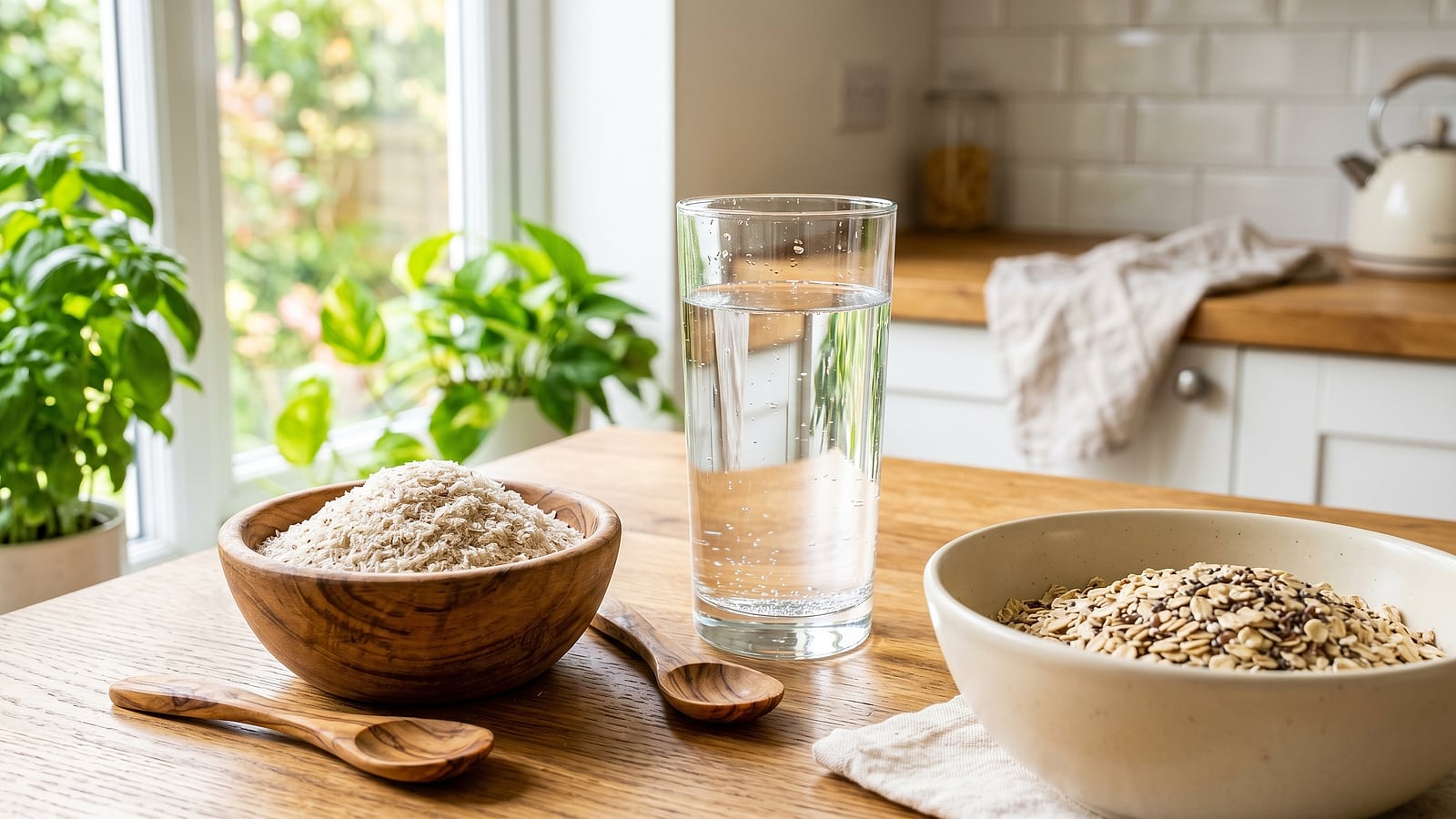
There is. And it costs about ten dollars. It is psyllium husk — the boring fiber in products like Metamucil. Most people think it is only for constipation. But decades of trials show it moves the exact numbers that scared you: it lowers LDL cholesterol and steadies blood sugar. By the end of this you will know how to use it, how to prove it is working, and where it stops — so you can walk into your next appointment with a plan, not just hope.
What it actually does to your numbers
This is not folklore. A meta-analysis of 8 controlled trials found that about 10 grams of psyllium a day lowered total cholesterol by 4% and LDL — the “bad” cholesterol — by 7%, on top of a normal diet [PMID: 10648260]. That effect is solid enough that the US FDA allows a heart-health claim on psyllium [PMID: 10648260]. A 7% drop in LDL can be the difference between “borderline” and “on target.”
It also lasts. A 26-week trial showed LDL stayed about 7% lower the entire time — not a quick blip [PMID: 10837282]. The researchers even wrote that psyllium “may provide an alternative to drug therapy for some patients” with mild high cholesterol [PMID: 10837282].
And there is a bonus for blood sugar. In a trial of men with type 2 diabetes, psyllium cut after-meal glucose by 11% to 19% — and dropped their LDL by 13% [PMID: 10500014]. Two wins from one cheap fiber.
Why a humble fiber pulls this off
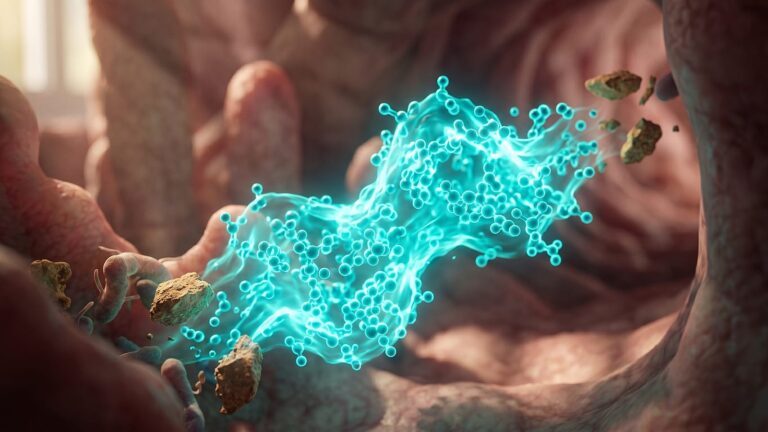
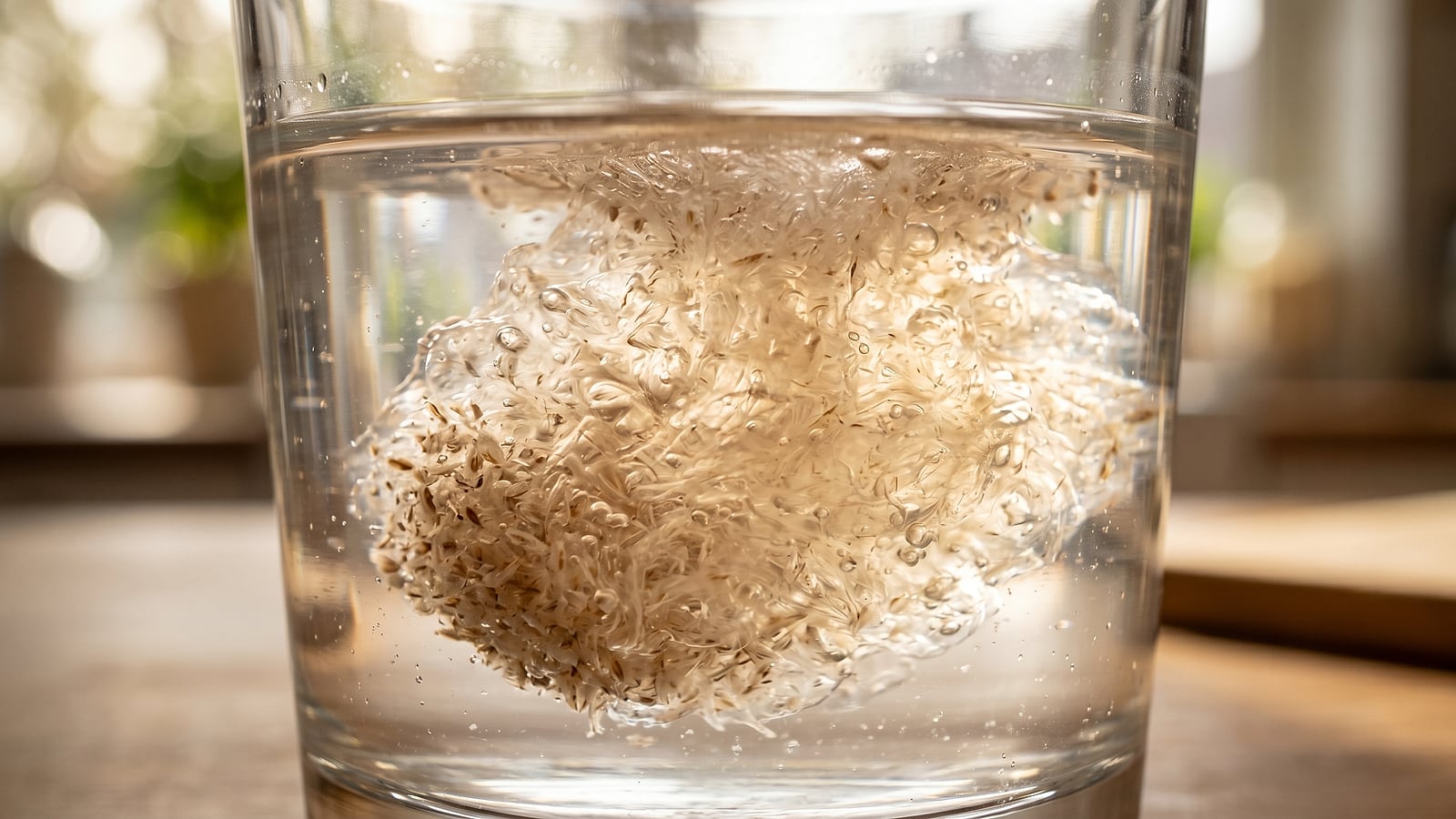
Here is the part that makes it click. In water, psyllium turns into a thick gel [PMID: 39847772]. That gel does two clever things. It slows how fast sugar enters your blood after a meal, softening the spike. And it grabs bile acids in your gut and drags them out — so your liver is forced to pull cholesterol from your blood to make new ones. That is the mechanism behind the falling LDL [PMID: 39847772]. Simple, mechanical, no drug needed.
Your step-by-step plan
This is how to do it right — matched to the studies, not guesswork.
- Dose: about 5 grams twice a day (10 g total) [PMID: 10648260][PMID: 10500014].
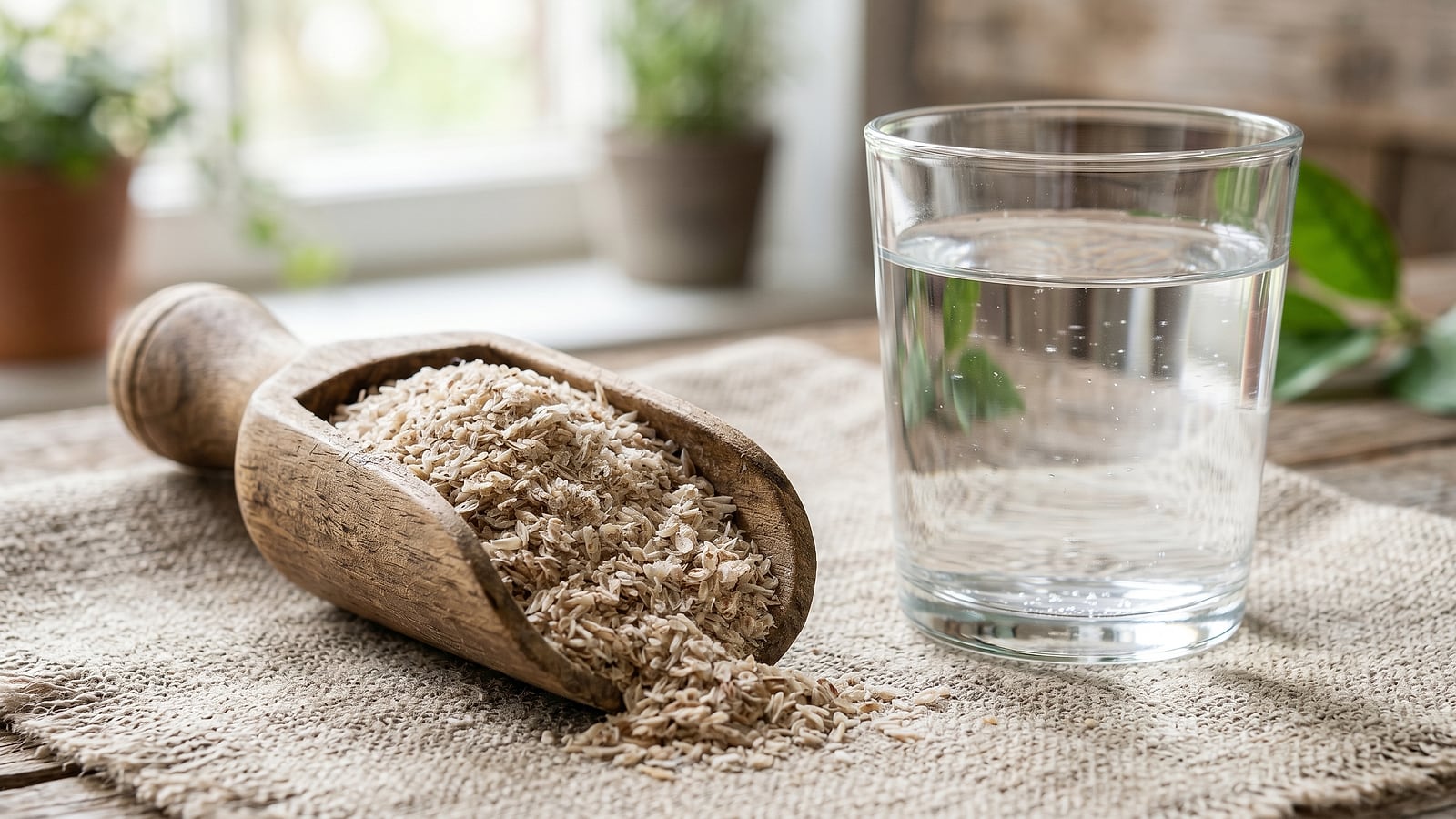
- Always with a full glass of water. Psyllium swells fast — taking it dry can cause choking or a blockage. This is the rule you cannot skip.
- Space it 2 to 4 hours from any medication. The same gel that traps bile acids can also reduce how well pills are absorbed.
- Start small and build up over a week or two to avoid gas and bloating.
How to know it is working
You cannot feel cholesterol — so do not guess, measure. The real scoreboard is your lipid panel. Take psyllium daily for 8 to 12 weeks, then ask your doctor to recheck your LDL [PMID: 10837282]. That number tells you, honestly, whether it is doing the job. Track it; do not rely on a vibe.
What it will not do (the honest catch)
Two things, so you are not disappointed. First, it is not a weight-loss tool — a 2025 review of 27 trials found no real change in BMI or waist size [PMID: 41126340]. Second, it does not replace a statin if your risk is genuinely high; for that situation it is a partner, not a substitute. Think of psyllium as the first lever to pull for mild elevations, and a solid add-on for everyone else. And never, ever take it dry.
Where you will be in three months
Let us be honest about the destination. Done daily, psyllium can realistically drop your LDL by around 7% and flatten your after-meal sugar swings [PMID: 10648260][PMID: 10500014]. For some people with mild elevations, that is enough to delay or avoid a drug; for others, it is a real complement that lets the rest of their plan work better. Either way, three months from now you will walk into that appointment with a number that moved — because of something you did, for ten dollars, with a glass of water.
Frequently Asked Questions
Can psyllium replace my statin?
Not if your heart risk is high — then a statin may be doing important protective work. For mild elevations, one long trial noted psyllium “may provide an alternative to drug therapy for some patients” [PMID: 10837282], but that is a decision to make WITH your doctor, using your rechecked numbers — never by stopping a prescribed drug on your own.
Will it help me lose weight?
Probably not. A 2025 review of 27 trials found no significant change in BMI or waist size [PMID: 41126340]. It may help you feel fuller, but treat it as a cholesterol and blood-sugar tool, not a fat burner.
How do I take it safely?
About 5 g twice a day, always with a full glass of water (it swells), and 2 to 4 hours apart from medications since it can reduce drug absorption. Build up slowly to avoid gas [PMID: 39847772].
Verified Sources
- Cholesterol-lowering effects of psyllium intake adjunctive to diet therapy in men and women with hypercholesterolemia: meta-analysis of 8 controlled trials. — The American journal of clinical nutrition, 2000 (PMID 10648260)
- Effects of psyllium on glucose and serum lipid responses in men with type 2 diabetes and hypercholesterolemia. — The American journal of clinical nutrition, 1999 (PMID 10500014)
- Long-term cholesterol-lowering effects of psyllium as an adjunct to diet therapy in the treatment of hypercholesterolemia. — The American journal of clinical nutrition, 2000 (PMID 10837282)
- The effect of psyllium consumption on anthropometric indices: a systematic review and dose-response meta-analysis of randomized controlled trials. — Journal of health, population, and nutrition, 2025 (PMID 41126340)
- Psyllium: A Nutraceutical and Functional Ingredient in Foods. — Annual review of food science and technology, 2025 (PMID 39847772)
Bloated, tired, foggy, or fighting cravings?
Get The Gut Reset free — a science-backed guide to go from “off” to clear, light and energized. Drop your email and we’ll send it straight to your inbox.
No spam. Unsubscribe anytime. Educational content, not medical advice.
professional before changing your diet, supplements, or treatment. These statements have not been
evaluated by the Food and Drug Administration and are not intended to diagnose, treat, cure, or prevent any disease.