
What almost nobody knows about resistant starch is that eating the wrong structural type won’t feed your gut microbes at all.
Almost nobody knows this about resistant starch: eating the wrong structural type won’t feed your gut microbes at all. You might be dutifully eating cold potatoes or raw oats, thinking you are doing your colon a big favor.
But you could be missing the mark entirely. Different chemical arrangements of these starches determine which specific bacteria get fed. In this article, you will learn the exact biological blueprint of the four main types of resistant starch. You will also get a practical, food-first plan to target specific bacterial groups — so you actually produce the therapeutic butyrate (a key fuel for your colon cells) your gut needs.
Why This Matters Today
Evidence suggests that people using generic prebiotic powders may not get the targeted gut effects they are looking for. The human gut is not a simple compost bin. It is a highly competitive, microscopic ecosystem.
If you feed it the wrong type of resistant starch, the beneficial species simply starve while less helpful ones take over. Recent clinical data shows how powerful the right approach can be. A review of randomized trials (studies where participants are randomly assigned to groups, the strongest kind of study design) found that proper use of resistant starch was linked to a meaningful drop in fasting blood sugar of 4.28 mg/dL and a 0.60% reduction in HbA1c (a measure of average blood sugar over several months) [31661295].
That is a significant metabolic shift from a simple dietary change. Yet most people never see these benefits because they treat all resistant starches as the same. They are not. If you are eating retrograded starch when your body needs raw, ungelatinized granules, you are wasting your time. Let’s look at the actual molecular chemistry that controls how these molecules behave in your colon.

The Science Behind It
Let’s get specific. Resistant starch is defined by its ability to pass through your upper digestive tract without being broken down. It arrives in your large intestine intact. But here is the catch: resistant starch is not a single substance.
It is a category of four distinct physical types [31765963]. Type 1 is physically trapped inside plant cell walls, like in whole seeds and legumes. Type 2 is raw, ungelatinized starch with a tightly packed crystalline structure, found in green bananas. Type 3 is retrograded starch — created when you cook and then cool starches like potatoes or white rice. Type 4 is chemically modified to resist human digestive enzymes altogether.
Your gut bacteria are incredibly selective eaters. Ruminococcus bromii, for example, is a primary degrader of Type 3 starch but struggles with Type 2. If R. bromii cannot break down the starch first, other beneficial species like Faecalibacterium prausnitzii cannot access the leftover pieces to create butyrate — the primary fuel for your colon cells [31765963].
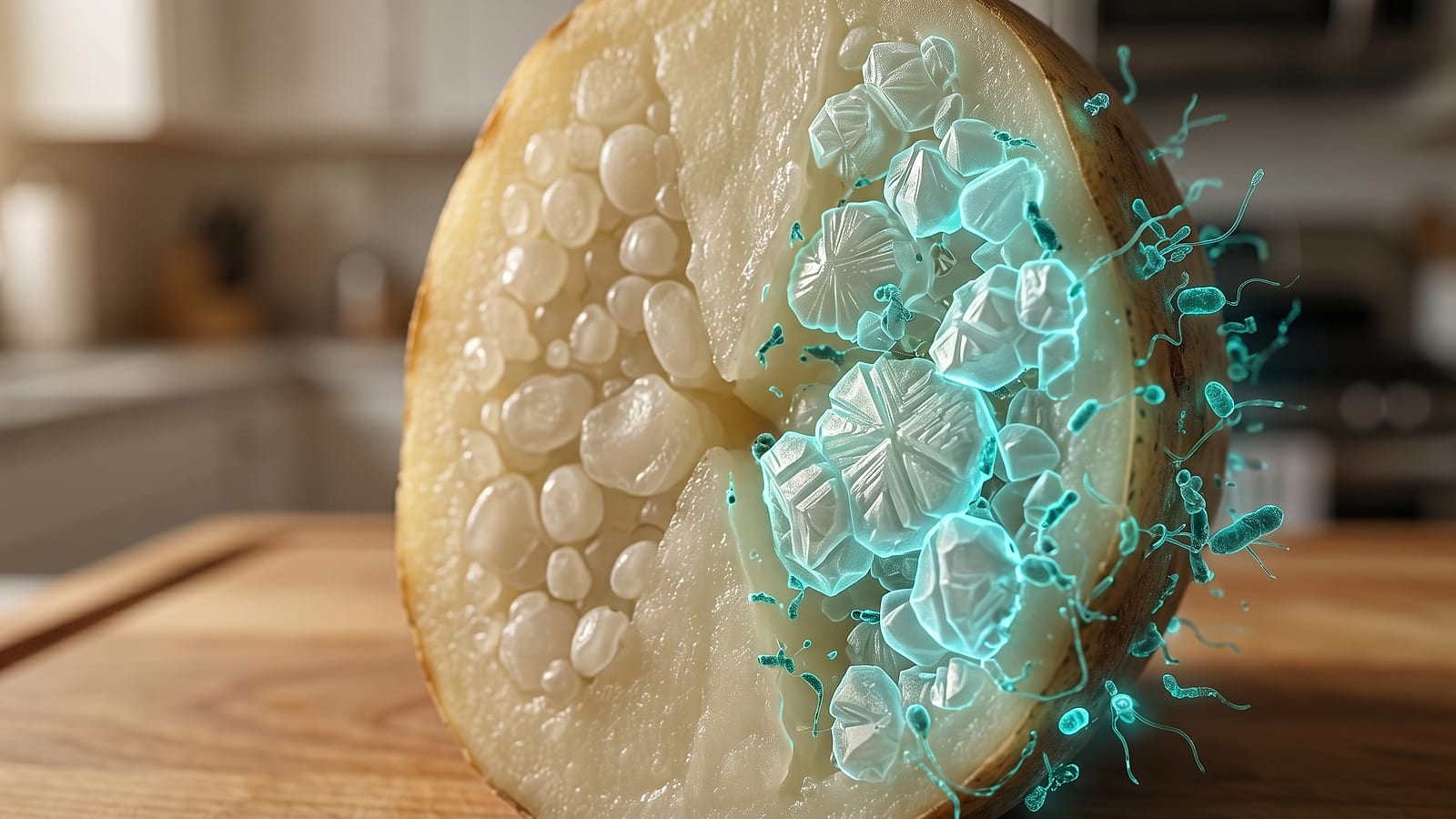
This cooperative process — where one bacterium breaks down starch so another can use the pieces — is delicate. When you eat a random mix, you get random results. But when you target specific metabolic pathways, the whole-body benefits can be significant. The fermentation of these specific structures in the colon may help trigger a chain of metabolic improvements, particularly in managing obesity and supporting healthy tissue responses [40609947].
The production of short-chain fatty acids (small molecules made by gut bacteria that signal other parts of the body) directly tells the brain to regulate appetite. It also strengthens the gut barrier, so fewer harmful substances leak into your bloodstream. Beyond local benefits, clinical trials suggest that using targeted resistant starches may support the management of metabolic diseases [26406392].
It is not just about bowel comfort. By shifting the balance of gut bacteria, evidence points to direct effects on inflammation, insulin sensitivity (how well your body responds to insulin), and hunger hormones [39605008]. Switching from standard fibers to a highly specific Type 3 retrograded starch plan may help address stubborn metabolic plateaus. It works because it respects the precise evolutionary preferences of your resident microbes. You cannot achieve this precision by grabbing whatever “high-fiber” box is on sale. You must build a targeted strategy.
The Complete Protocol

Start with the food source
For daily maintenance, focus on Type 3 (retrograded) resistant starch. Cook 150 grams of organic white Russet potatoes or jasmine rice. Let them cool in the refrigerator at 4 degrees Celsius (about 39°F) for at least 12 hours.
This cooling process recrystallizes the amylose molecules (a type of starch that becomes resistant to digestion when cooled). You can reheat them gently before eating, but keep the temperature under 130 degrees Fahrenheit. Higher heat melts the starch back into an easily digestible form. Consume this once daily with dinner.
Move to the concentrated natural form
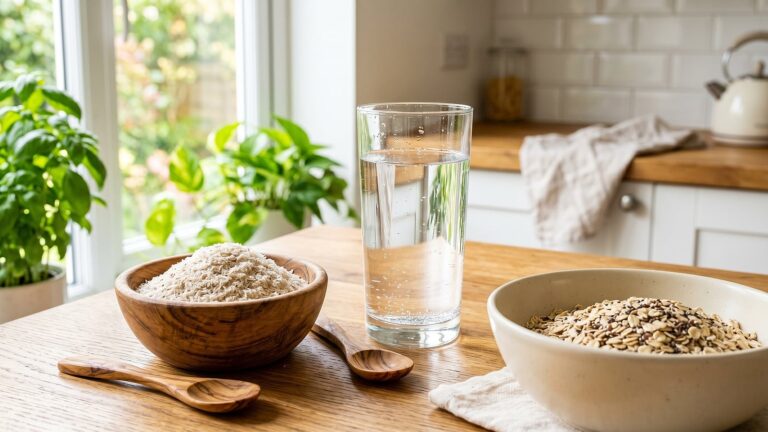
To support butyrate production, introduce unmodified potato starch — a Type 2 resistant starch. Start with 12 grams (about one level tablespoon) dissolved in 8 ounces of room-temperature water. Never heat this mixture, as heat destroys the Type 2 crystalline structure.
Drink this on an empty stomach within 30 minutes of waking up.
Optional: the supplement form
If raw starch causes too much initial gas, use a standardized green banana flour supplement. Look for a product guaranteed to contain at least 50% resistant starch by weight. Take 15 grams daily, mixed into cold almond milk or yogurt.
Always consume this with a fat source, like 10 grams of walnuts, to slow stomach emptying and help deliver the starch to your gut microbes.
When NOT to do this
Do not attempt this protocol if you have diagnosed Small Intestinal Bacterial Overgrowth (SIBO — too many bacteria in the small intestine) or severe Irritable Bowel Syndrome (IBS) with active diarrhea. Rapidly introducing resistant starch can cause intense fermentation in the small intestine, leading to painful bloating, cramping, and widespread inflammation. Resolve the bacterial overgrowth before attempting to feed the colon.
Keep a daily log of your stools and any bloating. Minor gas in the first few days is normal. Severe pain is a sign to cut your dose in half.
Frequently Asked Questions
Can I combine this protocol with a low-carbohydrate ketogenic diet?
Yes. Resistant starch bypasses digestion in the small intestine, so it does not raise blood sugar or insulin significantly [31661295]. The carbohydrates are broken down by your gut bacteria, not absorbed by you. This means you can get the metabolic benefits of a ketogenic diet alongside the butyrate production that normally comes from eating high-carb foods.
What if I miss a day of the cooled potato protocol — do I need to restart?
No need to restart. Your gut microbiome does not reset to zero in 24 hours. Simply pick up where you left off the next day. That said, consistency matters — the bacterial populations that break down these starches will start to decline after about 48 hours without their specific food source.
How does retrograded starch compare to standard psyllium husk?
Psyllium is a soluble, gel-forming fiber that mainly adds bulk to stool and slows digestion. It does not produce butyrate at the high levels that Type 3 resistant starch does. Think of psyllium as a broom for your intestines, while resistant starch is specialized fuel for your gut microbes [31765963].
Why does a 4-week timeframe matter if digestion can improve quickly?
Bowel habit improvements can happen relatively quickly as water balance shifts in the colon [39605008]. However, broader metabolic changes — like improvements in fasting insulin and HbA1c — are linked to at least 4 weeks of consistent microbial fermentation [31661295].
Is the raw potato starch supplement necessary if I eat cooled potatoes daily?
Not necessary, but it can be highly effective. Cooled potatoes provide Type 3 starch, while raw potato starch provides Type 2. Combining both structures may help feed a wider variety of beneficial bacterial species, supporting butyrate production [31765963].
Verified Sources
- Resistant starch: impact on the gut microbiome and health. — Current opinion in biotechnology, 2020 (PMID 31765963)
- Resistant starches for the management of metabolic diseases. — Current opinion in clinical nutrition and metabolic care, 2015 (PMID 26406392)
- Effects of resistant starch on glycemic control, serum lipoproteins and systemic inflammation in patients with metabolic syndrome and related disorders: A systematic review and meta-analysis of randomized controlled clinical trials. — Critical reviews in food science and nutrition, 2020 (PMID 31661295)
- Advances in resistant starch: mechanisms, applications, and challenges in obesity management and low-fat food development. — International journal of biological macromolecules, 2025 (PMID 40609947)
- Consumption of resistant potato starch produces changes in gut microbiota that correlate with improvements in abnormal bowel symptoms: a secondary analysis of a clinical trial. — BMC nutrition, 2024 (PMID 39605008)
Bloated, tired, foggy, or fighting cravings?
Get The Gut Reset free — a science-backed guide to go from “off” to clear, light and energized. Drop your email and we’ll send it straight to your inbox.
No spam. Unsubscribe anytime. Educational content, not medical advice.