You were told to take calcium for your bones — but without one missing vitamin, that calcium hardens your arteries instead
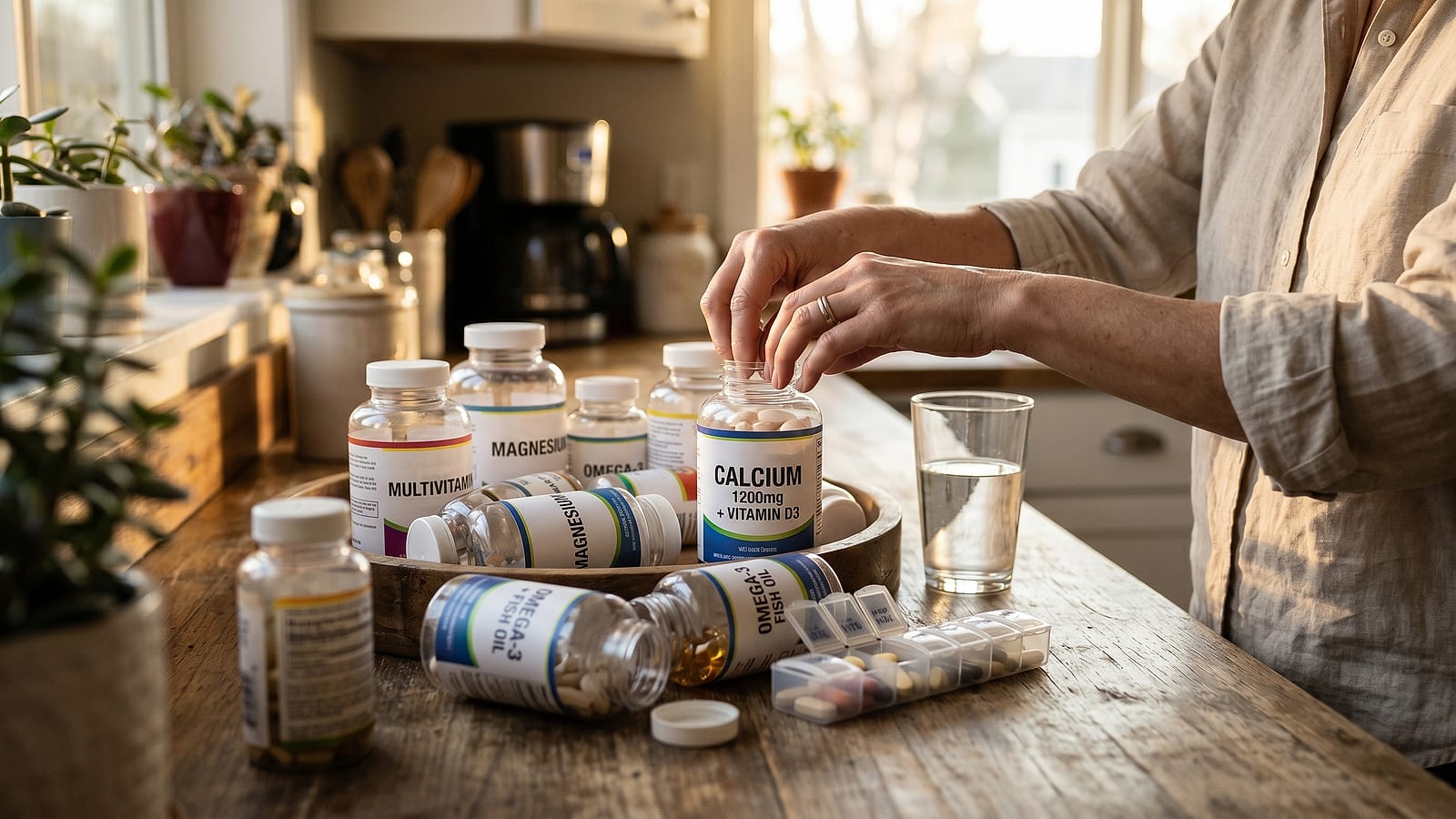
For decades, mainstream medicine handed out calcium supplements like cheap candy. “Protect your bones,” they said. It sounded simple. Safe. Logical. But they left out one critical detail.
Without one specific nutrient, that calcium may not reach your skeleton efficiently. Instead, it can build up in soft tissues and artery walls. By the end of this article, you will understand what that nutrient does, what doses researchers have studied, and how published trials have used it.
Why This Matters Today
Public health guidelines move slowly, even when new research points to a gap. Many people take calcium every day, believing it protects their bones. But research suggests calcium alone is not enough — you also need the proteins that tell calcium where to go.
When calcium builds up in artery walls, it is linked to stiffer, less flexible blood vessels. Studies that followed large groups of people have found that eating more vitamin K2 is linked to a lower risk of coronary artery disease and calcium buildup in blood vessels [PMID: 26176325]. Yet standard medical practice rarely pairs calcium advice with guidance on K2. Let’s look at the cell-level process that explains why this gap matters.
The Science Behind It
To understand how calcium ends up in the wrong place, we need to look at two specific proteins. The first is osteocalcin, which helps bind calcium to bone. The second is matrix Gla-protein (MGP), which helps stop calcium from hardening inside blood vessels.
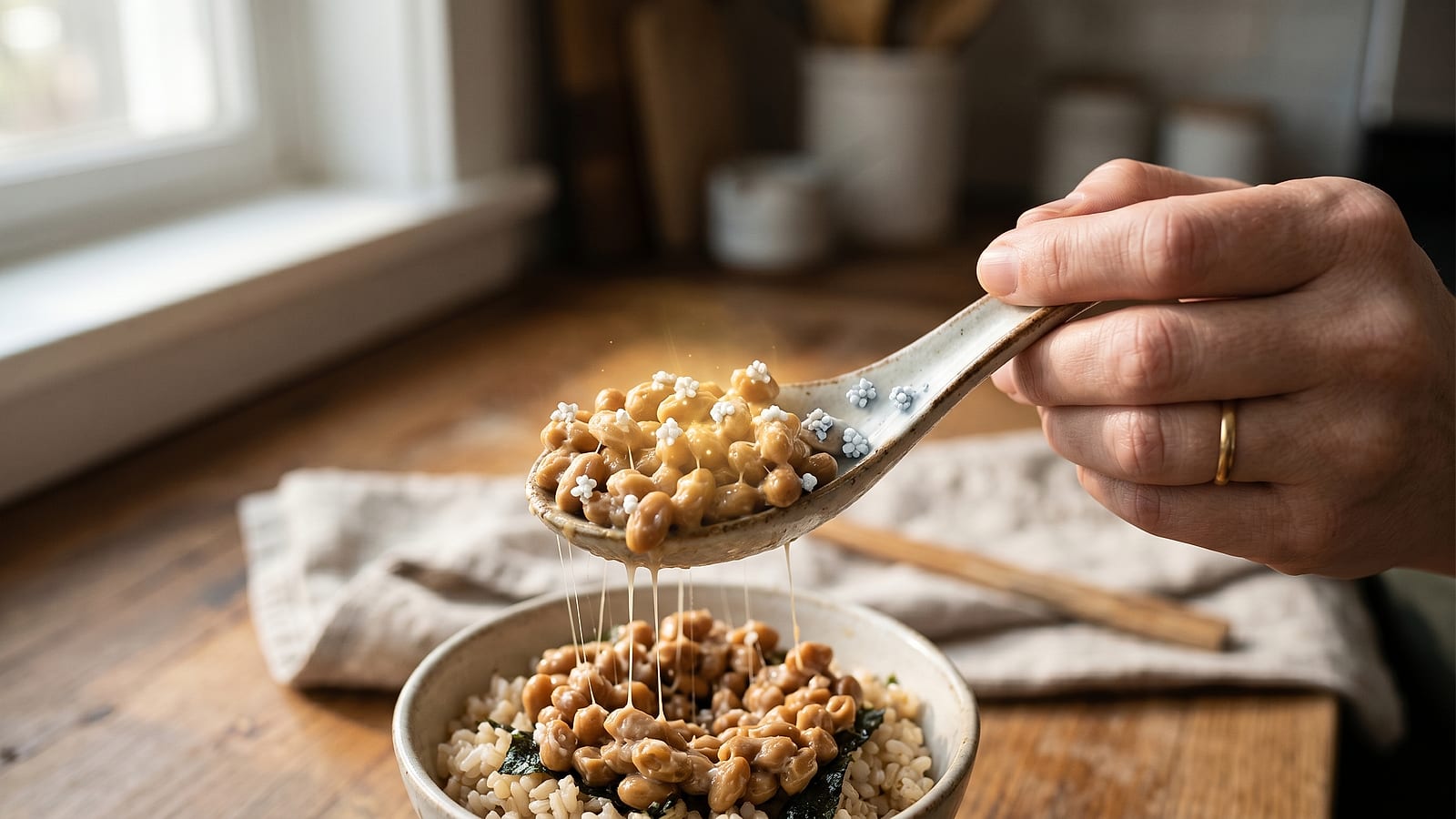
Both proteins need to go through a chemical activation step called carboxylation (a process that switches the protein “on”) before they can do their jobs. This is where vitamin K2 — specifically the form called menaquinone-7, or MK-7 — becomes important. A research review found that MK-7 acts as a helper molecule that activates both osteocalcin and MGP, guiding calcium into bones and helping keep it out of blood vessels [PMID: 35774605]. Without enough K2, these proteins stay inactive. Inactive osteocalcin is less effective at anchoring calcium to bone. Inactive MGP is less able to stop calcium from depositing in artery walls. The same review also notes that MK-7 may support bone strength by boosting a protein called osteoprotegerin, which helps slow bone breakdown [PMID: 35774605].
This two-part action is why calcium supplements alone may not be enough. One trial in kidney disease patients who were not yet on dialysis found that 90 mcg of MK-7 daily (taken alongside vitamin D) was linked to a significantly smaller increase in artery wall thickness compared to vitamin D alone. This suggests MK-7 may help slow the early stages of artery hardening [PMID: 26176325].
The evidence on bone density is more mixed. A three-year randomized, placebo-controlled trial (the strongest kind of study) in postmenopausal women with low bone density found that MK-7 did significantly reduce inactive osteocalcin. However, bone mineral density (the amount of calcium and minerals in bone) declined at all measured sites, and the difference between the MK-7 group (375 mcg/day) and the placebo group was not statistically significant [PMID: 33030563]. In other words, in that study, MK-7 influenced bone turnover markers but did not work better than a placebo at preserving bone density in that group. Larger, well-designed trials are still underway to investigate how MK-7 affects heart health, metabolism, and bone health in aging adults [PMID: 37208133]. One review notes that compared to vitamin K1, MK-7 is absorbed more easily by the body and stays active longer [PMID: 35774605].
The Complete Protocol
Start with the food source
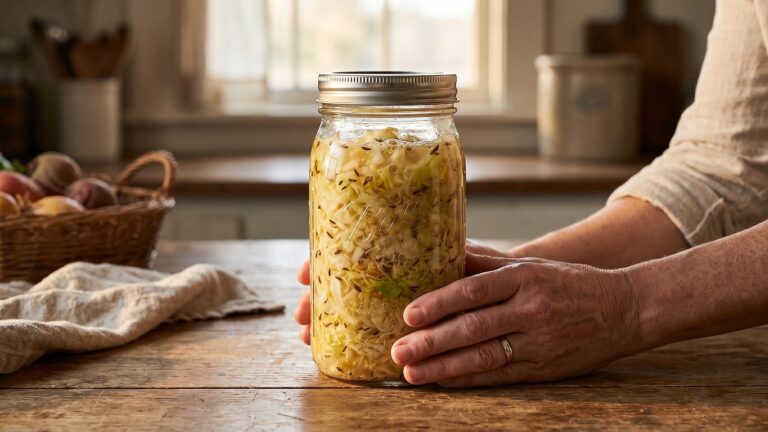
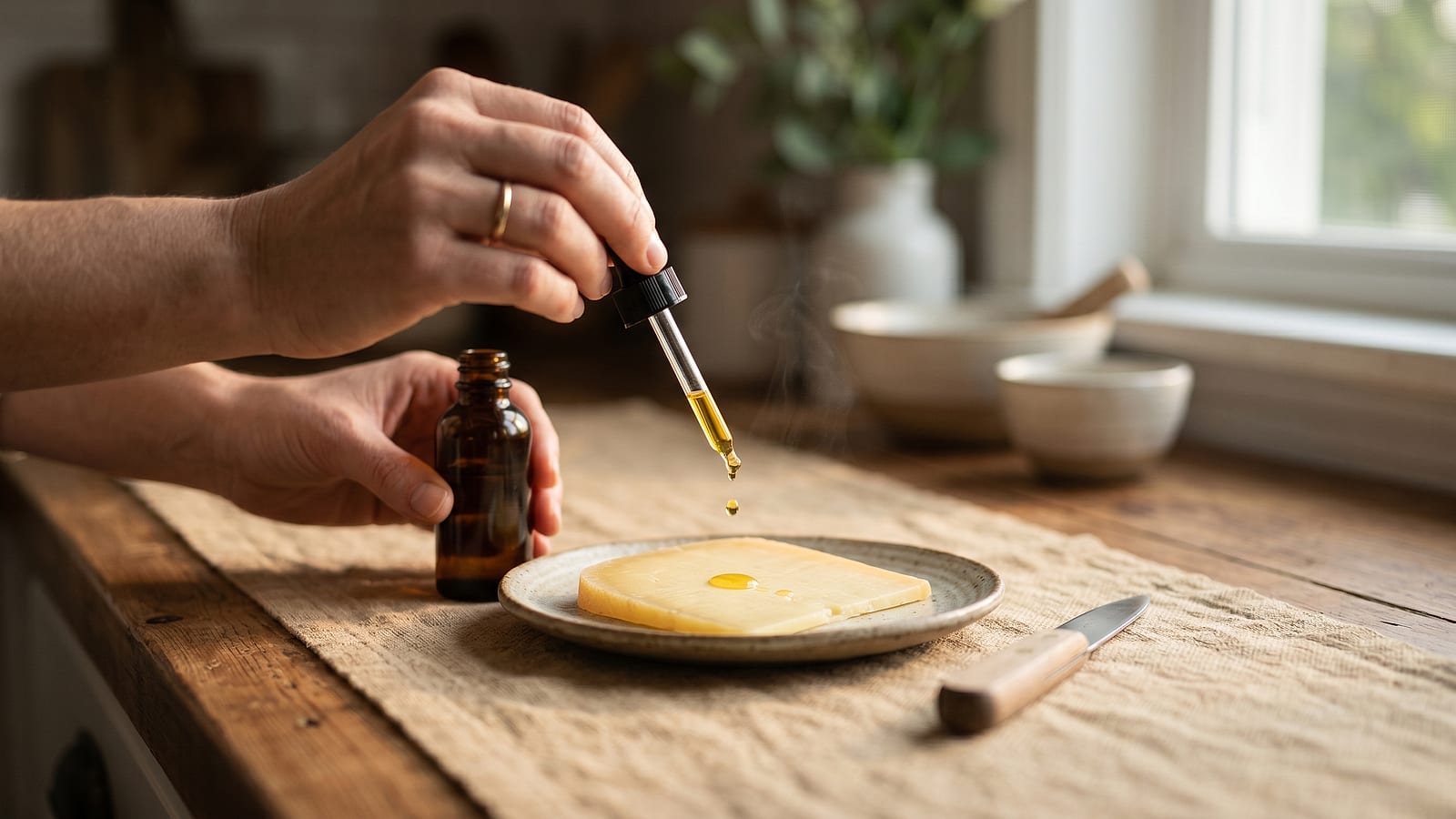
Traditional fermented foods are a good starting point. Japanese Natto (fermented soybeans) is one of the richest known food sources of MK-7. It is best eaten without heating, since high temperatures may break down the active compounds. Aged cheeses like Gouda and Edam also contain K2, produced by bacteria during the aging process — though in smaller and more variable amounts than Natto.
Move to the concentrated natural form
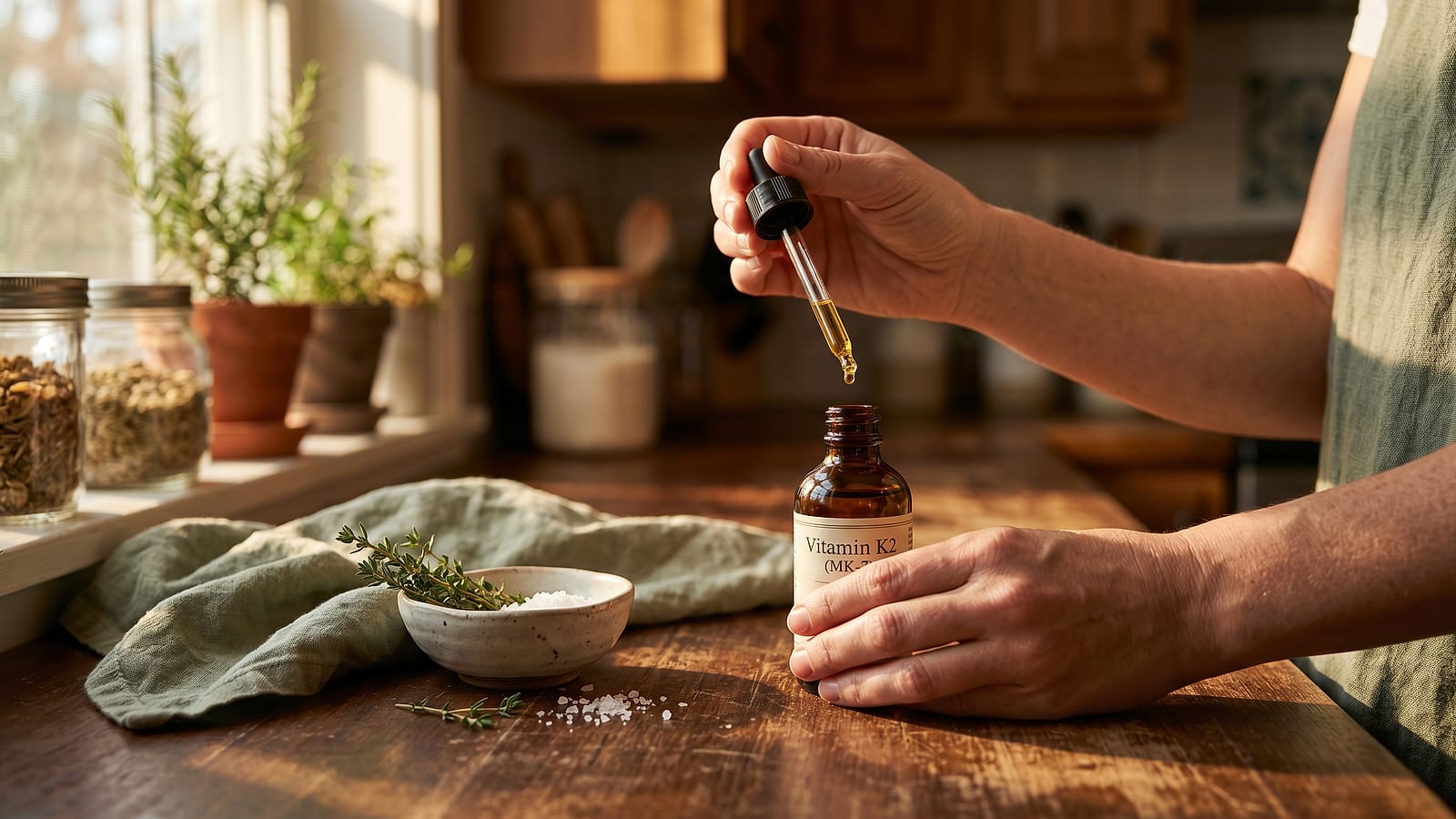
For people who want higher amounts, food alone may not be enough. Clinical trials have used daily MK-7 doses ranging from 90 mcg [PMID: 26176325] to 375 mcg [PMID: 33030563], and one ongoing trial uses 333 mcg per day [PMID: 37208133]. Because vitamin K2 is fat-soluble (meaning the body absorbs it better alongside fat), taking it with a meal that contains some fat is generally recommended.
Optional: the supplement form
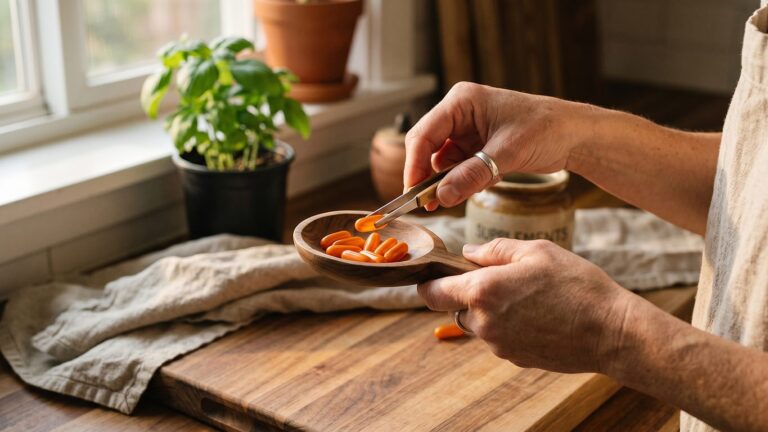
If you choose a capsule, look for one that clearly states the MK-7 form of vitamin K2. Labels showing 100% trans-isomer content are generally preferred, since the trans form is the biologically active version. Take it daily with a meal that contains some dietary fat to support absorption.
Practical note: Because vitamin K2 is fat-soluble, pairing it with a meal that contains some dietary fat — such as one that includes avocado, olive oil, or nuts — is a reasonable general approach to support absorption.
When NOT to do this
Do not start this protocol if you currently take coumarin-based blood thinners like Warfarin. Vitamin K2 directly works against these medications, which can create dangerous clotting risks. Always talk to your doctor first if you have a history of serious kidney disease.
Frequently Asked Questions
Can I take Vitamin K2 if I am already taking a Vitamin D3 supplement?
Vitamin D3 increases how much calcium your gut absorbs, but it does not directly control where that calcium ends up in your body. K2-dependent proteins like osteocalcin and MGP play a role in directing calcium toward bone and away from soft tissues. Pairing D3 with K2 is a common approach, but talk to your doctor about what is right for your situation.
What should I do if I miss a day of my K2 protocol?
The MK-7 form of vitamin K2 has a relatively long half-life (the time it takes for half the substance to leave your body), which means blood levels stay more stable than with shorter-lived forms. If you miss one day, simply resume your normal dose with your next meal containing fat. Do not double your dose.
Can I get enough Vitamin K2 just by eating regular butter and eggs?
Unlikely. Grass-fed butter and pasture-raised egg yolks do contain small amounts of vitamin K2, mainly the shorter-lived MK-4 form. However, the amounts are highly variable and generally low. Reaching the dose ranges used in clinical trials through these foods alone would be very difficult.
Why does bone and vascular remodeling take a long time?
Rebuilding bone tissue and reducing calcium buildup in blood vessels are slow, long-term processes. Clinical trials studying these outcomes have run for one to three years [PMID: 33030563] [PMID: 37208133]. That length of time reflects how long it takes for meaningful changes to show up on relevant tests.
Does cooking or boiling Natto completely destroy the active MK-7?
Heat may break down the active compounds in Natto. It is generally best eaten cold or at room temperature. If you want to mix it with rice, let the rice cool to a warm but not hot temperature before stirring the Natto in.
Verified Sources
- Molecular Pathways and Roles for Vitamin K2-7 as a Health-Beneficial Nutraceutical: Challenges and Opportunities. — Frontiers in pharmacology, 2022 (PMID 35774605)
- Effect of vitamin K2 on progression of atherosclerosis and vascular calcification in nondialyzed patients with chronic kidney disease stages 3-5. — Polskie Archiwum Medycyny Wewnetrznej, 2015 (PMID 26176325)
- The effect of vitamin MK-7 on bone mineral density and microarchitecture in postmenopausal women with osteopenia, a 3-year randomized, placebo-controlled clinical trial. — Osteoporosis international : a journal established as result of cooperation between the European Foundation for Osteoporosis and the National Osteoporosis Foundation of the USA, 2021 (PMID 33030563)
- Study protocol of the InterVitaminK trial: a Danish population-based randomised double-blinded placebo-controlled trial of the effects of vitamin K (menaquinone-7) supplementation on cardiovascular, metabolic and bone health. — BMJ open, 2023 (PMID 37208133)
Bloated, tired, foggy, or fighting cravings?
Get The Gut Reset free — a science-backed guide to go from “off” to clear, light and energized. Drop your email and we’ll send it straight to your inbox.
No spam. Unsubscribe anytime. Educational content, not medical advice.