Every old culture fermented its food for a reason science is only now decoding — and we traded it for shelf life
For thousands of years, every major civilization preserved its harvest without chemical additives. Instead, people relied on the living process of fermentation. From clay vessels in the Andes to stone jars in the Himalayas, our ancestors used microbial partners to pre-digest food, unlock nutrients, and protect their digestive systems. Today, we have traded that ancient biological heritage for sterile, shelf-stable packaging — and left our gut microbiomes (the communities of microorganisms living in our digestive tract) depleted and vulnerable.
Stepping away from these living traditions cost us more than flavor. It cut a deep evolutionary connection with the microbial world that helps regulate our immune and metabolic health. In this article, you will learn the precise cellular mechanisms our ancestors used instinctively. You will also find a targeted 4-week food protocol designed to safely bring these vital postbiotics (beneficial compounds produced by microbes) and live bacterial strains back into your daily routine.
Why This Matters Today
The modern industrialized diet is built on pasteurization, preservation, and sterile packaging. These processes have sharply reduced foodborne illness and extended shelf life. But they have also systematically removed the transient microbes that historically populated the human digestive tract.
This sterile food landscape coincides with a steep rise in metabolic and inflammatory conditions across Western societies. Studies that followed large groups of people over time show that moving away from traditional microbial exposures is linked to worse long-term health outcomes. A large meta-analysis (a study that pools results from many studies) of prospective cohort studies found that people who ate more fermented milks, yogurt, and cheese had lower rates of death from all causes and from heart and blood vessel disease. This points to a profound, body-wide benefit from these living foods. [41835372]
To reverse this generational decline in gut diversity, we need to look beyond generic over-the-counter probiotic pills. We need to understand how whole, traditionally fermented foods interact with our native biology. Let us examine the molecular pathways that make these ancestral ferments uniquely capable of transforming our internal ecosystem.

The Science Behind It
When we eat traditional fermented foods, we are not just swallowing isolated bacteria. We are taking in a complex, synergistic matrix — a rich mixture — of live microorganisms, prebiotic fibers (food that feeds beneficial gut bacteria), and bioactive compounds called postbiotics. Modern metagenomic sequencing (technology that reads the DNA of entire microbial communities) has revealed that each fermented food hosts a highly distinct population of microorganisms. These microbes are adapted to survive the acidic journey through the stomach and interact directly with our native gut microbiome. [35406140]
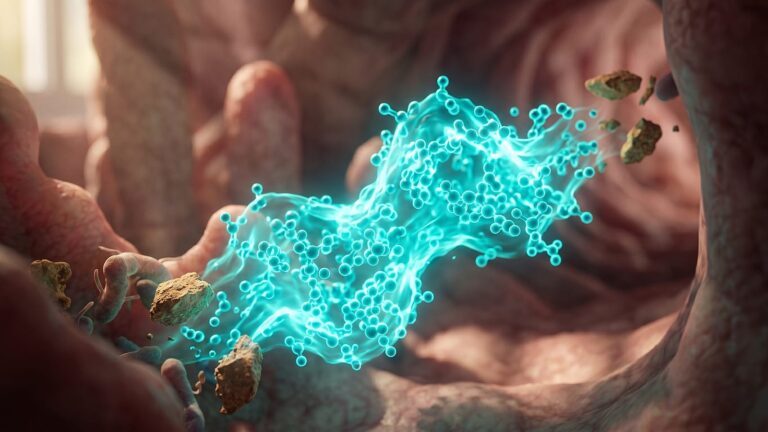
These transient microbes do not need to permanently colonize the gut to be useful. As they pass through, they produce short-chain fatty acids (SCFAs) — compounds like acetate, propionate, and butyrate — which serve as the primary fuel source for our colonocytes (the cells lining the colon).
The benefits go far beyond basic digestion. The cellular mechanisms triggered by these traditional foods directly influence our immune signaling pathways and the integrity of our gut barrier. Specific bioactive compounds generated during fermentation — such as bioactive peptides and organic acids — interact with receptors on the cells lining the gut. This strengthens the tight junctions (the seals between those cells) that prevent intestinal permeability, sometimes called “leaky gut.” [38081933] By reinforcing this physical barrier, fermented foods may help prevent harmful substances called lipopolysaccharides from leaking into the bloodstream and triggering inflammation throughout the body.
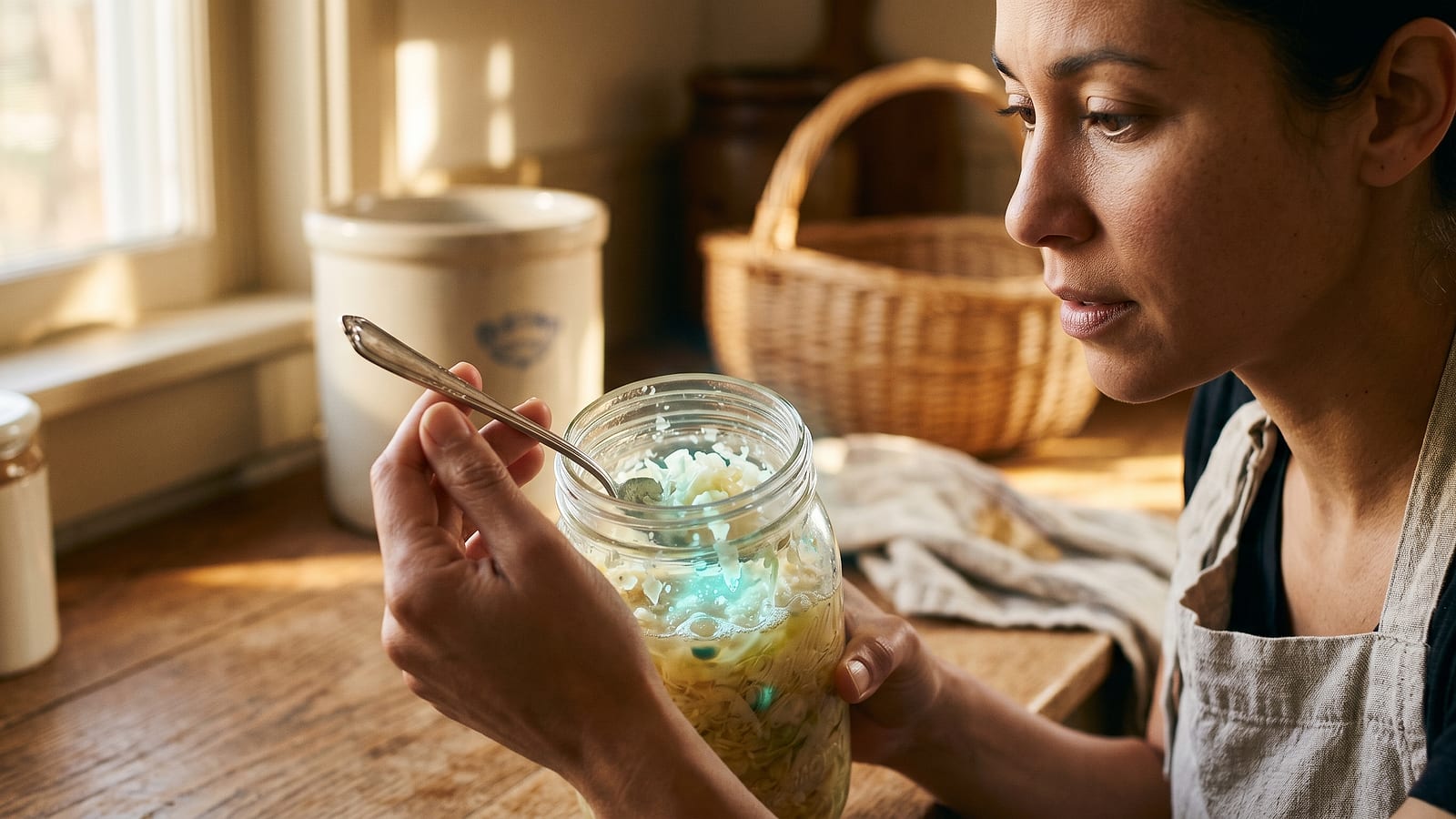
Clinical assessments show that our modern gut microbiome is highly adaptable and can respond quickly when reintroduced to traditional fermented foods. For instance, adding structured fermented dairy products to the daily diet of healthy volunteers produced rapid, measurable shifts in the composition and function of the gut microbiome within days. [30836671] This rapid response suggests an evolutionary expectation: our bodies are primed to receive and use the biochemical inputs that come from active fermentations.
These traditional foods also offer a unique dual-action benefit by combining live strains with prebiotic vehicles. Researchers are actively studying ancient practices — such as the Sri Lankan tradition of eating “diyabath,” a fermented cooked rice preparation, as a pre-breakfast meal — to document how these specific fermented food matrices influence the gut microbiome, nutritional status, and immune parameters in young populations. [41735946] By delivering viable microbes alongside the specific starches those microbes need to thrive, traditional preparations act as complete, self-contained symbiotic systems.
The Complete Protocol
Start with the food source
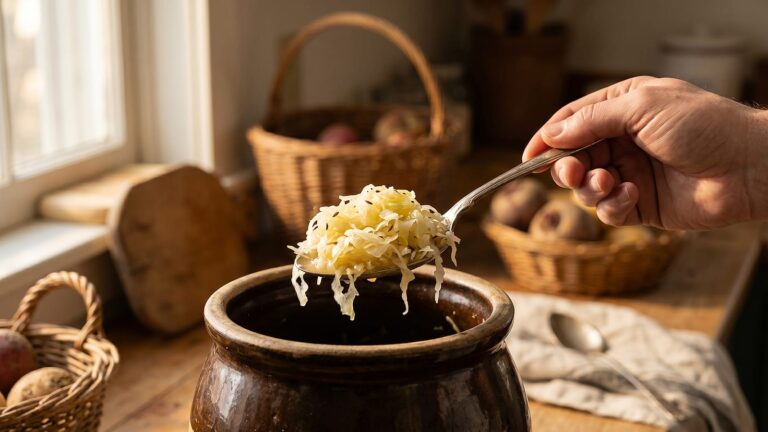
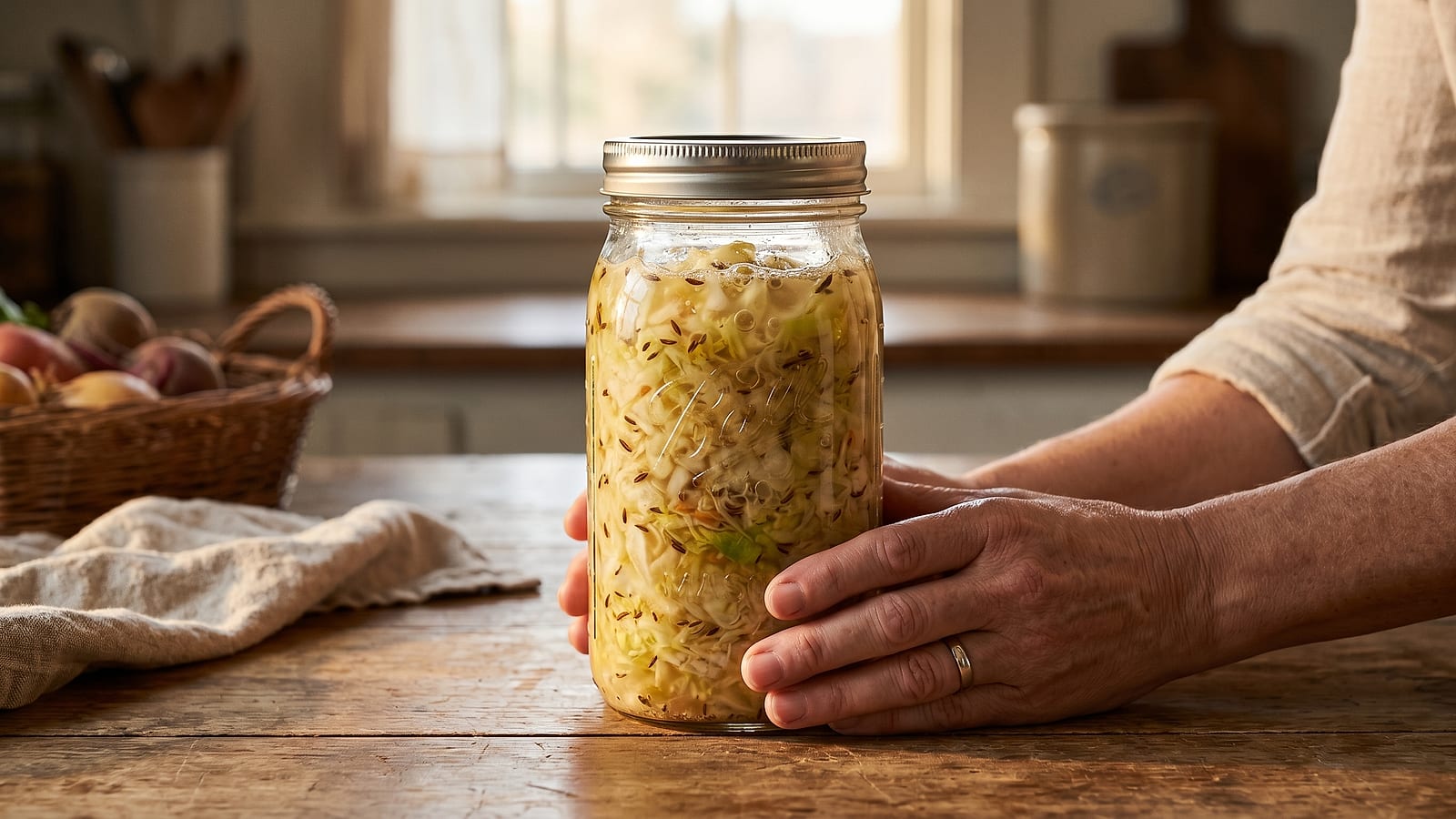
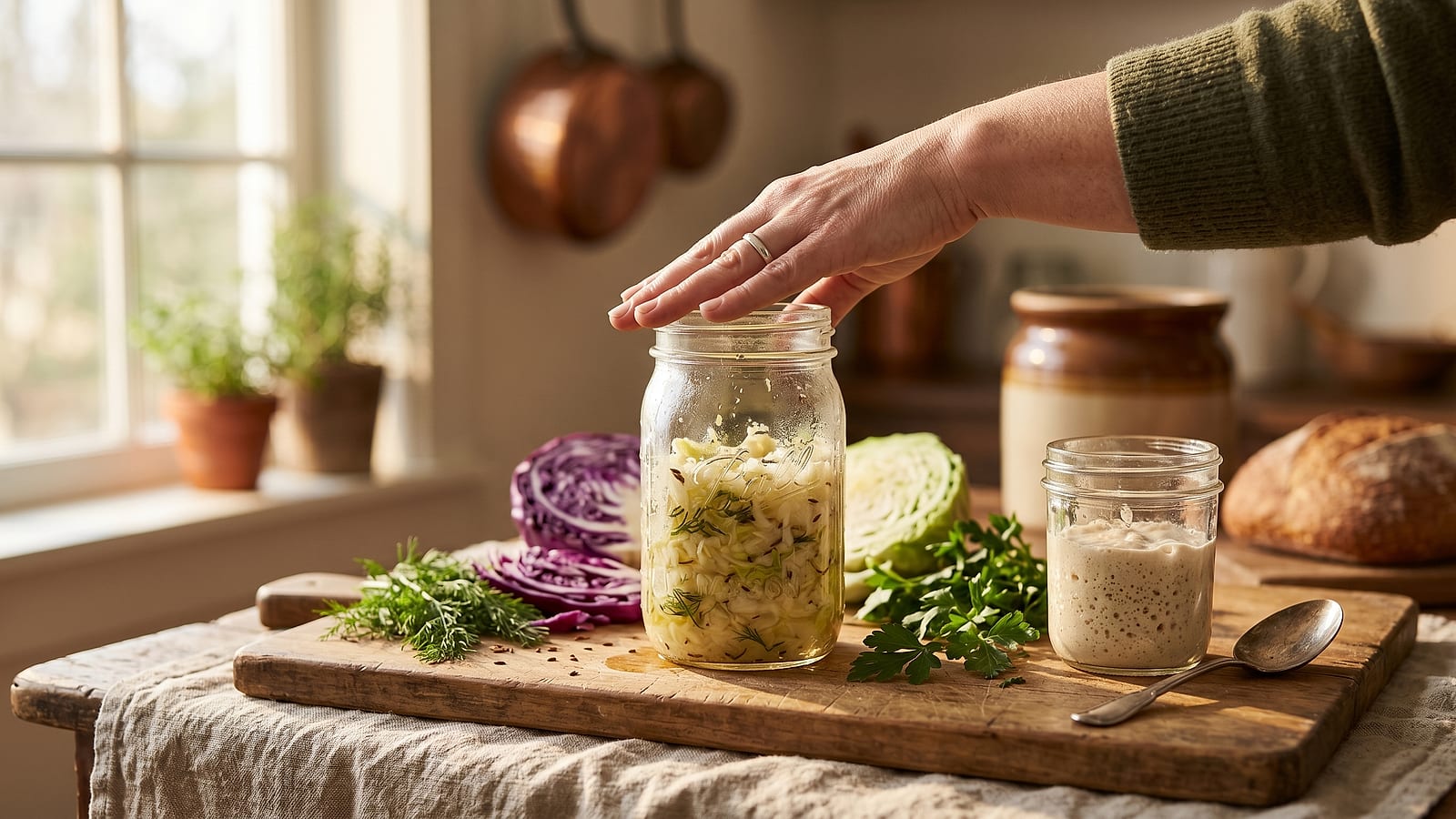
Begin with raw, unpasteurized fermented foods. Eat 60 grams (about 4 tablespoons) of traditional lacto-fermented sauerkraut or genuine, live-culture kimchi every day. Always eat it raw — never cooked or heated. Eat it within 30 minutes of waking, on an empty stomach, to give the live cultures the best chance of surviving the journey through your stomach acid.
Always look for fermented foods in the refrigerated section of your grocery store. If it is shelf-stable at room temperature, it has been pasteurized, which kills the beneficial live cultures you need.
Move to the concentrated natural form
After one week of daily fermented food intake, add a concentrated liquid ferment. Drink 120 milliliters (4 ounces) of traditional, unsweetened kefir or genuine kombucha. Take this dose mid-afternoon, at least 2 hours after lunch. This introduces a second wave of distinct microbial strains and postbiotic organic acids into your digestive tract.
Optional: the supplement form
If raw fermented foods are unavailable, choose a high-quality, clinical-grade probiotic supplement. Look for a formula with at least 15 billion CFUs (colony-forming units — a measure of live bacteria) per capsule, with a documented blend of Lactobacillus and Bifidobacterium strains. Take one capsule daily with a cold, non-acidic beverage, 15 minutes before your first meal.
When NOT to do this
Fermented foods support health for most people. However, they are not right for everyone in every situation.
Avoid high doses of fermented foods if you have Small Intestinal Bacterial Overgrowth (SIBO), a severe histamine intolerance, or are taking immunosuppressive medications. The high concentration of active microbes and biogenic amines (naturally occurring compounds in fermented foods) can trigger bloating, headaches, or other adverse reactions in these sensitive groups.
Frequently Asked Questions
Why does the protocol mention 4 weeks if scientific studies show rapid changes in just a few days?
Studies like [30836671] show that your gut microbiome begins to adapt within days of eating fermented foods. However, those early rapid shifts are transient — meaning they are temporary. Building a stable, resilient microbial ecosystem takes longer. Approximately 4 weeks of consistent daily intake is needed to support lasting immune resilience and a stronger gut barrier.
Can I cook my sauerkraut or add it to hot soups without destroying the benefits?
Heating fermented foods above 115°F (46°C) will pasteurize them, killing the beneficial live cultures. However, you will still receive the postbiotics and heat-killed structural components, which may help support gut health — though direct evidence for immune function support in humans has not been established by this source. [38081933] To get the full benefit of both live strains and active postbiotics, always eat your ferments raw and cold.
How does traditional fermented rice like diyabath compare to modern grain-based probiotics?
Traditional diyabath uses a slow, overnight fermentation of cooked rice, which dramatically increases resistant starch and organic acids. [41735946] Modern grain-based probiotics are often highly processed and lack this complex, symbiotic food matrix. Traditional preparation methods naturally deliver both the prebiotic fuel and the live microorganisms together in a single, readily usable form.
What should I do if I miss a day of the protocol — do I need to restart from week one?
No, do not restart. The gut microbiome is highly dynamic. If you miss a day, simply pick up where you left off the next morning. Missing a single day will not erase your progress, because the structural changes and metabolic pathways built in prior weeks remain in place.
Is it necessary to take a probiotic supplement if I already eat raw kefir and kimchi daily?
Generally, no. One narrative review (a study that surveys existing research) suggests that fermented foods host distinct microbial populations and contain bioactive peptides and microbial metabolites that may interact with the gut microbiome — though no direct comparison to isolated probiotic supplements was made. [35406140] Supplements are a good alternative when you travel or cannot access raw ferments, but whole fermented foods remain the gold standard for long-term gut health.
Verified Sources
- Human Gut Microbiome Response Induced by Fermented Dairy Product Intake in Healthy Volunteers. — Nutrients, 2019 (PMID 30836671)
- Fermented Foods, Health and the Gut Microbiome. — Nutrients, 2022 (PMID 35406140)
- Traditional diyabath (fermented cooked rice) as a pre-breakfast meal versus none (breakfast only) in improving gut microbiome and nutritional, health and immune parameters of young women in Sri Lanka: study protocol for a controlled trial. — BMC complementary medicine and therapies, 2026 (PMID 41735946)
- Fermented foods and gastrointestinal health: underlying mechanisms. — Nature reviews. Gastroenterology & hepatology, 2024 (PMID 38081933)
- Fermented foods consumption, all-cause, and cause-specific mortality: a meta-analysis of prospective cohort studies. — Frontiers in nutrition, 2026 (PMID 41835372)
Bloated, tired, foggy, or fighting cravings?
Get The Gut Reset free — a science-backed guide to go from “off” to clear, light and energized. Drop your email and we’ll send it straight to your inbox.
No spam. Unsubscribe anytime. Educational content, not medical advice.