For 50 years they called butter the villain and sold you the oil that may be quietly inflaming your cells
For fifty years, health guidelines called butter the dietary villain. Families were told to replace traditional fats with industrial seed oils. That shift promised better heart health. Instead, it quietly created a problem at the cellular level.
If you have spent years cooking with corn, canola, or soybean oil, you may have unknowingly changed the very structure of your cells. By the end of this article, you will understand how these oils affect your cell membranes. You will also get a clear, four-week plan to rebuild those membranes using stable, traditional fats — with exact daily amounts and safe cooking temperatures.
Why This Matters Today
Today’s kitchens are full of refined seed oils — canola, soybean, corn, and cottonseed. They are marketed as heart-healthy alternatives to animal fats. Yet rates of heart disease, metabolic disorders, and chronic inflammation have kept rising.
Scientists are now taking a second look at the dietary advice of the late 20th century. Recent narrative reviews (broad overviews of existing research) note that while eating too much saturated fat has historically been linked to higher cholesterol and a greater risk of insulin resistance [PMID: 39820582], replacing stable traditional fats with highly unstable vegetable oils has created a different problem. That problem comes down to chemistry. The fats found in industrial seed oils are structurally different from the fats our bodies need to build and maintain cells [PMID: 39657632].
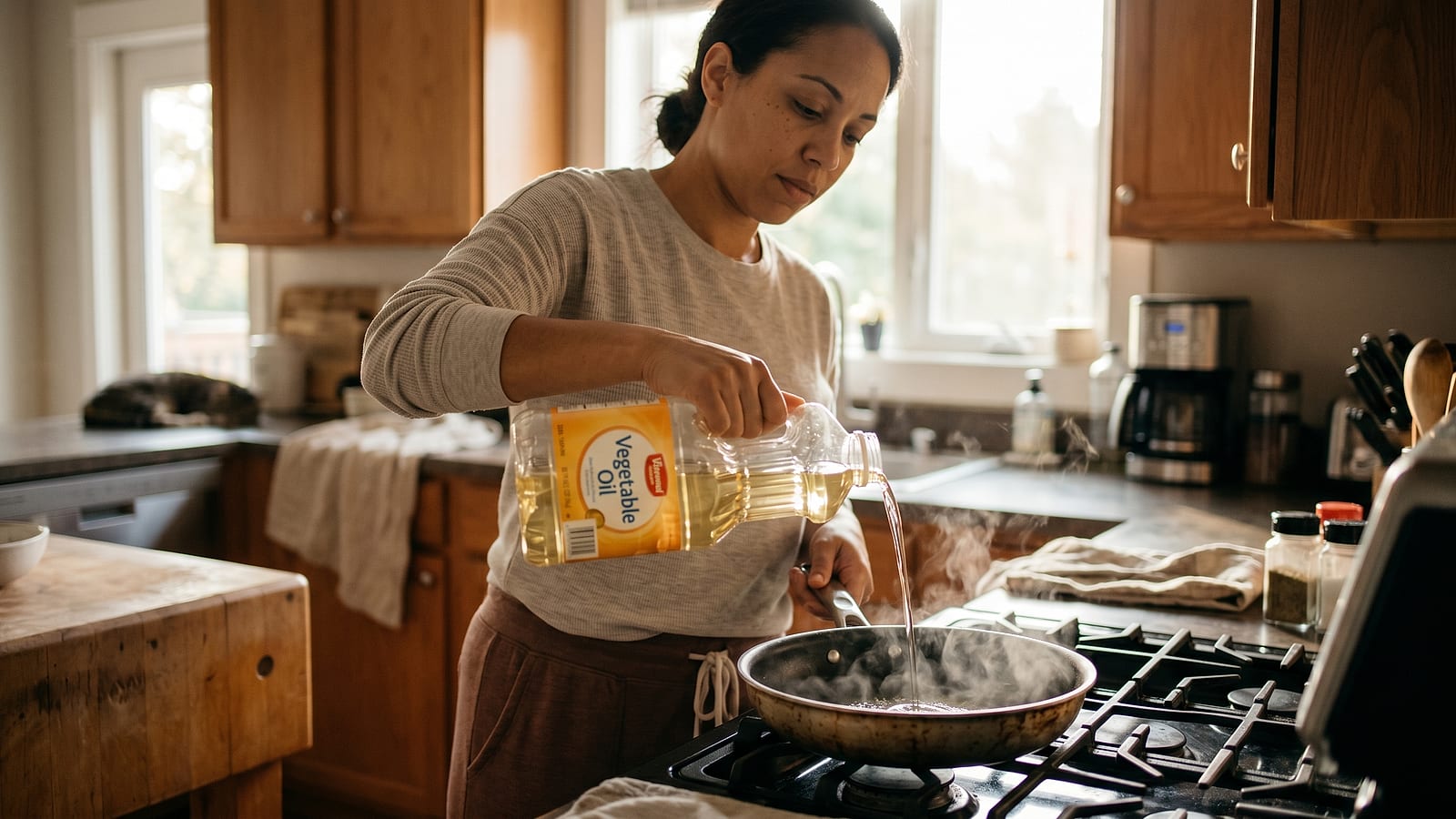
When these oils are heated — during factory processing or home cooking — they break down and form harmful byproducts. Those byproducts can be absorbed into our tissues. Today, the average person gets up to 20 percent of their daily calories from oils that did not exist in the human diet a century ago. That is a major shift in our nutritional foundation. To understand why it matters, we need to look at what happens at the outer edge of every cell in your body.
The Science Behind It
Every cell in your body is wrapped in a thin, flexible layer called a lipid bilayer (a two-layer membrane made of fat molecules). This membrane is not a fixed wall. It is a living, fluid structure built from the fats you eat. A 2017 narrative review found evidence suggesting that the types of dietary fats you eat may change the fat makeup of cell membranes in tissues that respond to insulin, which could affect metabolic health — but the review also noted that strong clinical evidence on these effects is still limited [PMID: 28428072].
When your diet is heavy in processed seed oils, your cell membranes are forced to use unstable polyunsaturated fatty acids (PUFAs — fats with many chemically weak points) instead of the stable fats your body prefers for building structure. This matters because of a key chemical difference. Saturated fats have no double bonds in their chemical structure. That makes them very resistant to heat and oxygen. PUFAs, by contrast, have many double bonds. Those weak points make them vulnerable to a damaging process called lipid peroxidation (a chain reaction where oxygen attacks and breaks down fat molecules).
When PUFAs are exposed to heat — in a factory refinery or your home pan — those weak bonds break. The result is toxic compounds called aldehydes. These do not simply pass through your body. They can be absorbed into cell membranes, where they reduce flexibility and interfere with the proteins embedded in those membranes. Those proteins include insulin receptors and nutrient transport channels — both critical to your health.

Lab studies point to a specific mechanism here. One study using cell cultures and a mouse model found that exposing retinal pigment epithelial cells (light-sensing cells at the back of the eye) to vegetable oils changed the physical and chemical properties of their membranes — specifically increasing membrane fluidity by up to 47% and altering their omega-3 PUFA content. No cell death was observed in this lab and animal study [PMID: 24144052]. When membranes lose their normal structure, cells can become less responsive to hormonal signals like insulin. Over time, this may contribute to insulin resistance, poor metabolic function, and low-grade, ongoing inflammation in tissues.
Traditional fats — such as grass-fed butter, ghee, and virgin coconut oil — provide stable saturated and monounsaturated fats that resist this kind of breakdown. One review of plant lipid research explains why this matters: while plant seeds can store over 450 structurally varied “unusual” fatty acids, the membranes of living cells are limited to mostly 16–18 carbon chains with zero to three double bonds. This reflects the strict structural requirements that cell membranes must meet to function properly [PMID: 39657632]. By replacing oxidized industrial oils with stable traditional fats, you give your body the right building blocks to support and maintain healthy cell membranes over time.
The Complete Protocol
Start with the food source
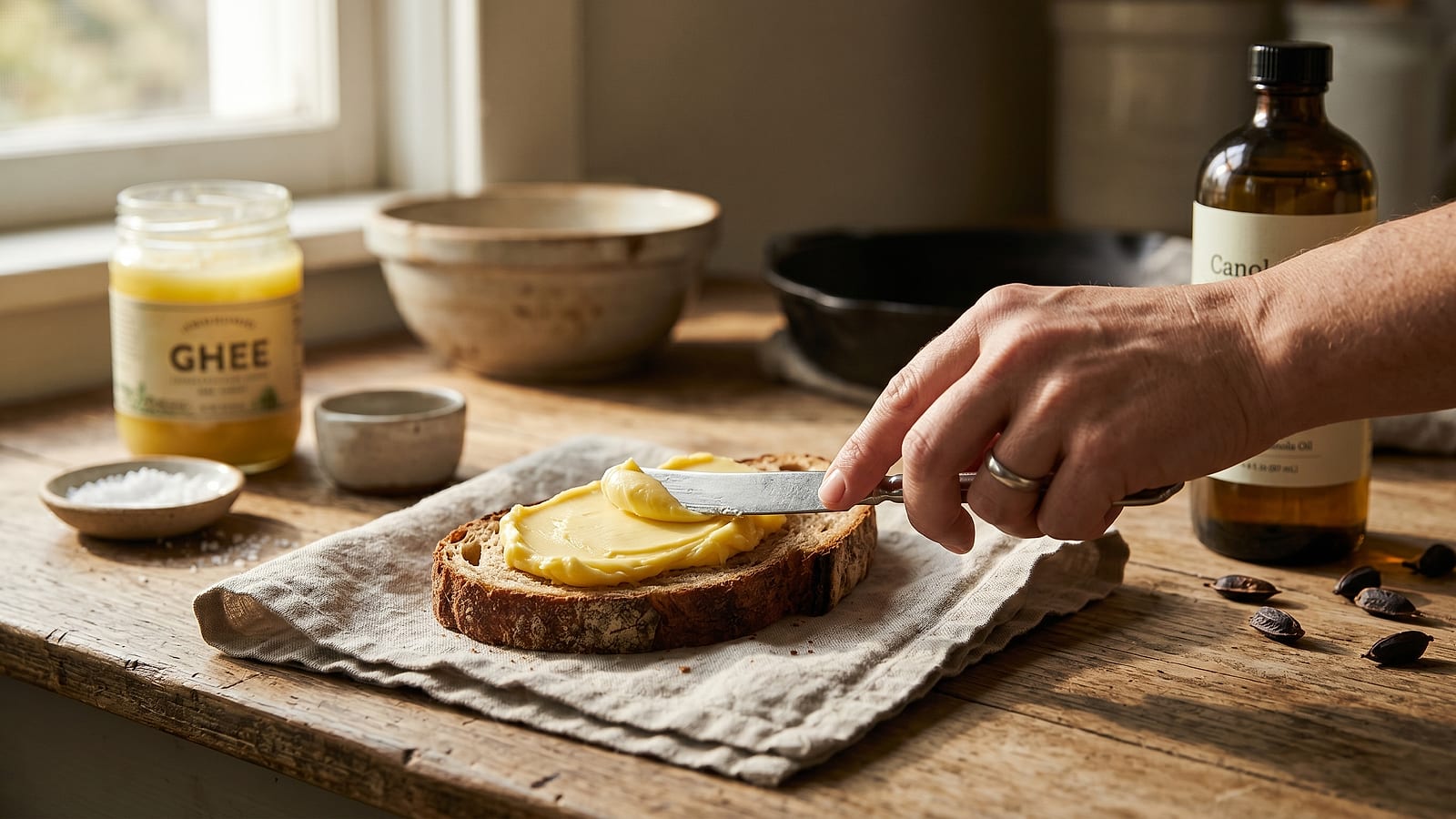
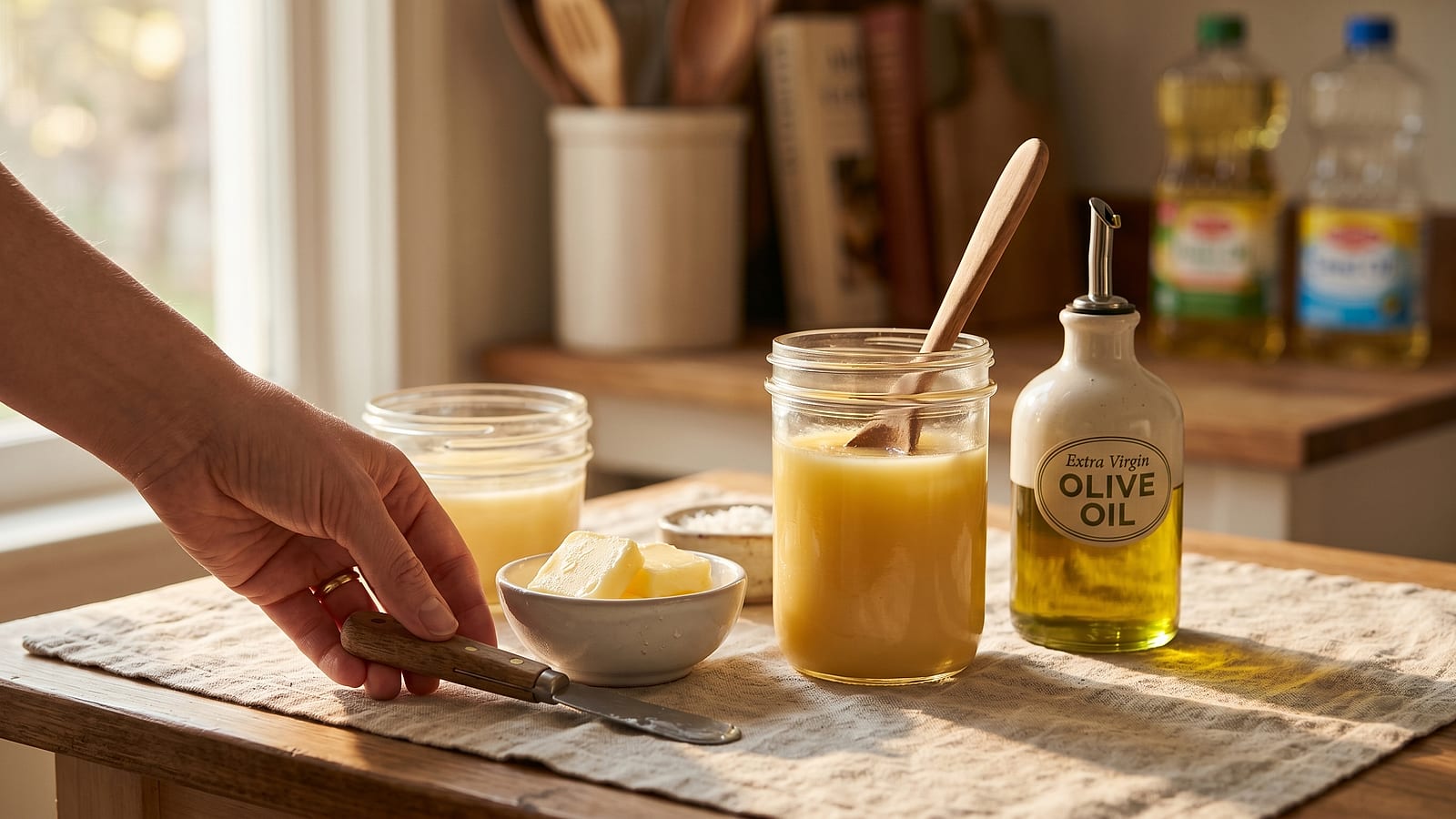
- Grass-Fed Ghee (Clarified Butter): Take 1 tablespoon (15 ml) daily. Use it as your main cooking fat for pan-frying, roasting, or sautéing. Its high smoke point of 485°F (250°C) means it stays stable under heat and does not break down into harmful compounds.
- Cold-Pressed Extra Virgin Olive Oil: Take 2 tablespoons (30 ml) daily. Do not heat this oil. Instead, drizzle it raw over cooked vegetables or proteins just before serving. This preserves its delicate antioxidant compounds called polyphenols.
Move to the concentrated natural form
- Pure Virgin Coconut Oil: Take 15 ml (1 tablespoon) daily, within 30 minutes of waking, on an empty stomach. Coconut oil is rich in medium-chain triglycerides (MCTs — a type of fat the body absorbs and uses for energy quickly). MCTs bypass the normal fat-digestion pathway, so they reach your cells faster and do not require heavy bile production to process.
Optional: the supplement form
- Cold-Pressed Macadamia Nut Oil Capsules: Choose a supplement standardized to contain at least 18% palmitoleic acid (omega-7, a monounsaturated fat linked to membrane health). Take one 1,000 mg softgel twice daily with your two largest fat-containing meals. This timing helps your body absorb the fat and may support healthy membrane structure.
When NOT to do this
Contraindications: Do not follow a high saturated fat protocol if you have been diagnosed with Familial Hypercholesterolemia (an inherited condition that causes very high cholesterol) or carry the APOE4 gene variant. In these cases, saturated fat can cause an unusually large rise in ApoB and LDL cholesterol levels [PMID: 39820582]. Also avoid therapeutic doses of coconut oil or ghee if you have active gallbladder disease or a blocked bile duct.
Pro-Tip: To get the most from this 4-week protocol, remove all processed foods containing canola, corn, or soybean oil from your pantry. Keeping those oils out of your diet prevents them from competing with the healthier fats you are trying to build into your cell membranes.
Frequently Asked Questions
Can I combine this ancestral fat protocol with an intermittent fasting schedule?
Yes. Taking the 15 ml of virgin coconut oil during your fasting window can boost ketone production (the process where your body burns fat for fuel instead of sugar). It should not significantly disrupt your fast, as long as your goal is cellular repair rather than strict calorie restriction.
What if I accidentally consume seed oils at a restaurant — do I need to restart the entire 4-week protocol?
Do not restart. One exposure will not undo your progress. Simply pick up where you left off. To help counter the oxidative stress from that meal, take 1,000 mg of a high-quality vitamin E (mixed tocopherols — a family of antioxidant compounds) with your next meal. This can help neutralize the unstable molecules produced when seed oils break down.
How does cold-pressed avocado oil compare to extra virgin olive oil for membrane health?
Cold-pressed avocado oil is an excellent alternative. Both oils are rich in monounsaturated oleic acid, which supports healthy membrane structure [PMID: 28428072]. However, avocado oil has a higher smoke point (up to 500°F/260°C), making it a safer choice than olive oil when cooking over medium heat.
Why focus on 4 weeks if red blood cells take 120 days to fully regenerate?
Red blood cells do take about 120 days to fully turn over. But other tissues — like the lining of your gut and liver cells — regenerate much faster, often within 3 to 5 days. Those fast-renewing tissues begin incorporating healthier fats relatively quickly, which is why you may notice metabolic and digestive changes within the 4-week window.
Is the macadamia nut oil supplement truly necessary if I already eat whole macadamia nuts daily?
The supplement is not strictly necessary if you eat 30 grams (about a handful) of raw, unsalted macadamia nuts every day. However, the cold-pressed capsule delivers a concentrated, standardized dose of palmitoleic acid without the fiber and protein. That makes it a better option for people with sensitive digestive systems.
Verified Sources
- Towards rational control of seed oil composition: dissecting cellular organization and flux control of lipid metabolism. — Plant physiology, 2025 (PMID 39657632)
- Are Seed Oils the Culprit in Cardiometabolic and Chronic Diseases? A Narrative Review. — Nutrition reviews, 2025 (PMID 39820582)
- Membrane lipid alterations in the metabolic syndrome and the role of dietary oils. — Biochimica et biophysica acta. Biomembranes, 2017 (PMID 28428072)
- Effects of vegetable oils on biochemical and biophysical properties of membrane retinal pigment epithelium cells. — Canadian journal of physiology and pharmacology, 2013 (PMID 24144052)
Bloated, tired, foggy, or fighting cravings?
Get The Gut Reset free — a science-backed guide to go from “off” to clear, light and energized. Drop your email and we’ll send it straight to your inbox.
No spam. Unsubscribe anytime. Educational content, not medical advice.