Your deep aches are not aging — your fascia has densified and turned inflamed, and almost no doctor checks it
Many people live with a deep, relentless ache in their muscles and joints. Well-meaning doctors often say this stiffness is simply part of getting older. But what if the real source of that daily pain is not your joints or muscles at all?
Recent imaging research points to the fascia — a vast, web-like tissue that wraps around your muscles and organs. This tissue can become thickened, scarred, and chronically inflamed. That process may drive persistent pain that standard X-rays completely miss. By the end of this article, you will understand the biology behind this thickening and what researchers have studied to address it.
Why This Matters Today
Millions of adults accept daily stiffness as a permanent part of life. Many do not realize their fascial system may have slowly changed from a fluid, slippery network into a dense, restrictive one. Standard medical tests focus almost entirely on bone damage or muscle tears — and routinely overlook the connective tissue that controls how freely you move.
This gap may help explain why common pain treatments often give only short-term relief. Research suggests that targeted natural approaches may help address the underlying inflammation that breaks down connective tissue. A review of curcumin (the active compound in turmeric) and boswellic acids (from the boswellia tree) found these plant extracts were linked to pain relief in osteoarthritis and other inflammatory conditions. The authors also suggested they may offer an alternative to standard anti-inflammatory drugs [PMID: 36171802]. To understand how, we need to look at what is happening inside the tissue itself.

The Science Behind It
The fascia is a continuous, three-dimensional web of connective tissue. It is made mainly of collagen fibers, elastin, and a fluid-rich surrounding material called the extracellular matrix (the gel-like substance between your cells). In a healthy state, cells called fibroblasts produce a slippery substance called hyaluronan. Hyaluronan acts like a molecular lubricant, letting muscles and organs glide smoothly past each other.
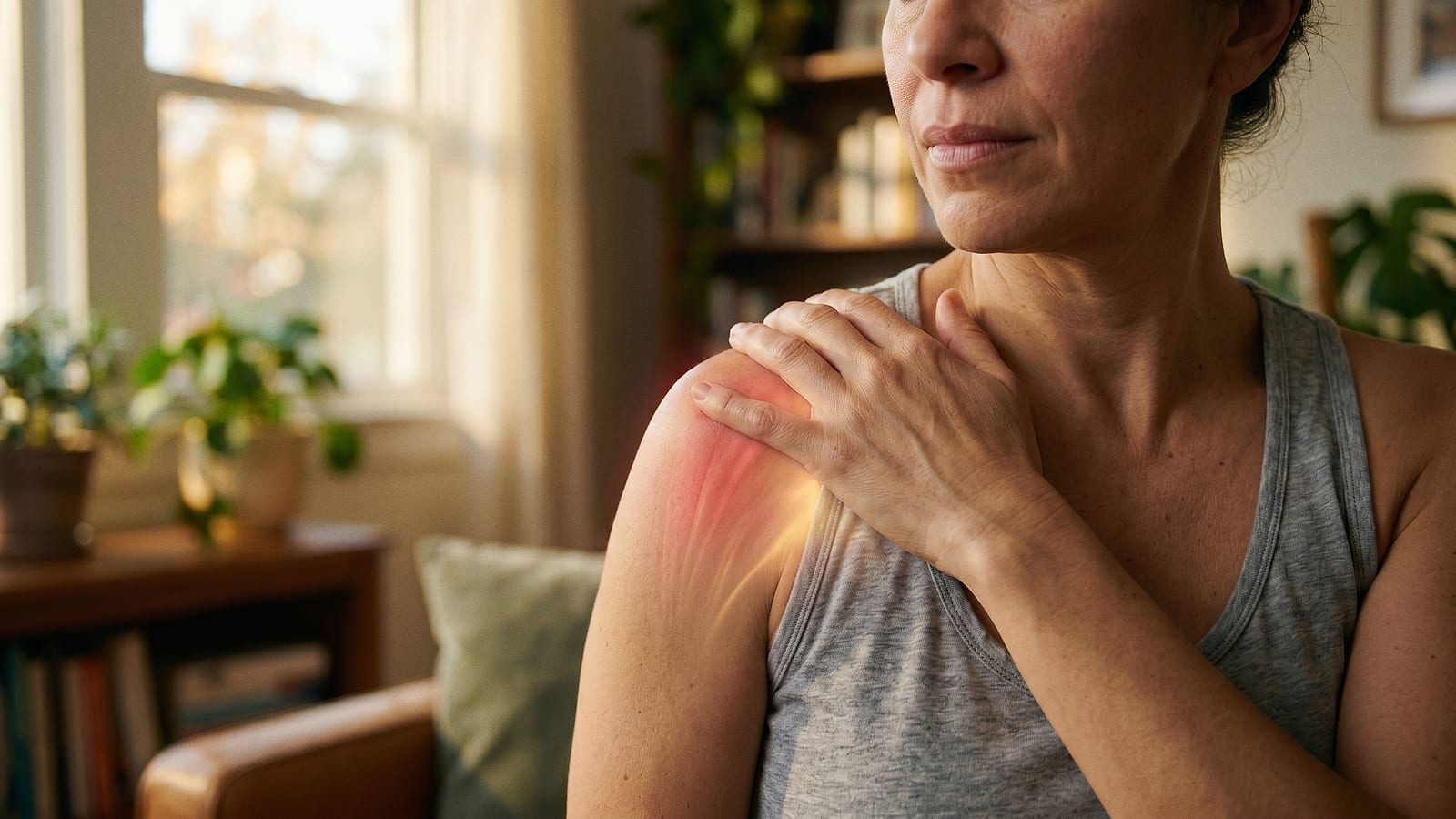
When the body faces chronic stress, poor posture, or ongoing inflammation, fibroblasts can change their behavior. They may overproduce dense, disorganized collagen while the hyaluronan becomes thick and sticky. This process — called densification — can turn once-flexible tissue into a tight casing that squeezes nearby nerves and blood vessels, sending persistent pain signals.
Researchers believe specific inflammation pathways drive this thickening. When fascial tissue is restricted, it can become starved of oxygen. That may trigger the release of pro-inflammatory enzymes and signaling molecules. One key pathway is the 5-lipoxygenase (5-LOX) pathway, which produces compounds called leukotrienes that make tissue more sensitive to pain. Standard over-the-counter anti-inflammatory drugs (NSAIDs) mainly block a different pathway called cyclooxygenase (COX). In lab studies, curcumin was found to block 5-LOX activity in rat immune cells, as well as another enzyme called 12-lipoxygenase and COX activity in human platelets. It also acted as an antioxidant in a cell-based test [PMID: 8510458]. In the same lab research, boswellic acids were found to specifically block leukotriene production through the 5-LOX pathway — without affecting 12-lipoxygenase or COX — suggesting they work by a different blocking mechanism [PMID: 8510458].
By addressing both the structural tightness and the chemical inflammation, evidence suggests these compounds may help support connective tissue health. A review found that lab data show both curcumin and boswellic acids influence gene activity controlled by a protein called NF-κB (a master switch for inflammation). The review found that activity in several inflammation pathways — including NF-κB, the 5-LOX pathway, and the COX pathway — as well as pathways involved in tissue breakdown, were reduced by these compounds [PMID: 36171802].
The same review found that the combination of boswellic acids and curcumin showed added benefit in lab models. In clinical trials (studies done in people), the combination suggested a synergistic effect — meaning the two compounds together worked better than either alone — for managing osteoarthritis pain [PMID: 36171802]. The authors also note that studying how these compounds work in the body is difficult because both are poorly absorbed [PMID: 36171802].
The Complete Protocol
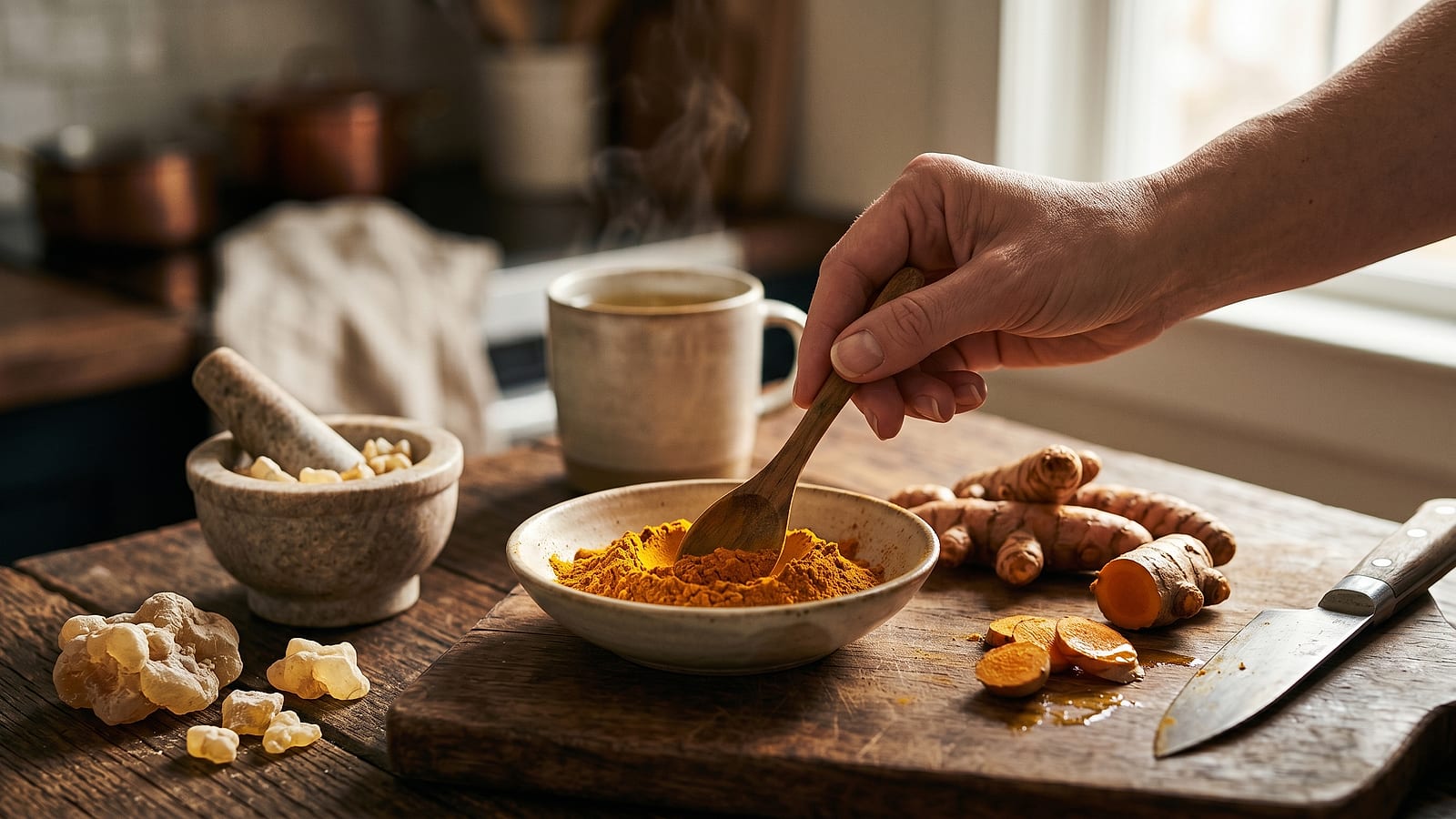
Start with the food source
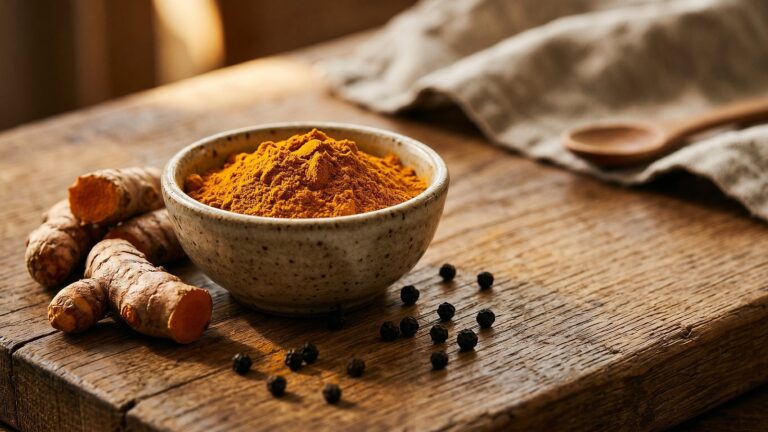
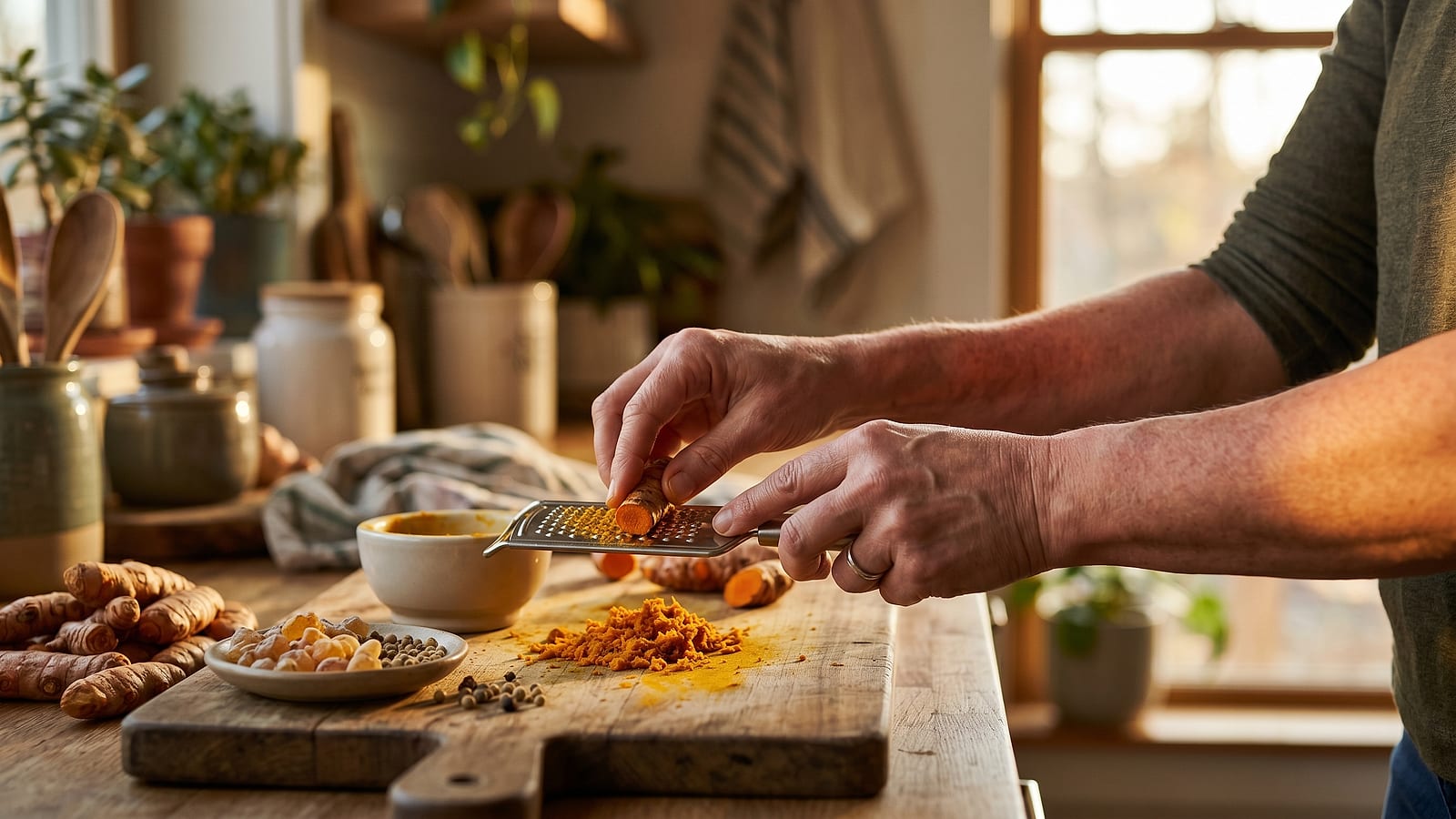
- Fresh Turmeric Root: Using fresh turmeric root as a daily food source is a traditional way to get curcuminoids into your diet. To prepare it, finely grate the fresh root and steep it in hot water for several minutes to make an infusion. The best amount and timing for absorption have not been established in the clinical research reviewed here. Ask a qualified health professional for personal guidance.
- Black Pepper and a Fat Source: Combining turmeric with black pepper — which contains a compound called piperine — and a source of dietary fat is a widely recommended approach. The goal is to support absorption of curcuminoids, since poor absorption is a recognized challenge with these compounds [PMID: 36171802]. Specific amounts and timing for this combination have not been established in the sources reviewed here.
Move to the concentrated natural form
- Boswellia Serrata Extract: Boswellia serrata is a tree whose gum resin contains boswellic acids — the active compounds studied for their ability to calm inflammation. These have been studied in lab settings and in clinical trials for osteoarthritis [PMID: 8510458, PMID: 36171802]. Specific doses, timing, and product forms for general musculoskeletal use are not established in the sources reviewed here. Ask a qualified health professional for personal dosing guidance.
Optional: the supplement form
- Standardized Curcumin & Boswellia Complex: Standardized supplements combining curcumin and boswellic acid extracts have been used in clinical trials for osteoarthritis [PMID: 36171802]. Poor absorption remains a recognized challenge for both compounds [PMID: 36171802]. Specific doses for general musculoskeletal use are not established in the sources reviewed here. Ask a qualified health professional for personal guidance. Taking fat-soluble supplements with a meal that contains fat is a general practice to support absorption.
When NOT to do this
Do not start this high-dose botanical protocol if you currently take prescription blood thinners such as Warfarin or Clopidogrel. Both curcumin and boswellia have mild blood-thinning effects that can raise your bleeding risk. Also stop this protocol at least 14 days before any planned surgery. Avoid use if you are pregnant, nursing, or have active gallstones or a blocked bile duct.
Frequently Asked Questions
Can I combine this protocol with foam rolling or myofascial release?
Combining these plant-based compounds with physical myofascial release (hands-on or foam-roller work on soft tissue) is an approach some practitioners recommend. The proposed idea is that the botanical compounds may help address cellular inflammation while foam rolling or manual therapy physically works on the tissue. There is no established evidence in the sources reviewed here on the best timing of physical therapy relative to supplement use. Ask a qualified health professional for personal guidance.
What should I do if I miss a dose of the fresh turmeric or liquid extract?
If you miss a dose, do not double up at your next scheduled time. Simply pick up where you left off. Taking a double dose can sometimes cause mild digestive upset. Consistency over time is generally considered important when using botanical supplements, though specific claims about blood levels and tissue remodeling timelines are not established in the sources reviewed here.
Why does the protocol recommend taking the fresh tea on an empty stomach but the supplement with food?
Taking fat-soluble supplement formulations with a fat-containing meal is a general practice meant to support absorption, since poor absorption is a recognized challenge for curcuminoids [PMID: 36171802]. The specific claim that fresh turmeric tea absorbs better on an empty stomach has not been established in the sources reviewed here. Direct timing comparisons between fresh turmeric tea and standardized capsules have not been studied in the literature reviewed here.
How does this natural dual-herb approach compare to taking daily over-the-counter NSAIDs?
Standard over-the-counter NSAIDs (non-steroidal anti-inflammatory drugs, such as ibuprofen) work mainly by blocking the COX pathway. In lab studies, curcumin blocked both COX and 5-LOX enzyme activity, while boswellic acids selectively blocked the 5-LOX pathway without affecting COX [PMID: 8510458]. A review suggests these botanical combinations may offer an alternative to NSAIDs for some patients [PMID: 36171802]. Direct head-to-head clinical comparisons between this botanical combination and standard NSAIDs specifically for fascial pain have not been established in the sources reviewed here.
Is it necessary to continue the fresh food sources if I transition entirely to the standardized supplement?
This comes down to personal preference and convenience. Standardized extracts are formulated to deliver consistent concentrations of active compounds, and clinical trials have used standardized formulations [PMID: 36171802]. Whether fresh turmeric food sources add meaningful benefit beyond a standardized supplement has not been directly compared in the sources reviewed here. Ask a qualified health professional for personal guidance.
Verified Sources
- Mechanism of antiinflammatory actions of curcumine and boswellic acids. — Journal of ethnopharmacology, 1993 (PMID 8510458)
- Comment on: Efficacy of Curcumin and Boswellia for knee osteoarthritis: Systematic review and meta-analysis. — Seminars in arthritis and rheumatism, 2019 (PMID 29735172)
- Potential complementary and/or synergistic effects of curcumin and boswellic acids for management of osteoarthritis. — Therapeutic advances in musculoskeletal disease, 2022 (PMID 36171802)
Bloated, tired, foggy, or fighting cravings?
Get The Gut Reset free — a science-backed guide to go from “off” to clear, light and energized. Drop your email and we’ll send it straight to your inbox.
No spam. Unsubscribe anytime. Educational content, not medical advice.