Your aching, swollen joints may be drowning in uric acid — and a small tart cherry flushes it out faster than you’d believe
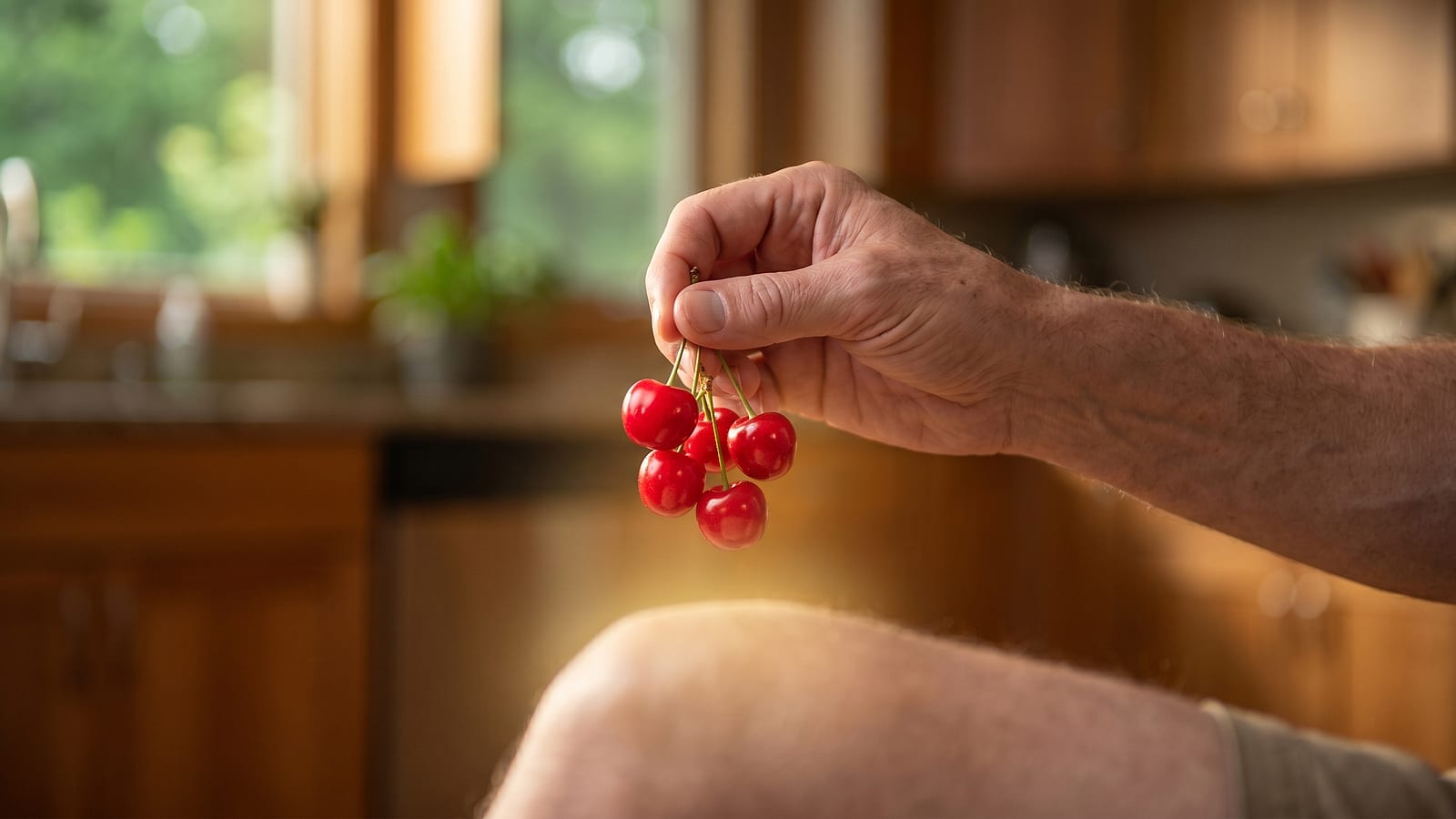
You wake up, step out of bed, and a sharp, burning pain shoots through your ankle. It feels like your joint is caught in a vice lined with crushed glass. That’s not just “wear and tear.” It’s a flood of tiny uric acid crystals inside your joint.
For years, people were told their only options were strong prescription drugs with serious side effects. But research has turned attention to the deep red pigments in Montmorency tart cherries as a possible dietary way to help manage uric acid. This article reviews what the current evidence says about tart cherry and uric acid, and outlines how tart cherry products have been used in clinical studies.
Why This Matters Today
Joint pain isn’t just an inconvenience. It can seriously affect your quality of life. Modern diets—loaded with high-fructose corn syrup and hidden purines (natural compounds that break down into uric acid)—are linked to high uric acid levels in many people.
A meta-analysis (a study that pools results from multiple trials) of four randomized controlled trials (the strongest kind of study) with 392 participants found that tart cherry intake was linked to a modest drop in uric acid in the blood compared with a control group. The authors noted, however, that results varied quite a bit across the four studies [PMID: 42242852]. The same paper used network pharmacology analysis (a method that maps how compounds interact with biological pathways) to suggest that anthocyanins (natural plant pigments) and other polyphenols (plant compounds) in tart cherry may act on pathways related to inflammation, oxidative stress, and metabolism [PMID: 42242852].
When sharp urate crystals build up in joints, they can trigger an immune response that causes pain and swelling. But how exactly might a stone fruit influence this process? Let’s look at what the research shows.

The Science Behind It
To understand why joints can ache from high uric acid, it helps to know about an enzyme (a protein that drives chemical reactions) called xanthine oxidase. This enzyme converts compounds called purines into uric acid in the body. When the body makes more uric acid than the kidneys can clear, tiny sodium urate crystals can form inside joints—often in the big toe, ankles, or knees—causing pain and inflammation.
Montmorency tart cherries are rich in plant pigments called anthocyanins. In laboratory tests on isolated enzymes, tart cherry extract slowed the activity of xanthine oxidase. It also slowed two other enzymes—cyclooxygenase-1 and cyclooxygenase-2—and an enzyme called lipoxygenase, all of which play a role in inflammation [PMID: 29478524]. The authors found that specific anthocyanins—cyanidin 3-rutinoside and cyanidin 3-glucoside—along with a compound called kaempferol, appeared to drive these effects [PMID: 29478524]. It is important to note that these findings come from lab tests on enzymes in a dish, not from human studies. Whether the same effects happen at realistic doses inside the human body still needs more research.

In a randomized controlled trial, taking Montmorency tart cherry—either as juice (240 ml) or as a powdered capsule (480 mg)—produced an average 8% drop in uric acid in the blood. The timing and length of that drop varied depending on the dose and form used [PMID: 33506357]. Importantly, the same trial found no significant change in a marker of inflammation called high-sensitivity C-reactive protein, and no significant change in the blood’s antioxidant capacity. In the study, tart cherry did not work better than a placebo for those broader measures—suggesting the effect was specific to uric acid rather than a general calming of inflammation [PMID: 33506357].
Looking at longer-term use: a three-month randomized, placebo-controlled trial of Montmorency cherry concentrate (30 mL twice daily) in middle-aged adults found no significant effect on blood vessel function or metabolic health markers between the tart cherry and placebo groups [PMID: 33922493]. A 12-week randomized pilot trial (a small early-stage study) of tart cherry juice (240 mL twice daily) in adults with metabolic syndrome (a cluster of conditions including high blood sugar, excess belly fat, and abnormal cholesterol) also reported results on heart and metabolic markers, but the study was small and results should be interpreted with caution [PMID: 32429737]. Overall, the available evidence suggests tart cherry supplements appear to be generally well-tolerated over these time periods, but evidence for broad heart and metabolic benefit remains limited.
General Guidance on Tart Cherry Use
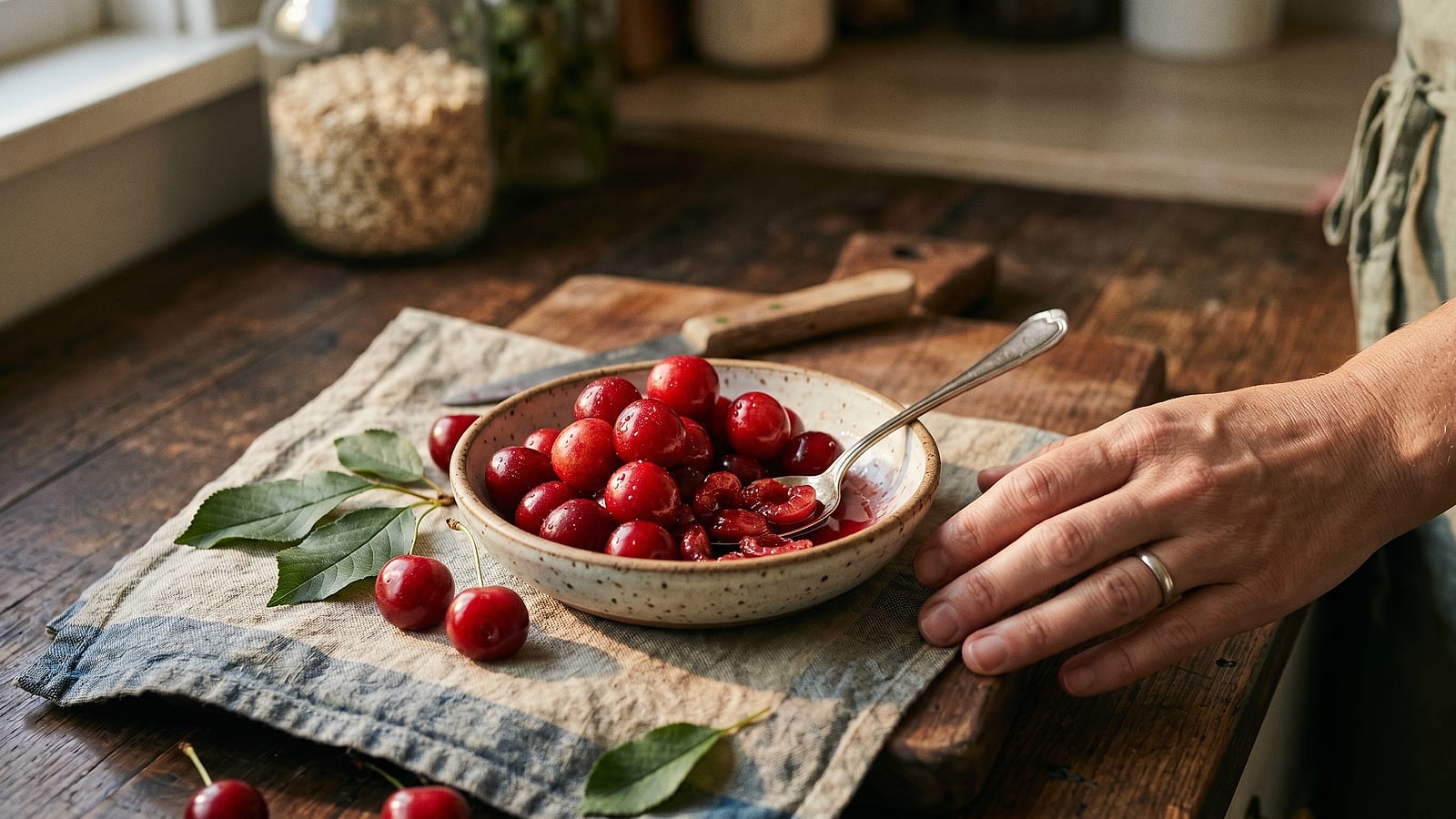
The following reflects the doses and forms used in published clinical research. It is not a personalized medical plan. Always talk to a qualified healthcare provider before changing your diet or starting a supplement.
Juice form
- Clinical trials have used about 240 milliliters (8 fluid ounces) of unsweetened 100% Montmorency tart cherry juice, taken once or twice daily [PMID: 33506357] [PMID: 32429737].
- Choosing a product with no added sugars is a good idea. Added fructose is linked to increased uric acid production.
Concentrated form
- A three-month trial used 30 mL of Montmorency tart cherry concentrate twice daily, mixed with water [PMID: 33922493].
- This form may be more practical for people who find drinking larger amounts of juice difficult.
Capsule/powder form
- One trial used 480 mg tart cherry powder capsules (one or two capsules daily) and found short-term reductions in blood uric acid levels [PMID: 33506357].
- When choosing a supplement, look for products that clearly state “Montmorency tart cherry” and list the amount of active compounds per serving. The research reviewed here has not established an ideal standardization level.
When NOT to use tart cherry supplements
Do not use tart cherry supplements without medical supervision if you have stage 4 or 5 chronic kidney disease. The potassium content may be a concern for kidneys that are not working well. If you currently take prescription blood thinners or uric-acid-lowering medications such as allopurinol, talk to your doctor before adding tart cherry products to your routine.
Frequently Asked Questions
Can I combine this with apple cider vinegar?
No clinical studies reviewed here have tested the combination of apple cider vinegar and tart cherry for uric acid management. If you choose to use apple cider vinegar, space it at least two hours apart from any prescription medications to reduce the chance of absorption interactions. Talk to your healthcare provider first.
What if I miss a day—do I need to restart?
Missing a single day is unlikely to require restarting. Simply pick up again at your next scheduled time. Do not take a double dose to make up for the missed one. Larger-than-usual amounts of cherry products may cause mild digestive upset because of their natural sorbitol (a type of sugar alcohol) content.
How does this compare to taking over-the-counter NSAIDs for joint pain?
NSAIDs (non-steroidal anti-inflammatory drugs, such as ibuprofen) and tart cherry work through different mechanisms and have not been directly compared in head-to-head clinical trials. NSAIDs block inflammatory enzymes and can provide faster short-term pain relief. Tart cherry is linked to modest reductions in blood uric acid in some trials [PMID: 42242852]. Neither approach should replace a proper medical evaluation and treatment for gout or other joint conditions. Talk to your doctor about the best option for your situation.
Does timing of intake matter?
The clinical trials reviewed here did not identify a specific best time of day to take tart cherry based on the body’s natural uric acid patterns. The trials used various schedules—once or twice daily, with or without food. Specific timing recommendations beyond what was tested in those studies are not supported by the evidence reviewed here.
Is the supplement form necessary if I eat fresh sweet cherries daily?
Montmorency tart cherries have a different polyphenol profile than sweet cherry varieties. The clinical research reviewed here focused specifically on Montmorency products. Whether sweet cherries produce the same effect on uric acid has not been established in the studies reviewed. The exact amount of sweet cherries needed to match the anthocyanin content of the studied Montmorency doses has not been determined in the sources reviewed here.
Verified Sources
- Acute Ingestion of Montmorency Tart Cherry Reduces Serum Uric Acid but Has no Impact on High Sensitivity C-Reactive Protein or Oxidative Capacity. — Plant foods for human nutrition (Dordrecht, Netherlands), 2021 (PMID 33506357)
- Tart cherry intake and serum uric acid: Meta-analysis of randomized controlled trials and evidence from network pharmacology. — Asia Pacific journal of clinical nutrition, 2026 (PMID 42242852)
- The inhibitory potential of Montmorency tart cherry on key enzymes relevant to type 2 diabetes and cardiovascular disease. — Food chemistry, 2018 (PMID 29478524)
- The Influence of Tart Cherry (Prunus cerasus, cv Montmorency) Concentrate Supplementation for 3 Months on Cardiometabolic Risk Factors in Middle-Aged Adults: A Randomised, Placebo-Controlled Trial. — Nutrients, 2021 (PMID 33922493)
- Effects of Montmorency Tart Cherry Juice Consumption on Cardiometabolic Biomarkers in Adults with Metabolic Syndrome: A Randomized Controlled Pilot Trial. — Journal of medicinal food, 2020 (PMID 32429737)
Bloated, tired, foggy, or fighting cravings?
Get The Gut Reset free — a science-backed guide to go from “off” to clear, light and energized. Drop your email and we’ll send it straight to your inbox.
No spam. Unsubscribe anytime. Educational content, not medical advice.