Tired of swallowing ibuprofen for your knees? The gentler plan that lets you need fewer painkillers
Every morning starts the same. Your knees protest on the first flight of stairs, you reach for the ibuprofen bottle by the sink, and a quiet worry follows you: how long can I keep taking this? You are not imagining that worry — daily anti-inflammatory painkillers (NSAIDs), taken for years, can wear on your stomach, kidneys, and heart.
So here is a fair, honest question, and a real plan to answer it: can turmeric’s active compound, curcumin, take over part of the job — gently enough that you need fewer pills? The research says yes, with limits. By the end you will know exactly how to use it, how to tell it is working, and how to combine it with your ibuprofen instead of gambling.

What curcumin actually did for knees
This is not wishful thinking. In a 2021 randomized, double-blind trial, 101 adults with knee osteoarthritis took a standardized curcumin extract (500 mg twice a day) or a placebo for 8 weeks. The curcumin group had significantly less knee pain and moved better on walking and standing tests [PMID: 35010916].
But the number that matters most for you is this: 37% of the curcumin group cut back their pain medication, versus only 13% on placebo [PMID: 35010916]. That is the whole point. Curcumin may not replace your painkiller outright — but it may let you reach for it far less often. And less NSAID over the years is exactly how you protect your stomach and kidneys.
NSAIDs vs curcumin — how each one works
Ibuprofen blocks an enzyme called COX that drives pain and swelling. It is fast and strong — but that same blocking is what irritates your stomach lining and stresses your kidneys over time.
Curcumin works further upstream. It calms the master inflammation switch inside your cells, called NF-kB, and related pathways [PMID: 40909997]. A large 2024 meta-analysis of 103 trials confirmed it reliably lowers C-reactive protein, a blood marker of inflammation [PMID: 39478418]. So it is genuinely anti-inflammatory — just gentler and slower than a drug. Think of ibuprofen as the fire extinguisher and curcumin as turning down the thermostat.
The honest catch — this decides everything
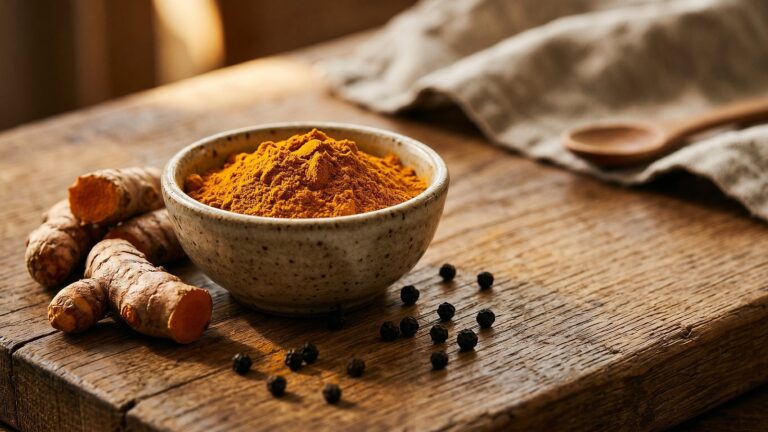
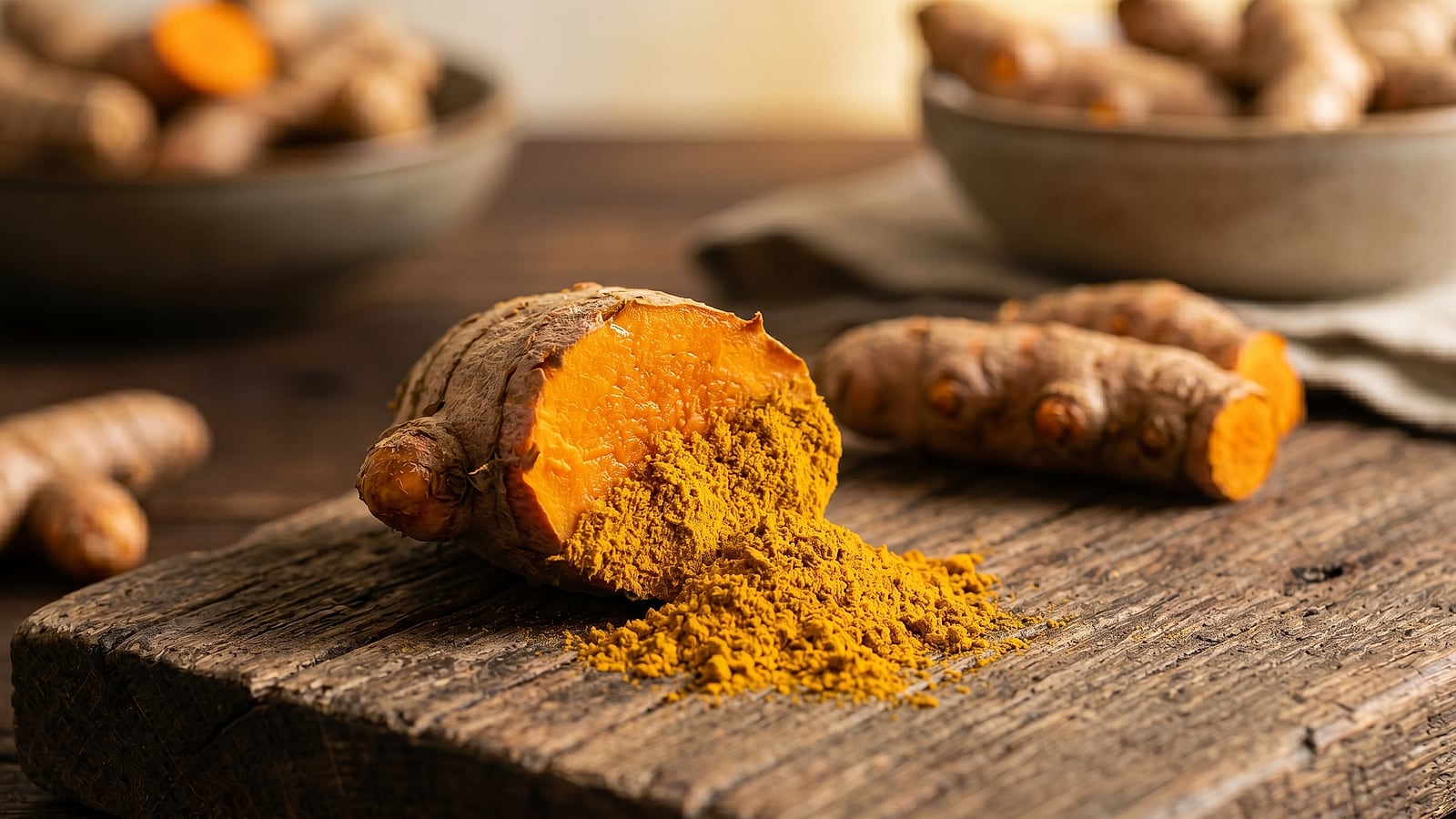
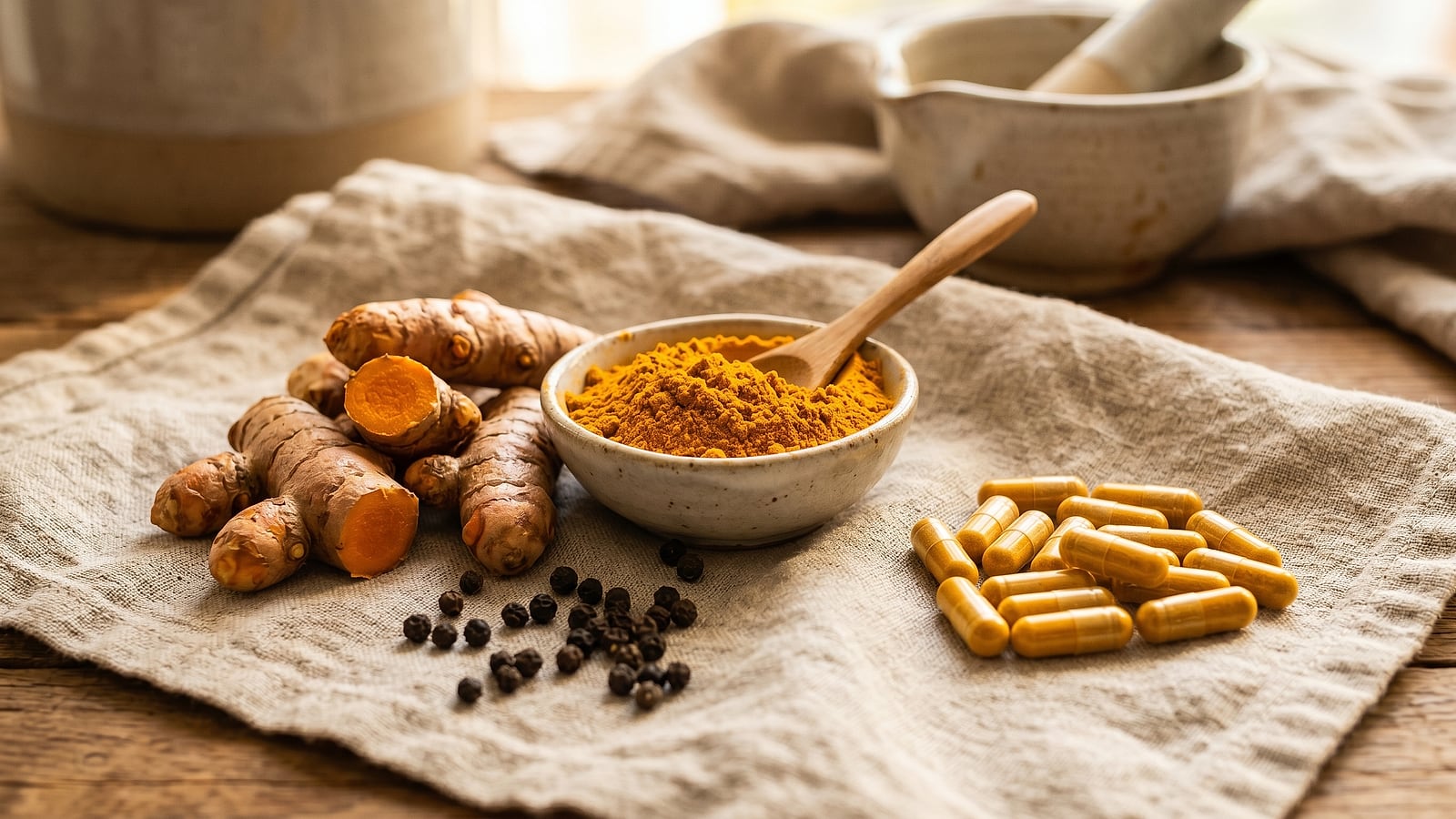
Two truths most articles skip. First, absorption: plain turmeric from your spice rack is barely absorbed — your gut blocks most of it [PMID: 40909997]. Sprinkling it on rice will do almost nothing. The trials used standardized extracts, and good products add black pepper (piperine) to boost absorption. Get this wrong and you waste your money. Second, the overall evidence quality is rated “relatively poor,” with many uncertainties — the knee-pain signal is one of the more solid ones, but it is not airtight [PMID: 40538540].
Your step-by-step plan
The smart move is not either/or — it is combining them well.
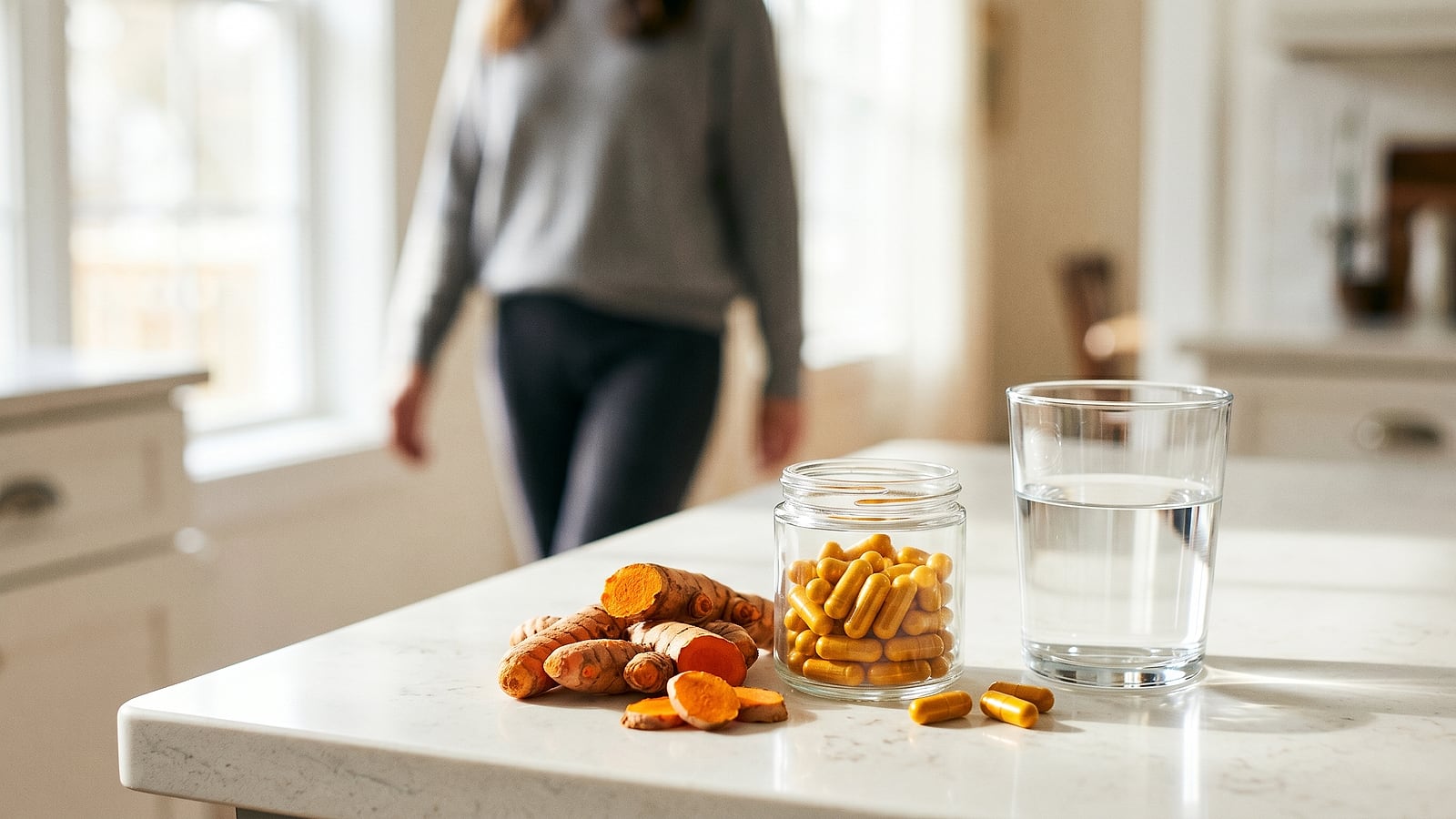
- Daily base: a standardized curcumin extract, about 500 mg twice a day, WITH piperine or in a high-absorption formula [PMID: 35010916].
- Keep ibuprofen for flares — the bad days, not every day.
- Give it 8 weeks. Curcumin builds slowly; do not judge it in a few days [PMID: 35010916].
- Support it with gentle movement and weight off the joint — curcumin works better as part of a plan, not alone.
How to know it is working
Track one simple thing: your weekly painkiller count. Keep a note of how many ibuprofen you take each week before you start, then again at weeks 4 and 8. If that number is dropping and your mornings feel easier, it is working — that is the exact win the trial measured [PMID: 35010916]. Also notice stair-climbing and how stiff the first ten minutes of your day feel.
What if it does not help
If after 8 weeks your pain and your pill count have not budged, it may not be your answer — and a low-absorption product is the usual culprit, so check that it had piperine before giving up. Talk to a doctor first if you take blood thinners (curcumin can thin blood mildly), have gallstones or bile-duct problems, or are pregnant. And never stop a prescribed medication on your own.
Where you could be in two months
Realistically: not a miracle, but a meaningful shift. In the trial, people had less pain, moved better, and over a third needed fewer painkillers [PMID: 35010916]. Picture that — climbing the stairs without the wince, reaching for the bottle a couple of times a week instead of every day, and knowing you are easing the long-term load on your stomach and kidneys. For a gentle, well-tolerated extract, that is a genuinely good place to land.
Frequently Asked Questions
Is turmeric the same as curcumin?
No. Curcumin is the active compound in turmeric, but only about 3% of the spice — and it is poorly absorbed. The trials used concentrated, standardized extracts, usually with black pepper, not kitchen turmeric [PMID: 40909997].
Can curcumin replace my ibuprofen?
Not exactly. It is gentler and slower, but a trial showed it let 37% of people cut their pain meds [PMID: 35010916]. Use it as a daily base and keep NSAIDs for flares — and never stop a prescribed drug without your doctor.
How long until it works?
The knee trial ran 8 weeks [PMID: 35010916]. Give a standardized, high-absorption extract about two months, and track your weekly painkiller count to see the change.
Verified Sources
- An Investigation into the Effects of a Curcumin Extract (Curcugen) on Osteoarthritis Pain of the Knee: A Randomised, Double-Blind, Placebo-Controlled Study. — Nutrients, 2021 (PMID 35010916)
- Curcumin on Human Health: A Comprehensive Systematic Review and Meta-Analysis of 103 Randomized Controlled Trials. — Phytotherapy research, 2024 (PMID 39478418)
- Regulation mechanism of curcumin mediated inflammatory pathway and its clinical application: a review. — Frontiers in pharmacology, 2025 (PMID 40909997)
- Curcumin and multiple health outcomes: critical umbrella review of intervention meta-analyses. — Frontiers in pharmacology, 2025 (PMID 40538540)
Crashing every afternoon? Tired but wired?
Get The 3 PM Crash Killer free — a science-backed guide to steady, all-day energy without more caffeine. Drop your email and we’ll send it straight to your inbox.
No spam. Unsubscribe anytime. Educational content, not medical advice.
professional before changing your diet, supplements, or treatment. These statements have not been
evaluated by the Food and Drug Administration and are not intended to diagnose, treat, cure, or prevent any disease.