
The root African healers used for crippling back pain holds up in modern trials — and it works where painkillers just mask the problem
African healers used this root for severe back pain for centuries — and modern clinical trials back it up. If you’ve spent years taking ibuprofen just to get through a morning walk, you know the cycle well. The pain eases for a while, then comes roaring back. Using NSAIDs (non-steroidal anti-inflammatory drugs, like ibuprofen) long-term carries well-documented risks to the stomach lining.
By the end of this article, you’ll have a clear picture of the evidence behind a desert root that researchers have studied for its ability to help calm the inflammation linked to joint pain.
Why This Matters Today
For decades, the standard medical answer for a bad lower back was simple: numb it. Anti-inflammatory drugs were widely prescribed, even though they treat symptoms rather than the underlying joint problem. Long-term use of over-the-counter pills can lead to stomach ulcers and rebound pain.
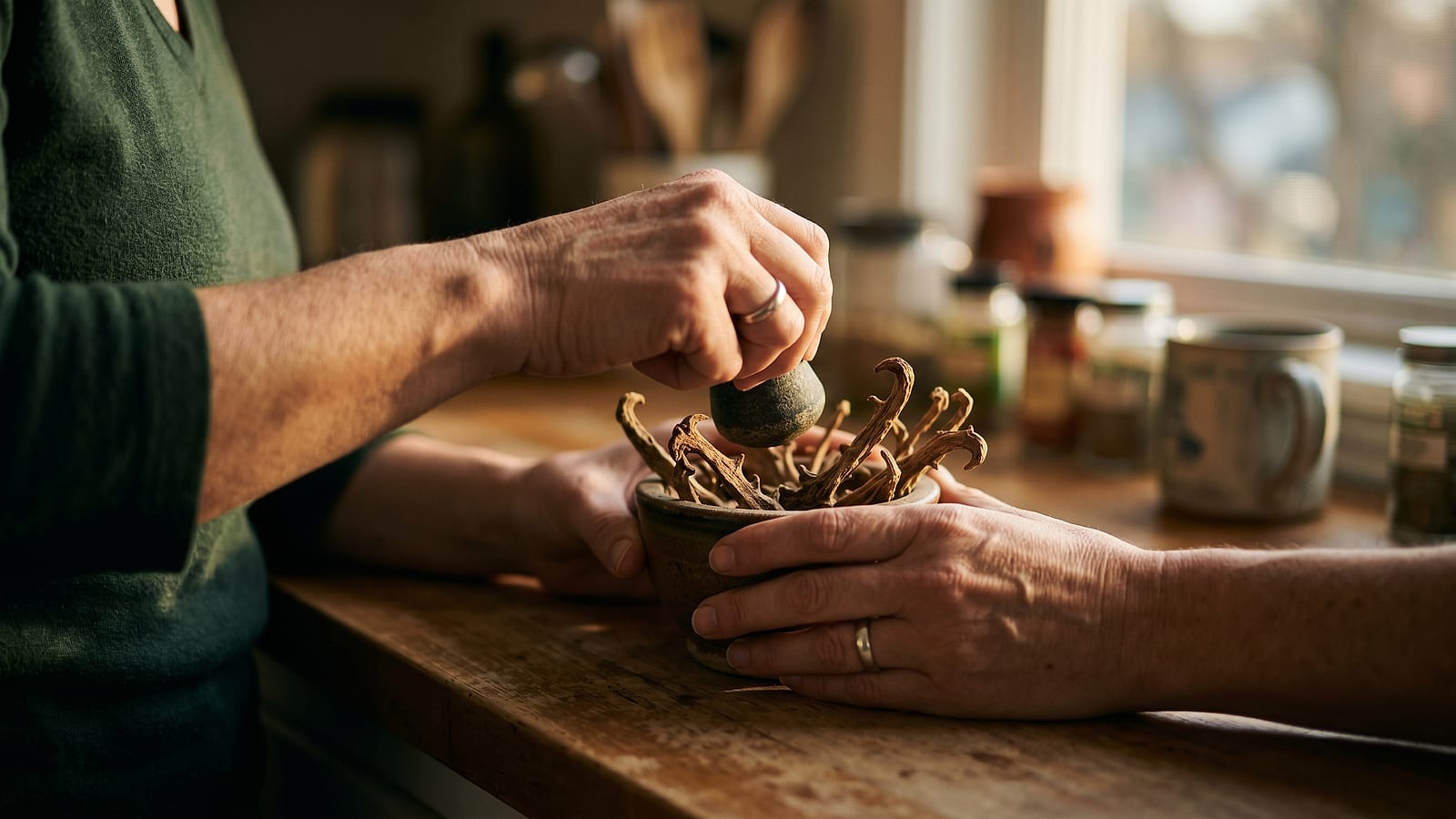
Researchers have also studied Harpagophytum procumbens, commonly known as devil’s claw. This plant has been used as a traditional remedy in the Kalahari region of southern Africa for centuries, including for arthritis, pain, and fever [PMID: 22940241]. This isn’t just folklore.
Systematic reviews (studies that pool and analyze results from many trials) have found moderate evidence that standardized devil’s claw preparations are linked to meaningful relief for long-term joint and muscle conditions, including osteoarthritis and non-specific lower back pain [PMID: 15369596]. One clinical trial in patients with general rheumatic disorders found that 60% of participants either reduced or stopped their other pain medications during the study [PMID: 17886223].

The Science Behind It
To understand why this root is studied for joint pain, it helps to know how the body handles inflammation. When a joint is injured, it releases chemical messengers that trigger swelling and pain. Devil’s claw contains active compounds called iridoid glycosides — specifically, harpagoside — which are thought to drive its observed effects, including pain relief and calming inflammation [PMID: 22940241]. Exactly how harpagoside works at the molecular level in humans is still being studied.
A review of clinical data found that standardized devil’s claw preparations are linked to significant reductions in osteoarthritis pain, with a good safety record [PMID: 17212570]. That systematic review found moderate evidence for preparations delivering 60 mg of harpagoside per day for osteoarthritis of the spine, hip, and knee. It also found moderate evidence for a water-based extract at 100 mg of harpagoside per day for sudden flare-ups of long-term, non-specific low back pain [PMID: 15369596].

The benefits studied go beyond wear-and-tear arthritis. A clinical trial focused on long-term, non-radiating back pain (pain that stays in the back and doesn’t shoot down the leg) found that a specific standardized extract, LI 174, at 480 mg twice daily over 8 weeks produced statistically significant improvements in pain severity and spinal mobility [PMID: 11746846]. The extract was well tolerated, and no serious side effects were observed in that study.
A clinical trial in patients with general rheumatic disorders found statistically significant improvements in patient-reported overall pain, stiffness, and physical function after 8 weeks of treatment with a Harpagophytum preparation [PMID: 17886223]. Mean pain scores across multiple joints dropped significantly. Quality of life scores also improved significantly from the start of the study.
The Complete Protocol
Traditional decoction form
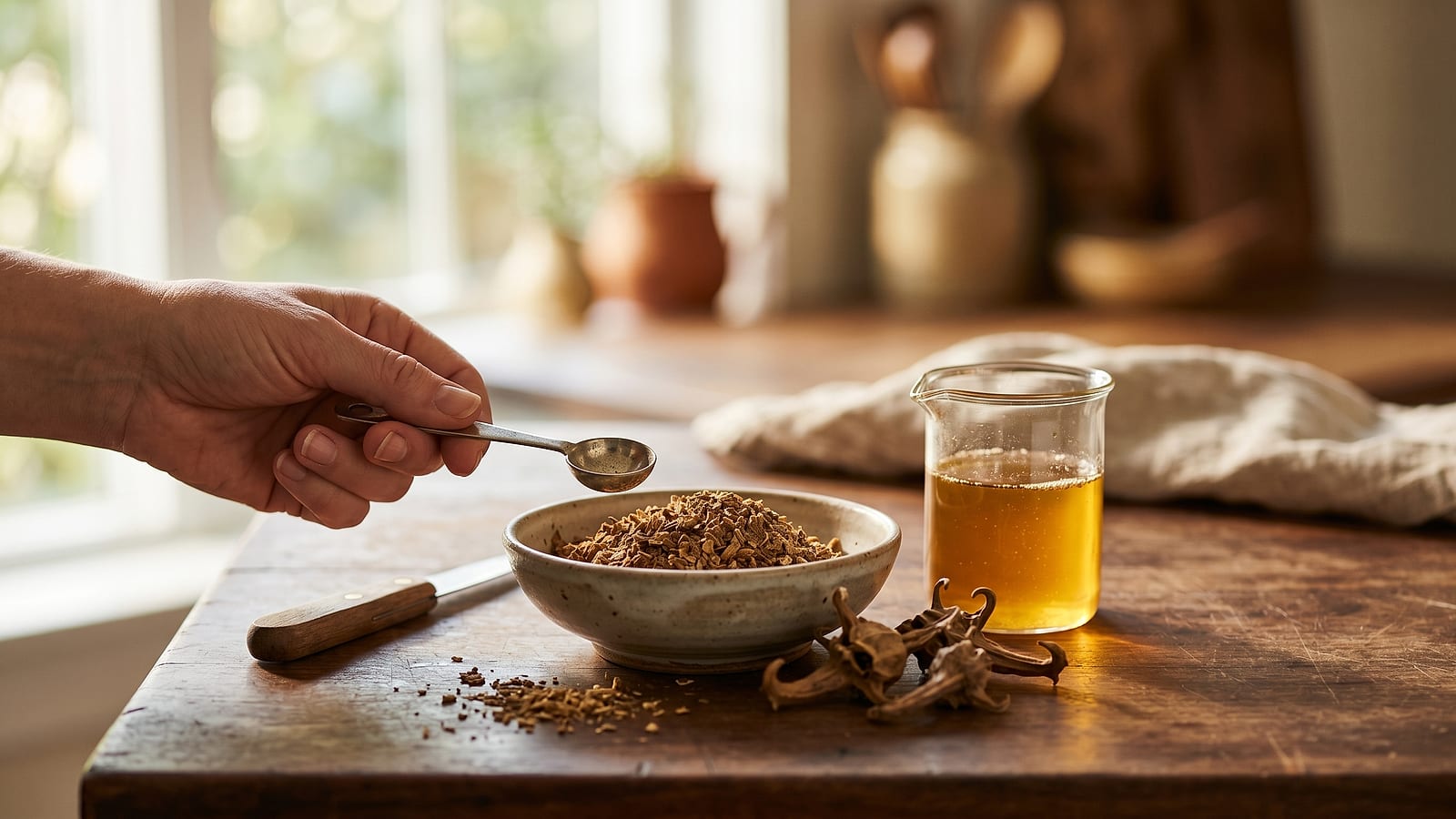
Devil’s claw has a long history of use as a tea or boiled extract (called a decoction) [PMID: 22940241]. If you use dried root, follow the preparation instructions on your product’s label. The harpagoside content varies by source and preparation method. Traditional use typically involves taking the preparation with meals to reduce stomach discomfort.
Standardized extract — the form used in clinical trials
- Clinical trials supporting effectiveness for low back pain used the extract LI 174 at 480 mg twice daily (delivering approximately 50 mg of harpagoside per dose) over 8 weeks [PMID: 11746846].
- The systematic review found moderate evidence for preparations delivering 60 mg of harpagoside per day for osteoarthritis, and 100 mg of harpagoside per day for sudden flare-ups of long-term non-specific low back pain [PMID: 15369596].
- When choosing a supplement, look for products standardized to a defined iridoid glycoside or harpagoside content. This helps ensure you’re getting a dose consistent with what was studied in clinical trials.
- Follow the timing and duration on your product’s label, and check with a healthcare provider. The clinical trials reviewed used varying schedules.
When NOT to use devil’s claw
Do not use devil’s claw if you have an active stomach or duodenal ulcer. The bitter compounds in the root stimulate stomach acid production. It is also traditionally considered unsafe during pregnancy. If you take blood-thinning medications such as warfarin, talk to your doctor before use, as an interaction is theoretically possible. Always consult a healthcare provider before starting any new supplement.
Frequently Asked Questions
Can I combine this protocol with my daily curcumin supplement?
Curcumin works on different inflammation pathways, while devil’s claw is linked to calming inflammation in joint tissue [PMID: 22940241]. Combining herbal supplements is common. However, both may have mild effects on platelet function (the blood cells that help clotting), so watch for easy bruising and keep your doctor informed.
What if I miss a dose — should I double up the next day?
No. If you miss a dose, simply pick up your normal schedule the next day. Taking a double dose is not recommended and may increase the risk of stomach irritation.
Is the supplement form really necessary if I drink the tea daily?
Not necessarily. Traditional boiled preparations have a long history of use [PMID: 22940241], and standardized capsule extracts offer a convenient way to get consistent harpagoside doses that match what was studied in clinical trials [PMID: 15369596]. The best form is the one you can use consistently, in consultation with a healthcare provider.
How does devil’s claw compare to over-the-counter NSAIDs like ibuprofen?
A review of clinical trials found that devil’s claw preparations are linked to meaningful pain relief in osteoarthritis and low back pain, with a favorable tolerability profile [PMID: 17212570]. However, direct head-to-head comparisons with NSAIDs are limited in the available evidence. Any changes to your pain management plan should be discussed with a healthcare provider.
Verified Sources
- Devil's Claw-a review of the ethnobotany, phytochemistry and biological activity of Harpagophytum procumbens. — Journal of ethnopharmacology, 2012 (PMID 22940241)
- Devil's Claw (Harpagophytum procumbens) as a treatment for osteoarthritis: a review of efficacy and safety. — Journal of alternative and complementary medicine (New York, N.Y.), 2006 (PMID 17212570)
- Effectiveness and safety of Devil's Claw tablets in patients with general rheumatic disorders. — Phytotherapy research : PTR, 2007 (PMID 17886223)
- Efficacy and tolerance of Harpagophytum extract LI 174 in patients with chronic non-radicular back pain. — Phytotherapy research : PTR, 2001 (PMID 11746846)
- Harpgophytum procumbens for osteoarthritis and low back pain: a systematic review. — BMC complementary and alternative medicine, 2004 (PMID 15369596)
Bloated, tired, foggy, or fighting cravings?
Get The Gut Reset free — a science-backed guide to go from “off” to clear, light and energized. Drop your email and we’ll send it straight to your inbox.
No spam. Unsubscribe anytime. Educational content, not medical advice.