Turmeric for Joint Pain: What About 1,000 mg of Curcumin a Day Did in 8 Trials, and How to Take It
If you have read that turmeric helps sore joints and then bought a jar of the yellow powder, you may be getting far less than the studies used. The trials that found a benefit gave people concentrated curcumin extracts, usually about 1,000 mg a day, for four to eight weeks. This guide covers the practical side: which form to look for, what the doses were, how long to try it, and who should talk to a clinician first.
What doses and forms were actually studied
Before you buy anything, it helps to know what the studies gave people. A 2016 systematic review and meta-analysis in the Journal of Medicinal Food pooled randomized trials of turmeric extracts and curcumin for arthritis. Eight trials met its criteria. Three of them reported lower pain scores than placebo (mean difference on a pain visual analogue scale: -2.04), and four showed a lower WOMAC score, a standard questionnaire for pain, stiffness and function. Its conclusion was that turmeric extract at about 1,000 mg/day of curcumin supports efficacy, with the caveat that more rigorous and larger studies are needed.
The individual trials used a range of regimens. This table shows several that we reviewed, all in people with knee osteoarthritis.
| Trial | What people took | Length | Compared with |
|---|---|---|---|
| Lopresti 2021 (101 adults) | 500 mg twice daily of a standardized curcumin extract | 8 weeks | Placebo |
| Rahimnia 2015 (40 adults) | 1,500 mg/day curcuminoids in 3 doses, plus 15 mg/day piperine | 6 weeks | Placebo |
| Shep 2019 (139 adults) | 500 mg curcumin (BCM-95) three times daily | 28 days | Diclofenac (open-label) |
| Kuptniratsaikul 2014 (367 adults) | 1,500 mg/day Curcuma domestica extract | 4 weeks | Ibuprofen 1,200 mg/day |
Notice what all four have in common: a measured, standardized amount of extract, taken for weeks. None of them used a pinch of spice on dinner. We compare the two head-to-head drug trials in detail in our companion piece, curcumin vs ibuprofen for knee osteoarthritis.

Kitchen turmeric vs a curcumin supplement
Curcumin is the main active compound in turmeric, but it makes up only a small share of the spice by weight. That is why cooking with turmeric is a fine habit for flavor and a poor way to reach a trial dose. A review in Frontiers in Pharmacology (2025) describes curcumin as having good safety but a “low bioavailability” that severely limits its clinical use, and points to better delivery systems as the research priority.
So the realistic choices are these:
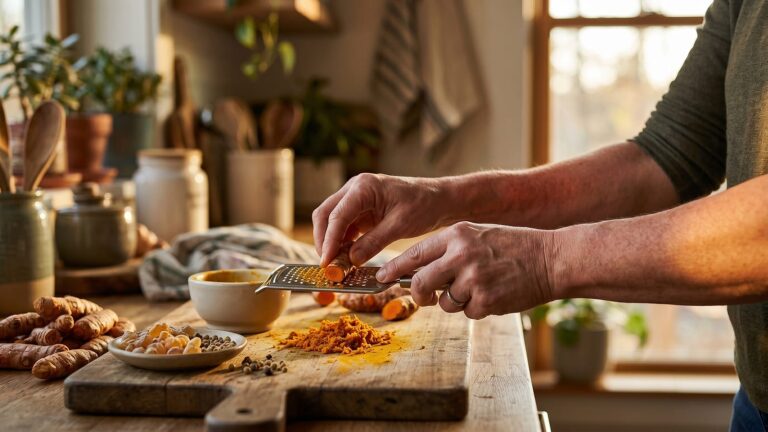
- Cooking with turmeric. Safe for nearly everyone as a food, and worth doing, but do not expect trial-level effects from it.
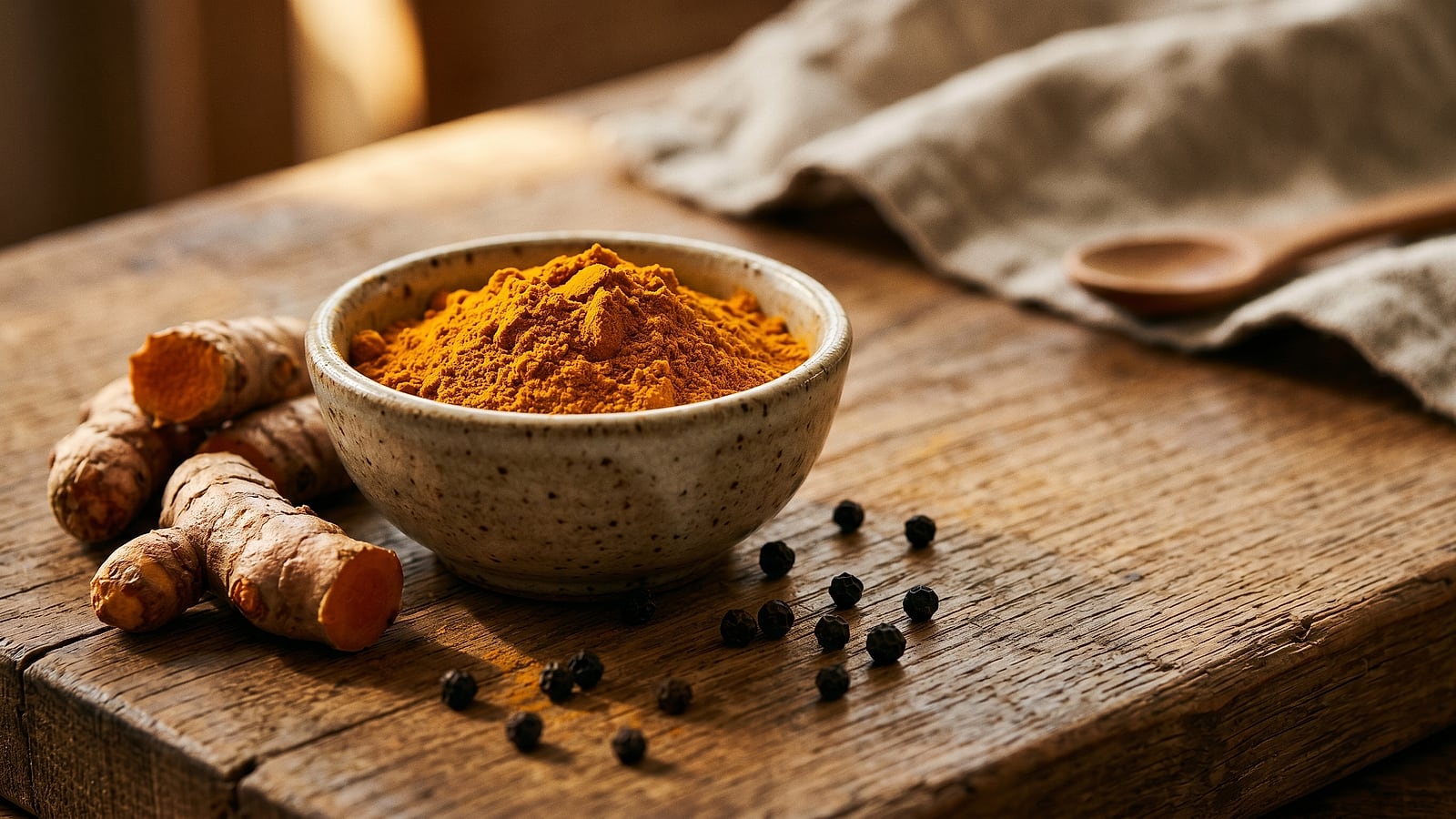
- A standardized curcumin or turmeric extract. This is what the studies tested. Look for the curcuminoid amount per capsule on the label, not just “turmeric root powder 1,000 mg,” which tells you little about curcumin.
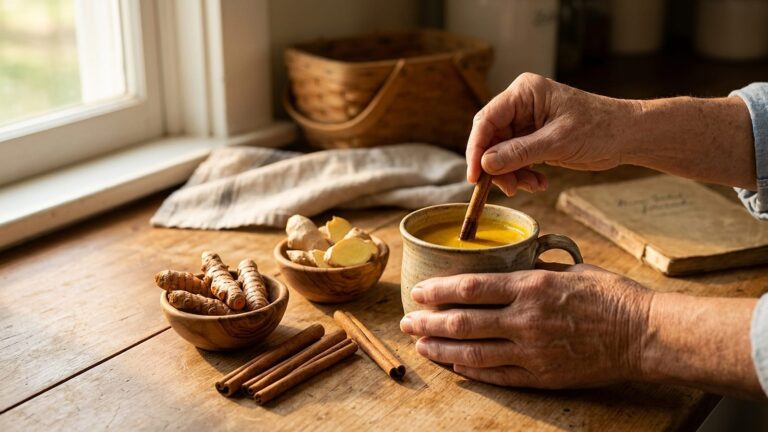
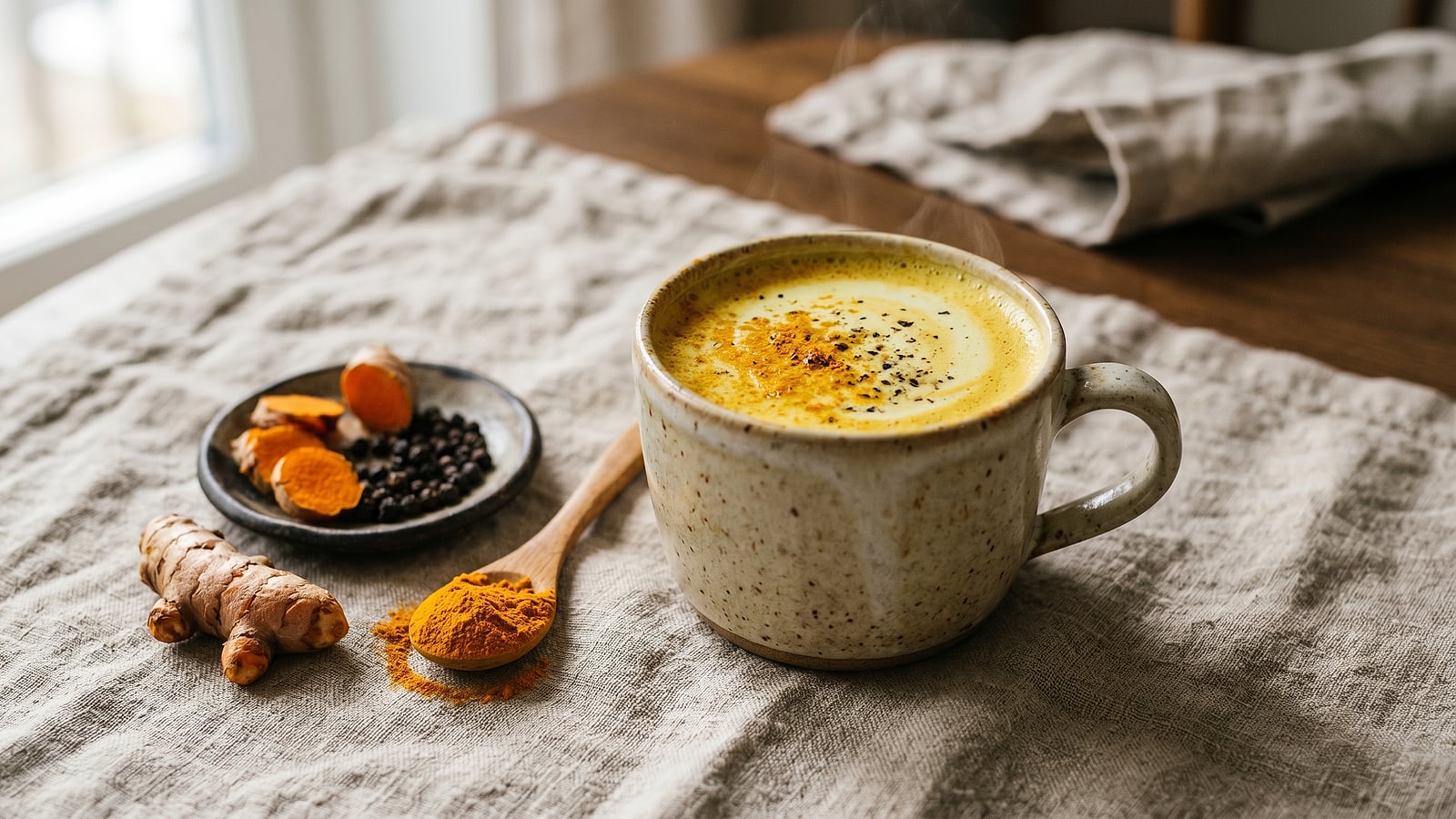
- Golden milk and similar drinks. Pleasant and harmless, but there is no trial data we reviewed that tells us what dose of curcumin you get or whether it eases joints.
Absorption: piperine, formulations and fat
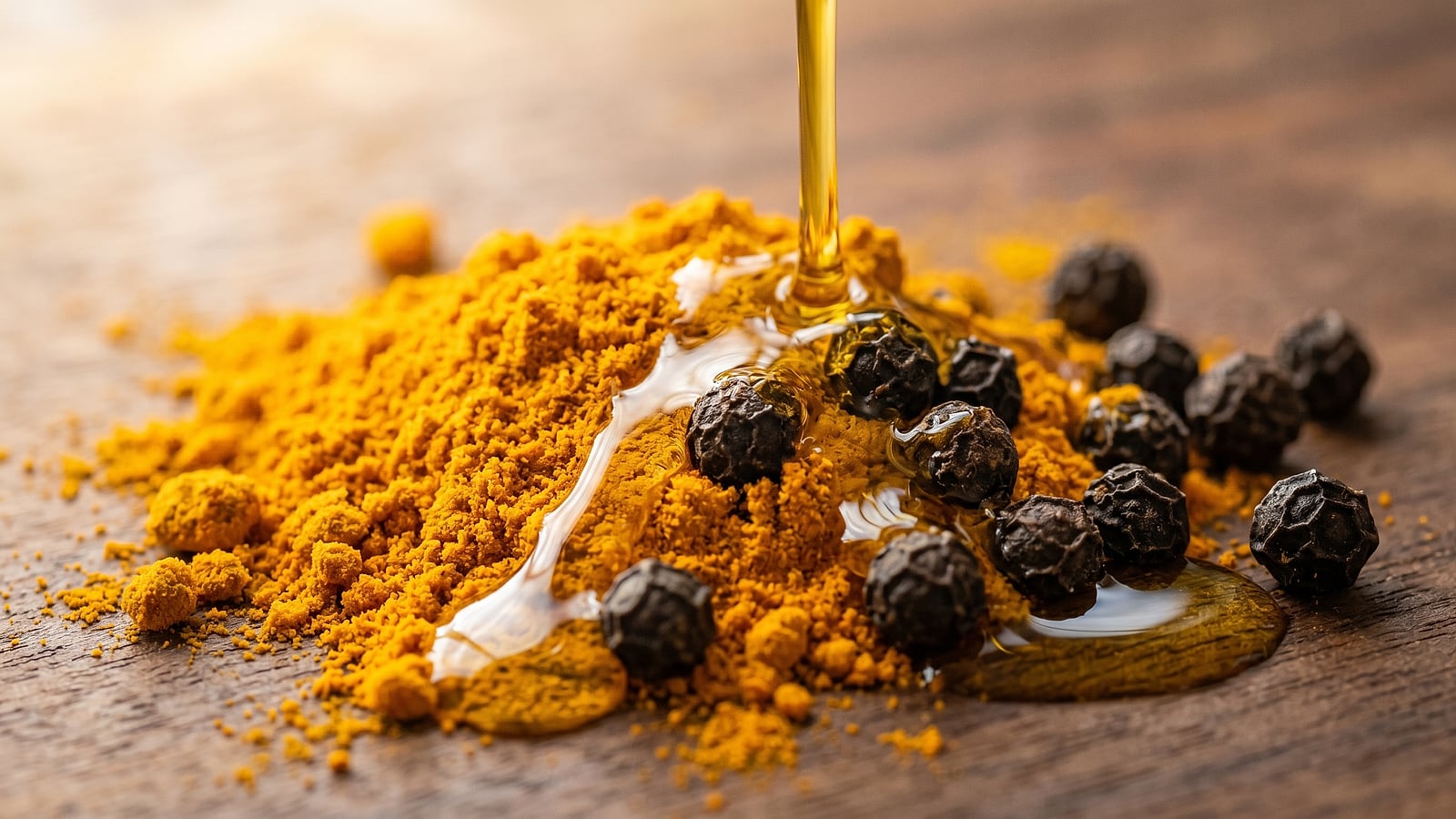
The classic study here is a 1998 paper in Planta Medica by Shoba and colleagues. The researchers noted that curcumin’s problem is rapid metabolism in the liver and intestinal wall. In healthy volunteers, a 2 g dose of curcumin alone produced serum levels that were either undetectable or very low. When 20 mg of piperine was given with it, concentrations were much higher from 15 minutes to 1 hour after the dose, and bioavailability rose by 2,000%. The authors reported no adverse effects at those doses.
Two points keep that finding in perspective. It measured blood levels, not joint pain. And it was a small pharmacokinetic study from 1998, so it tells you that piperine works, not exactly how much you need. Some of the arthritis trials followed the same logic: Rahimnia and colleagues added 15 mg/day of piperine to 1,500 mg/day of curcuminoids, and the 2020 Heidari-Beni trial combined turmeric extract with black pepper and ginger. Other trials relied on branded high-absorption formulations (BCM-95 in the Shep trial, for example). We did not review head-to-head comparisons of these formulations, so we cannot rank them. The practical rule is simple: choose a product that either contains piperine or is built for higher absorption, and match its curcumin dose to the ranges in the table above.
What about taking it with fat? Many labels and traditional recipes suggest taking turmeric with a meal that contains some fat. We did not find a trial abstract that tests this for joint pain, so we are not going to claim a number for it. Taking a capsule with food is harmless and may also be easier on your stomach.
A caution on piperine. Shoba and colleagues describe piperine as an inhibitor of glucuronidation, which is one of the body’s routes for clearing compounds. That is how it boosts curcumin. It is also a reason to mention a piperine-containing supplement to your pharmacist if you take prescription medicines, since we have not seen a study that rules out other effects. That is our precaution, not a finding.
Timing and how long to try it
There is no trial evidence that the time of day matters, so pick the time you will remember, ideally with a meal. What the studies do tell you is duration. The knee trials above ran for 4 weeks (Kuptniratsaikul), 28 days (Shep), 6 weeks (Rahimnia) and 8 weeks (Lopresti). Based on that, 4 to 8 weeks is a fair test window.
- Before you start: write down your usual pain on a 0 to 10 scale, how long morning stiffness lasts, and how often you use pain relievers.
- At weeks 4 and 8: score the same three things again.
- If nothing has moved at 8 weeks: stop. More of the same product is unlikely to be the answer, and a clinician can look for other causes.
What to expect, honestly
In the 8-week Lopresti trial, people taking curcumin had significantly lower knee pain scores than those on placebo, and did better on some walking and timed tests, though not on the 30-second chair stand or 40-meter fast walk. Pain-relieving medication was reduced in 37% of the curcumin group, compared with 13% on placebo. The authors themselves call for longer studies, different doses and other extracts.
There are good reasons not to oversell this:
- The joints studied matter. Every trial in this guide enrolled people with knee osteoarthritis. We did not review trials for hand osteoarthritis or other conditions, so do not assume the same results.
- Placebo effects are large in pain trials. In the Rahimnia trial, inflammatory markers fell in both the curcuminoid and placebo groups, and the authors concluded the symptom improvement in the curcuminoid group could not be attributed to systemic anti-inflammatory effects.
- The overall evidence quality is limited. A 2025 umbrella review of 25 meta-analyses rated the methodological quality as “relatively poor” and said that for many conditions the conclusions remain uncertain.
- The “NF-kB switch” explanation is partly from animals. The often-quoted study on turmeric blocking NF-kB in arthritic joints used rats, injected rather than eaten. A 2025 review says curcumin acts mainly by inhibiting NF-kB signaling, but this is a mechanism proposal, and how much of it explains joint relief in people is not settled.
Pooled results also show that curcumin lowers some blood inflammation markers: a 2023 meta-analysis of 66 randomized trials found lower CRP, TNF-alpha and IL-6, though not IL-1 beta. Lower blood markers are not the same thing as a better knee, so we treat that as supporting context only.
Safety: liver, blood thinners, gallbladder
Turmeric as a food has a long record of use. Concentrated supplements are a different product, and three issues deserve plain language.
Liver. A 2021 analysis from the Italian phytovigilance system described seven acute hepatitis cases in Tuscany linked to Curcuma longa products, all with high-bioavailability, high-dose curcumin formulations. A literature review of case reports added 23 more, and in 16 of those the patient improved after stopping the product. A 2025 series from US pathology archives described 11 patients with liver injury attributed to over-the-counter turmeric supplements (10 of them women, median age 58). Liver tests returned to normal in all of them after they stopped. These are case reports, so they cannot tell us how common the problem is. They do mean that dark urine, yellow skin or eyes, unusual fatigue or upper-right abdominal pain while taking a supplement is a reason to stop it and call a doctor.
Blood thinners. You will often read that curcumin thins the blood. The data we found are reassuring but limited. In a 10-day study of one branded formulation (Meriva), bleeding time did not change in people on aspirin, ticlopidine or clopidogrel, and INR did not change in stable patients on warfarin or dabigatran. A rat study found curcumin raised blood levels of warfarin and clopidogrel at a high dose but did not change anticoagulation. Ten days in a small group is short, and it covers one product. If you take any anticoagulant or antiplatelet drug, or have surgery planned, tell your prescriber before starting.
Gallbladder. In a randomized crossover study of 12 healthy volunteers, 20 mg of curcumin reduced gallbladder volume by about 29% over two hours compared with placebo. A follow-up in 12 volunteers found larger contractions at 40 and 80 mg. Neither study tested people with gallstones, so we cannot say what it means for them. Because a contracting gallbladder can matter if stones are present, the cautious move is to ask your doctor first.
Who should skip or ask first
- You take warfarin, dabigatran, aspirin or another blood thinner, or have surgery scheduled.
- You have gallstones, a bile duct problem or a history of gallbladder attacks.
- You have liver disease, abnormal liver tests, or you take other supplements or medicines that can affect the liver.
- You are pregnant, nursing or planning a pregnancy. We found no trial we could cite for these situations, so ask.
- You take several prescription drugs and want to add a piperine-containing product.
- Your joint is hot, red, very swollen, or the pain came on suddenly and severely. That needs medical assessment, not a supplement trial.
Also, do not replace a prescribed arthritis treatment with turmeric. If you want to add it, bring the bottle to your next appointment.
A practical plan, step by step
- Check with your clinician or pharmacist if any item in the list above applies to you.
- Pick one product. Choose a standardized curcumin extract with the curcuminoid amount per capsule on the label, and either piperine or a formulation designed for absorption. Look for independent testing marks such as USP or NSF, since supplement quality varies. Those are general quality markers, not something the trials tested.
- Aim for the studied range. The meta-analysis points to about 1,000 mg/day of curcumin; individual trials used 1,000 to 1,500 mg/day, split into two or three doses. Do not exceed the label.
- Take it with a meal. It may be gentler on the stomach.
- Score yourself before starting and at weeks 4 and 8.
- Stop and call a doctor if you notice jaundice, dark urine, severe stomach pain or any bleeding that is unusual for you.
- Judge at 8 weeks. A real change is a lower pain score, shorter morning stiffness or needing less of your usual pain relief, as agreed with your doctor.
If you want to compare curcumin directly with over-the-counter painkillers, or to understand how the trials measured the difference, read our comparison of curcumin and ibuprofen for knee osteoarthritis. For food-based support, see our pieces on the peppery compound in olive oil and on kitchen spices and recent lab work.
Questions people ask
How much turmeric or curcumin should I take for joint pain?
The 2016 meta-analysis of randomized trials supports about 1,000 mg/day of curcumin from a turmeric extract. Individual knee studies used 500 mg twice daily, 500 mg three times daily or 1,500 mg/day of curcuminoids. Follow the product label, and check with your clinician if you take medication.
Do I need black pepper?
You need some way around curcumin’s poor absorption. In a human study, 20 mg of piperine with 2 g of curcumin raised bioavailability by 2,000% compared with curcumin alone. Many supplements include piperine, and others use special formulations. Kitchen turmeric with a pinch of pepper is still unlikely to match a trial dose.
How long until I notice anything?
The trials we reviewed ran 4 to 8 weeks, so judge it over that window. A Shep trial compared curcumin with diclofenac and found similar pain improvement at days 14 and 28, but that was against a drug, not a placebo.
Is turmeric safe to take every day?
As a food, yes for most people. Concentrated supplements have been linked to rare liver injury in case reports, and curcumin affects gallbladder contraction. Ask your doctor first if you have liver or gallbladder problems or take medication, and stop if you develop jaundice, dark urine or severe abdominal pain.
Can I take it with blood thinners?
Do not start without telling your prescriber. A short study of one formulation found no change in INR or bleeding time, but it was small and brief, and it does not cover every product or dose.
Keep reading
Verified sources
- Daily JW, Yang M, Park S. Efficacy of turmeric extracts and curcumin for alleviating the symptoms of joint arthritis: a systematic review and meta-analysis of randomized clinical trials. J Med Food. 2016;19(8):717-729. PMID 27533649
- Lopresti AL, Smith SJ, Jackson-Michel S, Fairchild T. An investigation into the effects of a curcumin extract (Curcugen) on osteoarthritis pain of the knee: a randomised, double-blind, placebo-controlled study. Nutrients. 2021;14(1):41. PMID 35010916
- Shoba G, Joy D, Joseph T, et al. Influence of piperine on the pharmacokinetics of curcumin in animals and human volunteers. Planta Med. 1998;64(4):353-356. PMID 9619120
- Rahimnia AR, Panahi Y, Alishiri G, Sharafi M, Sahebkar A. Impact of supplementation with curcuminoids on systemic inflammation in patients with knee osteoarthritis. Drug Res. 2015;65(10):521-525. PMID 25050518
- Shep D, Khanwelkar C, Gade P, Karad S. Safety and efficacy of curcumin versus diclofenac in knee osteoarthritis: a randomized open-label parallel-arm study. Trials. 2019;20(1):214. PMID 30975196
- Kuptniratsaikul V, Dajpratham P, Taechaarpornkul W, et al. Efficacy and safety of Curcuma domestica extracts compared with ibuprofen in patients with knee osteoarthritis. Clin Interv Aging. 2014;9:451-458. PMID 24672232
- Heidari-Beni M, Moravejolahkami AR, Gorgian P, et al. Herbal formulation “turmeric extract, black pepper, and ginger” versus naproxen for chronic knee osteoarthritis. Phytother Res. 2020;34(8):2067-2073. PMID 32180294
- Dehzad MJ, Ghalandari H, Nouri M, Askarpour M. Antioxidant and anti-inflammatory effects of curcumin/turmeric supplementation in adults: a GRADE-assessed systematic review and dose-response meta-analysis. Cytokine. 2023;164:156144. PMID 36804260
- Xu Q, Lian H, Zhou R, et al. Curcumin and multiple health outcomes: critical umbrella review of intervention meta-analyses. Front Pharmacol. 2025;16:1601204. PMID 40538540
- Liu M, Wang J, Song Z, Pei Y. Regulation mechanism of curcumin mediated inflammatory pathway and its clinical application: a review. Front Pharmacol. 2025;16:1642248. PMID 40909997
- Funk JL, Frye JB, Oyarzo JN, et al. Efficacy and mechanism of action of turmeric supplements in the treatment of experimental arthritis (rat model). Arthritis Rheum. 2006;54(11):3452-3464. PMID 17075840
- Lombardi N, Crescioli G, Maggini V, et al. Acute liver injury following turmeric use in Tuscany. Br J Clin Pharmacol. 2021;87(3):741-753. PMID 32656820
- Papke DJ Jr, Viveiros K, Zota V, et al. Turmeric supplement-associated hepatitis: a clinicopathological series of 11 cases. Histopathology. 2025;86(3):410-422. PMID 39381846
- Hu S, Belcaro G, Dugall M, et al. Interaction study between antiplatelet agents, anticoagulants, thyroid replacement therapy and a bioavailable formulation of curcumin (Meriva). Eur Rev Med Pharmacol Sci. 2018;22(15):5042-5046. PMID 30070343
- Liu AC, Zhao LX, Lou HX. Curcumin alters the pharmacokinetics of warfarin and clopidogrel in Wistar rats. Planta Med. 2013;79(11):971-977. PMID 23807811
- Rasyid A, Lelo A. The effect of curcumin and placebo on human gall-bladder function: an ultrasound study. Aliment Pharmacol Ther. 1999;13(2):245-249. PMID 10102956
- Rasyid A, Rahman AR, Jaalam K, Lelo A. Effect of different curcumin dosages on human gall bladder. Asia Pac J Clin Nutr. 2002;11(4):314-318. PMID 12495265
This article is for education only and is not medical advice. Talk to a qualified clinician before starting a supplement, especially if you have a medical condition or take medication.
Still bloated, tired and fighting cravings? It’s probably not your willpower — it’s your gut.
Get The Gut Reset free: the simple, science-backed steps to feel lighter, clearer and more energized — starting in days, not months. Enter your email and we’ll send it right now.
No spam. Unsubscribe anytime. Educational content, not medical advice.