Your grandmother actually knew holy basil held cellular-defense secrets that modern science is only now proving.
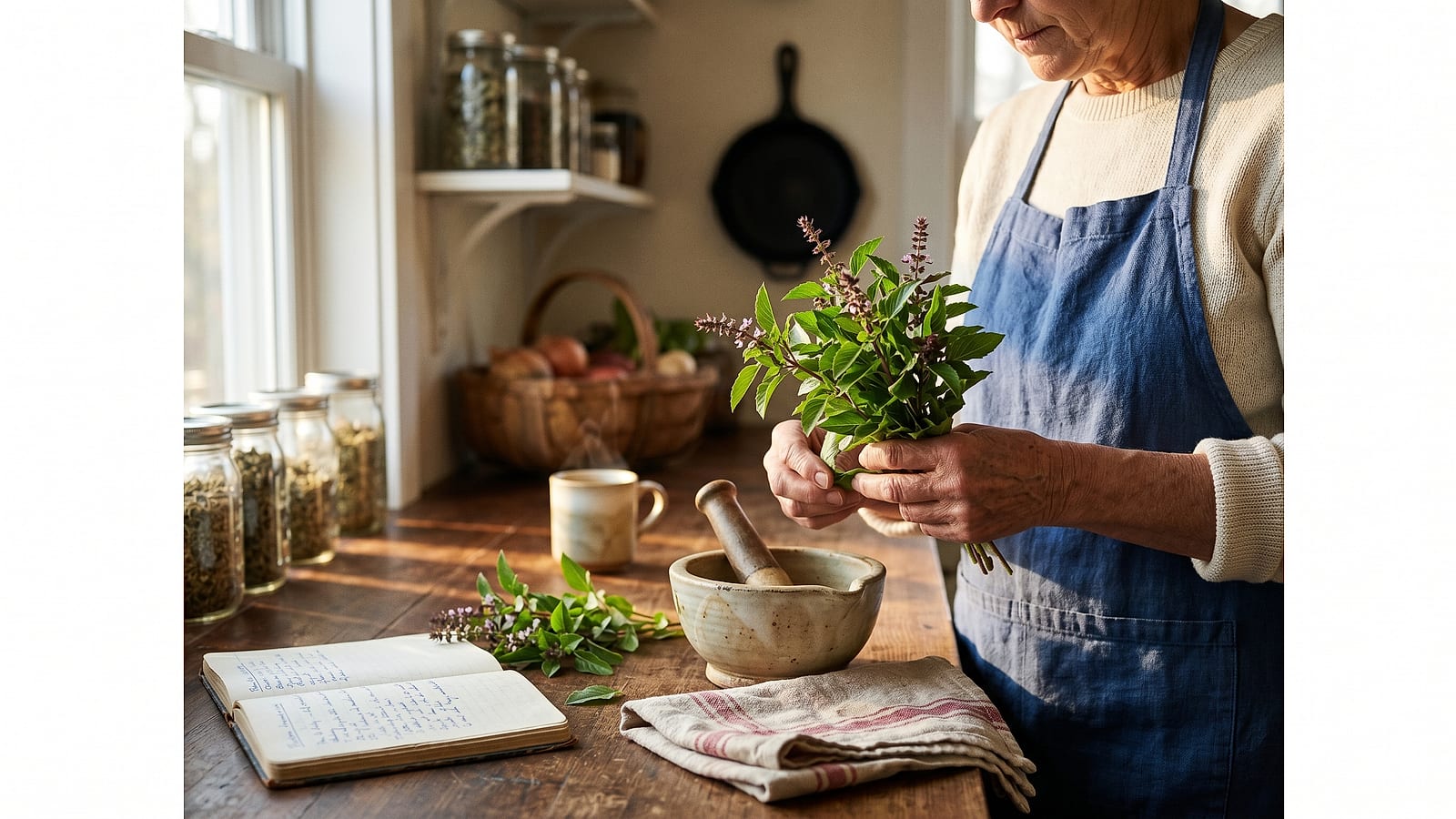
Your grandmother knew something about holy basil that modern science is only now catching up to. For generations, traditional healers in the foothills of the Himalayas gathered these purple-speckled leaves. They dried them in the shade to preserve what they called a sacred shield of vital energy.
By the end of this article, you will understand the science behind this ancient plant. You will also find a general usage guide based on clinical dosing, and a clear list of who should be careful with this herb.
Why This Matters Today
Our immune systems face constant, low-level stress every day. Synthetic chemicals, ongoing mental strain, and disrupted sleep all take a toll. Modern medicine is excellent in a crisis, but it often overlooks the quiet, daily work of building resilience.
Researchers are now looking at complex plants like holy basil — known historically as Tulsi — for that kind of everyday support. A review of human clinical studies found that tulsi is linked to wide-ranging adaptogenic (stress-buffering), inflammation-calming, and immune-balancing properties that may help the body handle ongoing stressors [PMID: 28400848]. This is not just about a soothing herbal tea. It is about understanding how a plant used for thousands of years may interact with our immune defenses.
By looking at where traditional practice and modern biochemistry overlap, we can better judge what the evidence actually says about this leaf.
The Science Behind It
Holy basil may support the immune system and help the body handle environmental stress. The plant’s oils and water-based extracts contain active compounds — including eugenol, ursolic acid, and rosmarinic acid — that researchers think may act as biological response modifiers (substances that change how the body reacts to stress or disease). Lab and animal research screening water-based plant extracts found that holy basil (Ocimum sanctum) is linked to notable immune-balancing effects. These include increases in CD3+ T-cells (a type of immune cell that fights infection) and higher levels of TNF-alpha (a signaling protein that helps coordinate immune responses) [PMID: 40034324]. This balancing effect may help keep the immune system alert without pushing it into the kind of chronic overdrive that damages tissue — though larger human trials are still needed to confirm this.
Researchers have also looked at how holy basil extracts affect immune organs. One animal study found that holy basil extracts encouraged spleen cells in mice to multiply at certain concentrations. Spleen cells showed significantly greater growth compared to control cells at the highest tested amount [PMID: 33373262]. The spleen is a key hub for filtering blood and housing mature lymphocytes (white blood cells that fight infection). These findings are interesting, but this research was done in mouse cells in a lab dish, so it may not translate directly to humans.
Holy basil has also been studied for its effect on the link between stress, hormones, and immunity. Chronic stress raises cortisol (a stress hormone) throughout the body. High cortisol can suppress immune function by slowing white blood cell activity and triggering the release of inflammatory signaling proteins. A randomized, double-blind, placebo-controlled trial — the strongest kind of study design — found that stressed adults who took 125 mg of a standardized holy basil extract twice daily for eight weeks had significant improvements in perceived stress, mood, and sleep quality compared to those taking a placebo [PMID: 36185698]. By supporting stress resilience and sleep, the plant may help reduce the immune suppression that high cortisol causes, though the exact mechanisms in humans are still being studied.
Taken together, this evidence — from lab studies, animal research, and human trials — suggests holy basil may support immune defenses while also easing the burden of stress on the body. A systematic review (a study that pools and analyzes results from many studies) found that all reviewed human studies reported positive clinical outcomes with no significant side effects [PMID: 28400848]. This helps explain why a plant used for millennia still draws serious scientific attention — even as researchers agree that larger, longer human trials are needed.
The Complete Protocol
Start with the food source
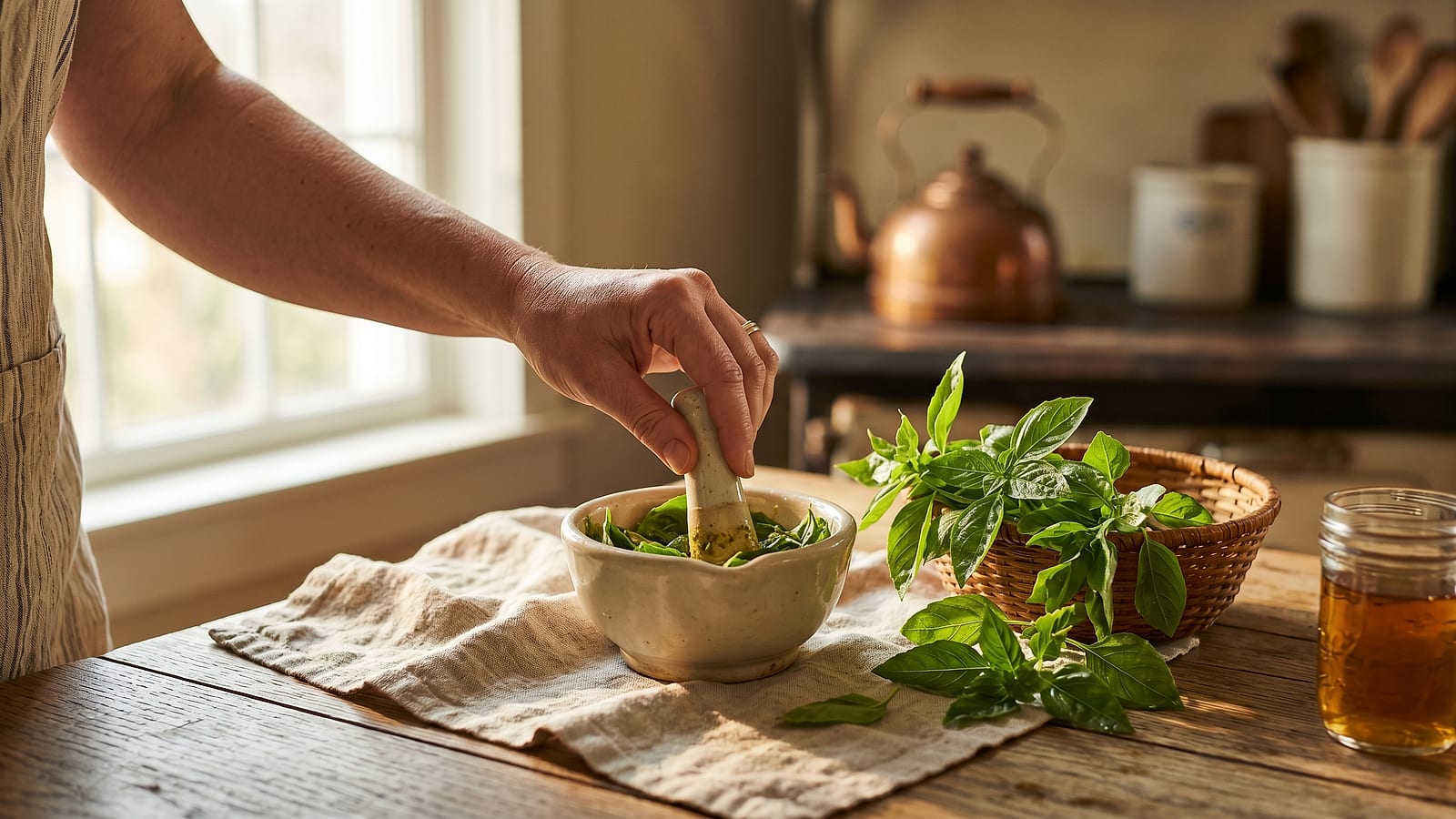
- Fresh Holy Basil Leaves (Tulsi): Fresh leaves are a traditional starting point. They can be eaten daily as part of a general wellness routine. Amounts used in traditional practice vary widely. Ask a qualified herbalist or healthcare provider what quantity makes sense for you.
- Whole Leaf Infusion: Dried organic holy basil leaves can be steeped in hot water to make an herbal tea. Covering the cup while steeping is generally recommended to help keep the aromatic compounds in the liquid. For therapeutic use, ask a healthcare provider about how much and how often to drink it.
Move to the concentrated natural form
- Liquid Extract: Liquid extracts of Ocimum tenuiflorum are sold commercially. The right dose depends on the product’s concentration and your health. Follow the manufacturer’s instructions and check with a healthcare provider before starting.
Optional: the supplement form
- Standardized Dry Extract Capsules: The clinical trial that showed stress and sleep benefits used 125 mg of a standardized holy basil extract twice daily (250 mg total per day) for eight weeks [PMID: 36185698]. Standardized capsules come in a range of doses. Talk to a healthcare provider to find the right dose for your situation. Taking fat-soluble botanical supplements with a meal is a common general practice, though specific absorption benefits for holy basil have not been confirmed in the available evidence.
When NOT to do this
Do not use holy basil if you are pregnant, actively trying to conceive, or breastfeeding. Animal studies suggest it may have anti-fertility and uterus-stimulating effects. Also avoid it if you take blood-thinning medications (such as warfarin or aspirin), because holy basil has mild anti-platelet (blood-thinning) properties. Do not use it within 14 days of surgery. People taking thyroid medications should also be cautious, as holy basil may affect thyroid hormone levels.
Frequently Asked Questions
Can I combine holy basil with other adaptogens like Ashwagandha?
Holy basil and ashwagandha are both adaptogens — plants that help the body handle stress — and they are thought to work on different parts of the stress response. Holy basil is linked to immune-balancing and inflammation-calming effects [PMID: 28400848], while ashwagandha has been studied for its effects on the HPA axis (the hormonal system that controls the stress response). If you are thinking about combining these supplements, talk to a healthcare provider. Specific dosing guidance for using them together has not been established in current clinical research.
What should I do if I miss a day of the protocol — do I need to restart?
Missing one day is generally not a reason to restart a course of herbal supplementation. Simply pick up your usual routine the next day. Do not double your dose to make up for the missed day. If you have questions about your specific plan, ask a healthcare provider.
How does a holy basil infusion compare to drinking standard green tea for cellular health?
Green tea is rich in epigallocatechin gallate (EGCG), a well-studied antioxidant (a compound that protects cells from damage). Holy basil, by contrast, has been linked to immune-balancing and stress-buffering effects in reviewed studies [PMID: 28400848]. No direct head-to-head comparisons between holy basil and green tea for immune health have been established in the available evidence, so strong claims about which is better cannot be made at this time.
Why does the protocol suggest a pause after several weeks of use?
Taking periodic breaks from herbal supplements is a common traditional and practical recommendation. However, the specific idea that holy basil’s active compounds cause receptor desensitization (where the body stops responding as well over time) has not been demonstrated in the available clinical evidence. If you are using holy basil for a set period, ask a healthcare provider about the right duration and whether cycling on and off makes sense for you.
Is the supplement form necessary if I already chew fresh leaves daily?
Capsules are not strictly necessary, but they offer standardized levels of active compounds. Those levels can vary in fresh leaves depending on soil quality and climate. A systematic review notes that human studies have used a range of preparations, including fresh leaves, teas, and standardized extracts [PMID: 28400848]. The clinical trial that showed stress and sleep benefits used a standardized extract at a specific dose [PMID: 36185698]. If you want results similar to that trial, a standardized product may be the better choice.
Verified Sources
- A randomized, double-blind, placebo-controlled trial investigating the effects of an Ocimum tenuiflorum (Holy Basil) extract (Holixer(TM)) on stress, mood, and sleep in adults experiencing stress. — Frontiers in nutrition, 2022 (PMID 36185698)
- Stimulatory effect of Holy basil and Thai basil on mouse spleen cell proliferation. — Journal of immunoassay & immunochemistry, 2021 (PMID 33373262)
- Screening of aqueous plant extracts for immunomodulatory effects on immune cells and cytokine production: In vitro and in vivo analyses. — Heliyon, 2025 (PMID 40034324)
- The Clinical Efficacy and Safety of Tulsi in Humans: A Systematic Review of the Literature. — Evidence-based complementary and alternative medicine : eCAM, 2017 (PMID 28400848)
Bloated, tired, foggy, or fighting cravings?
Get The Gut Reset free — a science-backed guide to go from “off” to clear, light and energized. Drop your email and we’ll send it straight to your inbox.
No spam. Unsubscribe anytime. Educational content, not medical advice.