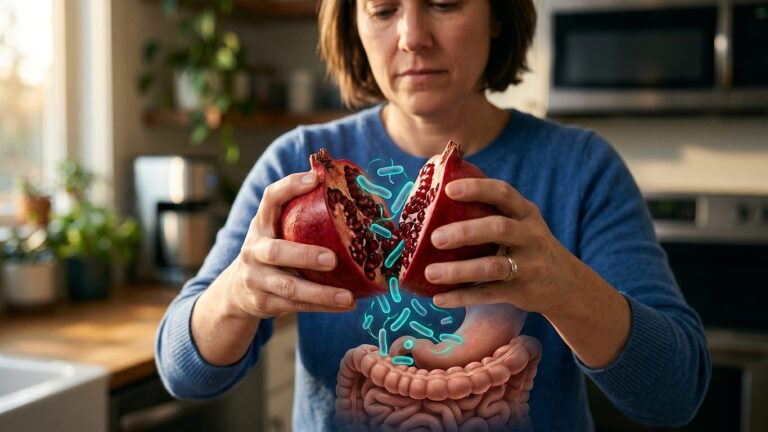

For decades, the “Food Police” told us that raw milk was dangerous and that skim milk was healthy. In 2026, the script has flipped.
For decades, the “Food Police” told us that raw milk was dangerous and that skim milk was healthy. In 2026, the script has flipped. This systematic demonization of natural dairy fat did not just steer millions toward sugary, processed alternatives; it actively deprived generations of the complex nutrient matrix essential for robust metabolic and immune development.
By the end of this investigative piece, you will understand the biological mechanisms that research has proposed to explain why whole dairy may support cellular health. You will also find a structured approach to reintroducing whole dairy into your daily routine, informed by the available peer-reviewed evidence.
Why This Matters Today
The political tide is finally turning. With the bipartisan “Whole Milk for Healthy Kids Act” making headlines, legislative bodies are revisiting what independent researchers have been examining for years: the relationship between dairy fat and health outcomes. For decades, dietary guidelines emphasized low-fat dairy products under the rationale of cardiovascular protection. Yet, a growing body of observational and clinical evidence tells a more nuanced story. A review of proposed biological mechanisms notes that whole-milk dairy food consumption, despite its saturated fat content, does not appear to increase cardiovascular risk, owing in part to the protective structure of the dairy food matrix [PMID: 37684008]. Furthermore, an umbrella review of systematic reviews and meta-analyses found that an increment of approximately 200 ml (about one cup) of milk per day was associated with a lower risk of cardiovascular disease, stroke, hypertension, colorectal cancer, metabolic syndrome, and obesity [PMID: 33413488]. This evolving evidence has fueled growing consumer interest in less-processed whole dairy. To understand why, we must examine how modern processing may structurally alter milk at the molecular level.

The Science Behind It
To comprehend the renewed interest in whole dairy, we must first address the evidence on dairy fat and health. Industrial homogenization subjects milk to extreme pressure, disrupting the milk fat globule membrane (MFGM) — a complex structure that plays a role in regulating lipid digestion and absorption. A review notes that the dairy food matrix, which describes how macronutrients, micronutrients, and other bioactive components are packaged and compartmentalized in whole-milk dairy foods, is proposed as a key reason why whole-milk dairy consumption does not appear to increase cardiovascular risk despite its saturated fat content [PMID: 37684008].
Beyond basic nutrition, research has investigated whether milk components may interact with the immune system. A study found that bovine milk and milk-derived Immunoglobulin G (IgG) are associated with the induction of trained innate immunity in human monocytes — a form of immune memory in which primary defenses are reprogrammed to respond more efficiently upon re-stimulation [PMID: 30262772]. Whether this effect translates meaningfully to whole-body immune outcomes in humans through dietary consumption of raw milk remains an area of ongoing research. It is also worth noting that pasteurization is known to denature heat-sensitive proteins, including immunoglobulins, though the clinical significance of this for healthy adults consuming pasteurized dairy has not been established by the provided sources.
Separately, epidemiological evidence suggests that raw cow’s milk consumption in the first year of life is associated with protection against atopic diseases and an increased number of regulatory T-cells (Tregs) [PMID: 24521175]. A review proposes that milk-derived exosomal microRNAs — including miR-155, which is involved in immune system development — may represent a mechanism by which milk supports thymic regulatory T-cell maturation and helps modulate allergic responses [PMID: 24521175]. The same review notes that boiling abolishes this proposed exosomal microRNA-mediated bioactivity. These findings are largely based on epidemiological and translational research, and the authors acknowledge that the precise mode of action remains under investigation.
At the population level, a meta-analysis of cohort studies found that subjects with high milk or dairy consumption had a relative risk of stroke and/or heart disease of 0.84 (95% CI 0.76–0.93) and 0.79 (0.75–0.82), respectively, compared with those with low consumption [PMID: 19155432]. This association suggests a potential survival advantage linked to dairy consumption, though observational data cannot establish causation, and dietary patterns are complex.
The Complete Protocol
Start with the food source
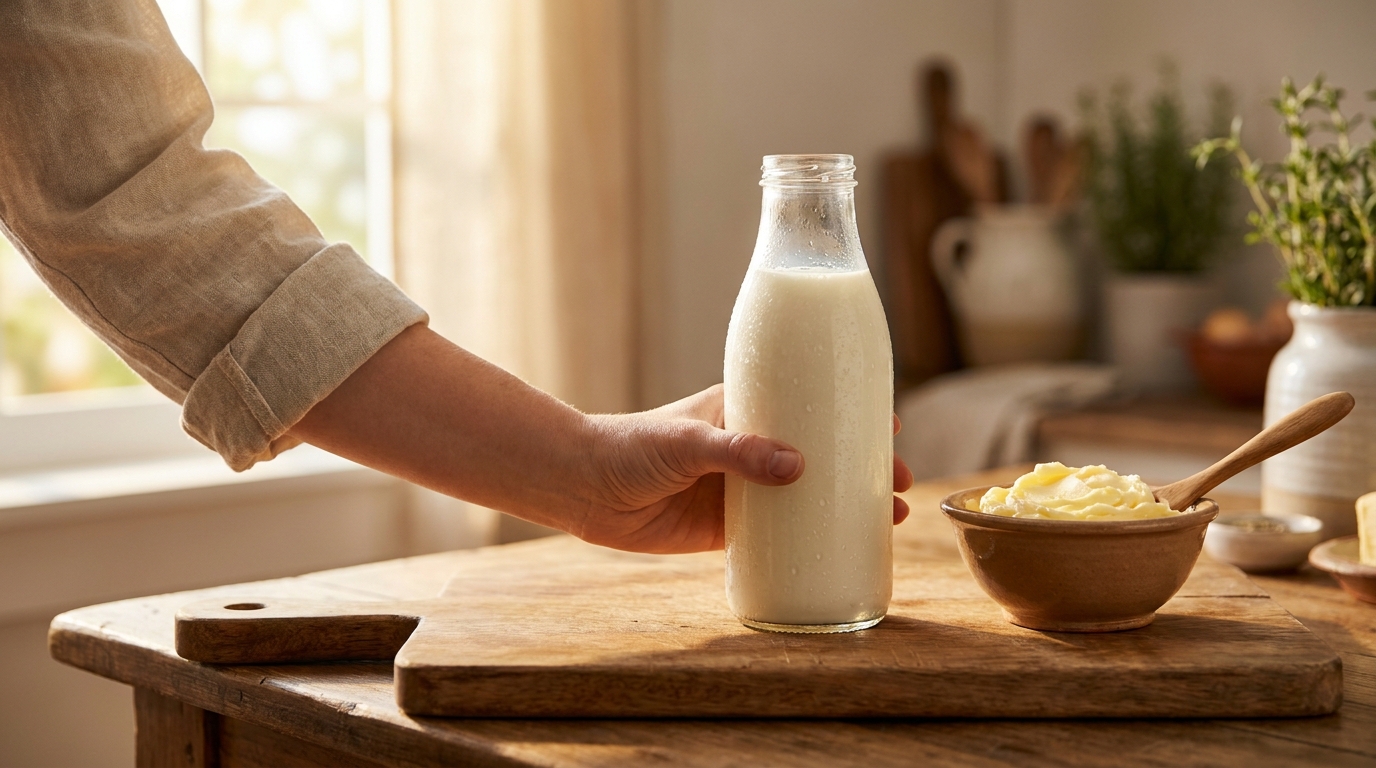
Begin introducing raw whole milk gradually to allow your digestive tract to adjust. Start with a small amount — around 60 ml (2 ounces) daily — and increase slowly over several weeks as tolerated, working toward a daily intake in the range that population studies have examined (approximately 200–240 ml per day) [PMID: 33413488]. Timing and precise escalation schedules have not been established in clinical trials; the approach here is based on general principles of dietary tolerance. Ensure the milk is sourced from pasture-raised, grass-fed cows and kept strictly below 40°F (4°C) to minimize microbial risk.
Shake the container vigorously before pouring. Raw milk is non-homogenized, meaning the fat-soluble vitamins and the protective milk fat globule membrane (MFGM) rise to the top as cream. Shaking redistributes this nutrient-dense layer evenly.
Move to the concentrated natural form
To further support nutritional intake, some individuals choose to introduce raw, grass-fed bovine colostrum powder. If doing so, mix a small amount into lukewarm water — avoid hot water, as heat can denature active proteins. The optimal dose and timing of colostrum supplementation for immune or metabolic outcomes in healthy adults has not been established by the sources reviewed here; follow product guidance and consult a healthcare provider.
Optional: the supplement form
If sourcing high-quality raw milk is not possible due to local regulations or availability, cold-processed bovine colostrum supplements standardized for Immunoglobulin G (IgG) content are commercially available. Specific dosing regimens for such supplements are not established by the sources reviewed here; consult a healthcare provider for personalized guidance.
When NOT to do this
Do not attempt this protocol if you have a medically diagnosed IgE-mediated bovine milk allergy (anaphylaxis risk). Avoid raw dairy if you are currently pregnant, immunocompromised, or undergoing active chemotherapy, as the risk of foodborne pathogens from unpasteurized products is significantly elevated in these states.
Frequently Asked Questions
Can I combine this raw dairy protocol with an intermittent fasting schedule?
Some individuals choose to consume dairy at the start of their eating window. Fat-soluble vitamins (A, D, and K2) present in whole milk require dietary fat for absorption, and consuming whole milk alongside or as part of a meal may support this. The specific timing interaction between raw milk consumption and intermittent fasting has not been studied in the sources reviewed here; individual responses may vary.
What should I do if I miss a day of the protocol—do I need to restart from day one?
There is no established clinical protocol that requires restarting after a missed day. Simply resume your usual intake the following day. Research on trained innate immunity suggests that cellular adaptations associated with milk-derived IgG exposure develop over time [PMID: 30262772], but the precise timeline and impact of brief interruptions in dietary intake have not been studied.
How does raw whole milk compare to pasteurized, organic grass-fed whole milk?
Organic grass-fed pasteurized milk avoids synthetic pesticides and may offer a favorable fatty acid profile. Pasteurization is known to denature heat-sensitive proteins, including immunoglobulins, and a review proposes that boiling abolishes exosomal microRNA-mediated bioactivity in milk [PMID: 24521175]. However, whether these differences translate into meaningful health outcome differences for healthy adults consuming either form has not been directly compared in the sources reviewed here.
Is the supplemental colostrum necessary if I am already drinking raw whole milk daily?
Colostrum contains higher concentrations of immunoglobulins and lactoferrin than mature milk. Whether combining colostrum supplementation with raw whole milk consumption produces additive or synergistic benefits beyond either alone has not been established in the sources reviewed here. Individuals with specific health concerns should consult a healthcare provider.
Why might metabolic and immune effects be related?
The immune and metabolic systems are interconnected. A review notes that whole-milk dairy foods may influence oxidative stress, inflammatory responses, and gut microflora — pathways that intersect with metabolic regulation [PMID: 37684008]. However, specific timelines for when such effects might be observed in individuals consuming raw whole milk have not been established in clinical trials.
Verified Sources
- Whole-Milk Dairy Foods: Biological Mechanisms Underlying Beneficial Effects on Risk Markers for Cardiometabolic Health. — Advances in nutrition (Bethesda, Md.), 2023 (PMID 37684008)
- Milk consumption and multiple health outcomes: umbrella review of systematic reviews and meta-analyses in humans. — Nutrition & metabolism, 2021 (PMID 33413488)
- The survival advantage of milk and dairy consumption: an overview of evidence from cohort studies of vascular diseases, diabetes and cancer. — Journal of the American College of Nutrition, 2008 (PMID 19155432)
- Induction of Trained Innate Immunity in Human Monocytes by Bovine Milk and Milk-Derived Immunoglobulin G. — Nutrients, 2018 (PMID 30262772)
- Milk: an exosomal microRNA transmitter promoting thymic regulatory T cell maturation preventing the development of atopy? — Journal of translational medicine, 2014 (PMID 24521175)
Bloated, tired, foggy, or fighting cravings?
Get The Gut Reset free — a science-backed guide to go from “off” to clear, light and energized. Drop your email and we’ll send it straight to your inbox.
No spam. Unsubscribe anytime. Educational content, not medical advice.