That numbness and tingling isn’t “just age” — a quiet B-vitamin shortfall is starving your nerves, and the early damage is reversible
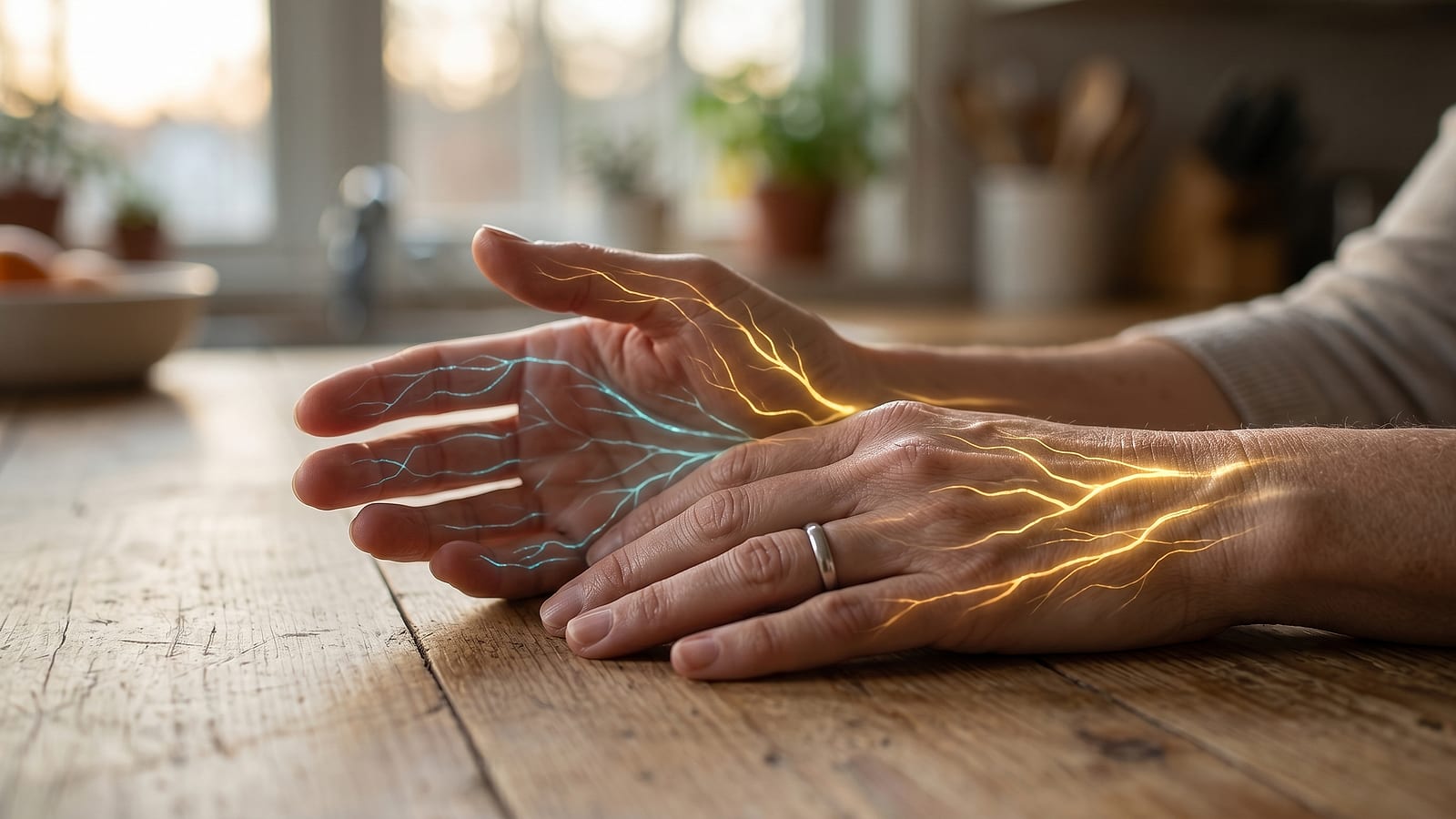
That faint, buzzing numbness in your toes is not just a harmless sign of getting older. For many people, persistent tingling or sensory changes in the hands and feet may point to underlying nerve stress. Many people dismiss this slow, creeping sensation as “just bad circulation” or “normal aging” — until it starts affecting daily life. Peripheral neuropathy (nerve damage that affects the hands and feet) has many causes, and nutritional factors are among those researchers have studied.
One active area of research is the role of B-vitamin levels in keeping peripheral nerves healthy. This article maps out what the current evidence says — and what it does not yet show — about nerve function and a targeted approach using benfotiamine and B vitamins. If you are experiencing neurological symptoms, talk to a doctor before changing your diet or supplements.
Why This Matters Today
Standard blood tests do not always capture the full picture of your nutritional status. Experts also continue to debate the ideal reference ranges for B12. On top of that, certain diets and medications — including some that reduce stomach acid — are linked to lower B-vitamin absorption.
A Cochrane systematic review (a study that pools results from many clinical trials) notes that B-vitamin therapies are widely used for peripheral neuropathy. However, the evidence for specific forms and doses is mixed. Whether you see a measurable benefit may depend on how well your body can absorb the particular form you take [PMID: 18646107]. Talk to a healthcare provider before starting any supplement.

The Science Behind It
Your nerves are wrapped in a fatty protective coating called the myelin sheath. Adequate vitamin B12 is considered important for keeping this coating intact. A deficiency is linked to neurological symptoms including tingling and loss of sensation. But B vitamins do not work alone. Thiamine (vitamin B1) plays a key role in cellular energy production, which nerves depend on heavily.
Benfotiamine is a fat-soluble form of thiamine. Researchers have studied it because it may be absorbed more effectively than standard water-soluble thiamine. In an eight-week randomized controlled trial (the strongest kind of study, where participants are randomly assigned to a treatment or a placebo), patients with alcoholic polyneuropathy who took benfotiamine showed significant improvements in vibration perception, motor function, and an overall neuropathy symptom score compared with those who took a placebo [PMID: 9872352].
Researchers have also looked at benfotiamine combined with other B vitamins. A 12-week double-blind randomized controlled trial in patients with diabetic polyneuropathy found that a combination of benfotiamine with vitamins B6 and B12 was linked to a significant improvement in how fast nerve signals traveled in the peroneal nerve. There was also a trend toward better vibration perception [PMID: 8886748].
However, the evidence is not all positive. A rigorous 24-month double-blind, randomized, placebo-controlled trial in patients with type 1 diabetes found that benfotiamine at 300 mg per day significantly raised thiamine levels in the blood. But it did not work better than a placebo for peripheral nerve function or markers of inflammation [PMID: 22446172]. This shows that benefits seen in some shorter trials have not held up consistently across all populations and study designs. The overall evidence base remains limited. A Cochrane review similarly notes that the evidence for B vitamins in peripheral neuropathy is mixed — some small trials show benefit, others show no significant effect [PMID: 18646107].
The Complete Protocol

Start with the food source
- Eat 150 grams of fresh beef liver or beef tenderloin twice per week. Both are good sources of B vitamins, including B12.
- Cook meat to a safe internal temperature. Eating it with a source of dietary fat may help your body absorb fat-soluble nutrients.
- Including these foods in a balanced diet may help you maintain adequate B-vitamin intake.
Move to the concentrated natural form
- Nutritional yeast is a food source of B-complex vitamins. You can add it to daily meals easily.
- Use about 2 tablespoons (roughly 12 grams) per day, mixed into food or drinks.
- B-vitamin content varies by brand. Check the label for the actual nutrient levels in the product you buy.
Optional: the supplement form
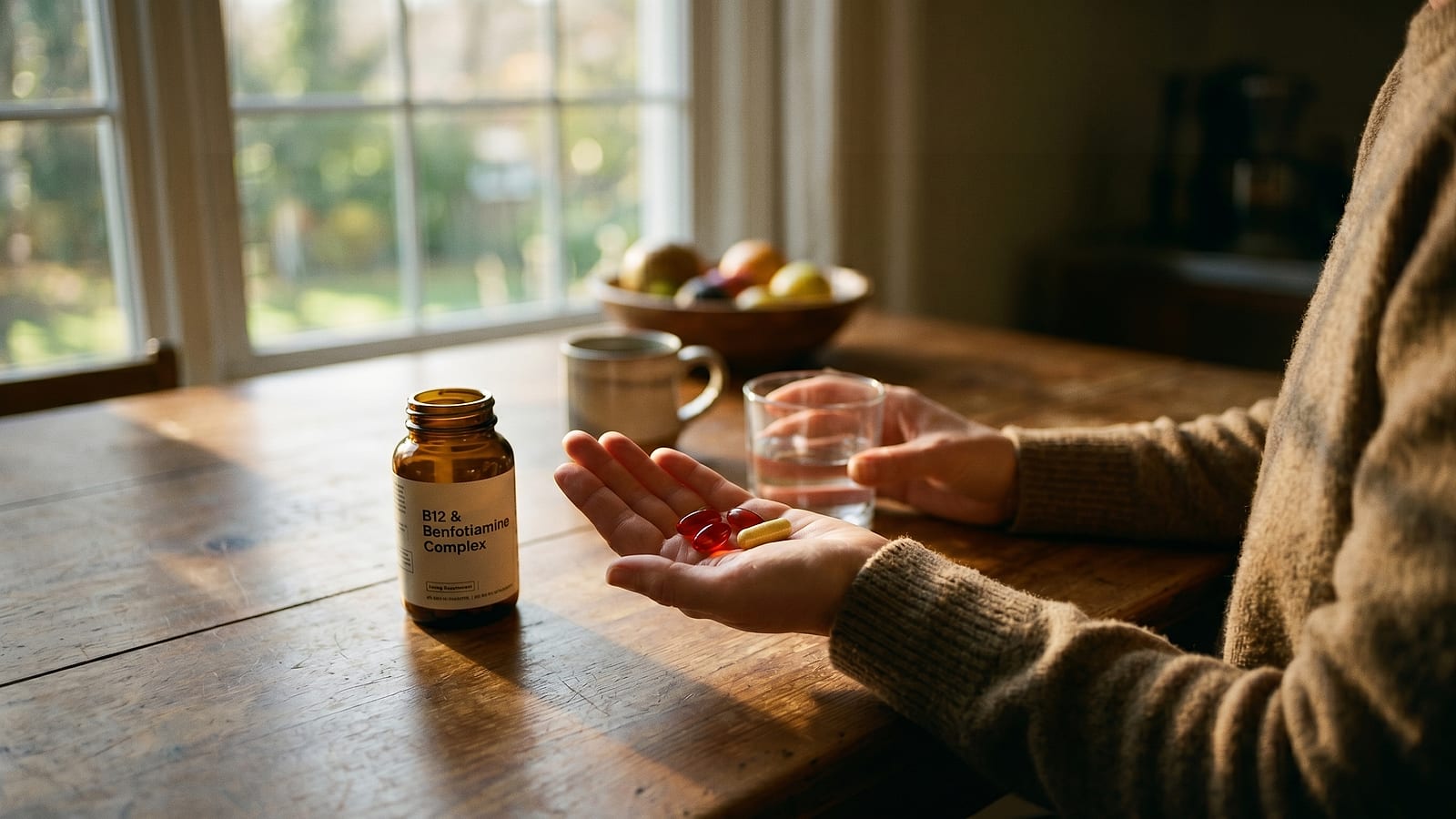
- Clinical trials have used benfotiamine doses ranging from 300 mg per day to higher amounts. Ask a healthcare provider what dose is right for you [PMID: 22446172] [PMID: 8886748].
- Methylcobalamin is a common supplement form of B12. Your healthcare provider can guide you on the right dose based on your individual needs.
- Follow the manufacturer’s instructions on timing and whether to take the supplement with food, since this can vary by product.
When NOT to do this
Do not start a high-dose B-vitamin protocol if you are pregnant, nursing, or currently undergoing chemotherapy without first talking to your doctor. High-dose benfotiamine may also interact with certain medications. Always check with your doctor if you have a history of severe kidney disease or take other medications.
Frequently Asked Questions
Can I combine this protocol with alpha-lipoic acid (ALA)?
Alpha-lipoic acid has been studied separately for peripheral neuropathy and is sometimes used alongside B vitamins. Whether combining the two offers added benefit has not been well established by the available evidence. Talk to your healthcare provider before starting any combination supplement approach.
What if I miss a day of the protocol — should I double the dose?
No. Do not double the dose. If you miss a day, simply pick up where you left off the next day. Doubling up on B vitamins is generally unnecessary and may cause digestive discomfort.
How does benfotiamine compare to standard thiamine mononitrate?
Standard thiamine is water-soluble. Benfotiamine is a fat-soluble form of thiamine. Because of this structural difference, benfotiamine is considered to be absorbed more effectively by the body. Clinical trials have used it specifically for this reason [PMID: 9872352] [PMID: 8886748]. The exact difference in tissue concentrations compared with standard thiamine varies across studies.
Why might improvement take weeks or months?
Nerve tissue repair is a slow process. Clinical trials studying benfotiamine have run from 8 weeks to 24 months [PMID: 9872352] [PMID: 22446172]. This reflects the expectation that meaningful changes in nerve function — if they occur — take time to develop. Individual responses vary, and not all trials have shown significant benefit.
Is the supplement form necessary if I eat B-rich foods every day?
For people with adequate dietary intake and normal absorption, food sources may be enough to maintain B-vitamin levels. For those with a confirmed deficiency, absorption problems, or active neuropathy symptoms, a healthcare provider may recommend supplements in addition to dietary changes. The right approach depends on your individual situation and should be discussed with a doctor.
Verified Sources
- The effects of long-term oral benfotiamine supplementation on peripheral nerve function and inflammatory markers in patients with type 1 diabetes: a 24-month, double-blind, randomized, placebo-controlled trial. — Diabetes care, 2012 (PMID 22446172)
- A benfotiamine-vitamin B combination in treatment of diabetic polyneuropathy. — Experimental and clinical endocrinology & diabetes : official journal, German Society of Endocrinology [and] German Diabetes Association, 1996 (PMID 8886748)
- Benfotiamine in treatment of alcoholic polyneuropathy: an 8-week randomized controlled study (BAP I Study). — Alcohol and alcoholism (Oxford, Oxfordshire), 1998 (PMID 9872352)
- Vitamin B for treating peripheral neuropathy. — The Cochrane database of systematic reviews, 2008 (PMID 18646107)
Bloated, tired, foggy, or fighting cravings?
Get The Gut Reset free — a science-backed guide to go from “off” to clear, light and energized. Drop your email and we’ll send it straight to your inbox.
No spam. Unsubscribe anytime. Educational content, not medical advice.