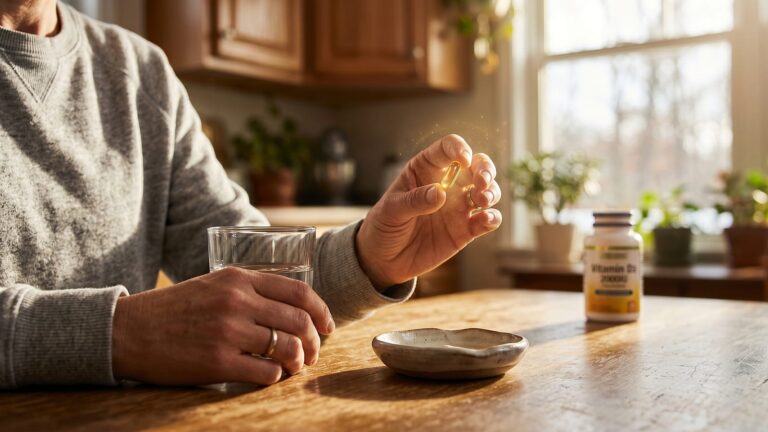
The energy-drink industry sold you a sugar-and-caffeine crash — while the real fix for low energy is a cheap B-vitamin millions are quietly running low on
The energy drink industry sells synthetic stimulants as if they create real energy. They do not. They borrow energy from your body and leave you more drained than before.
Constant exhaustion often has a cause that mainstream advice misses. By the end of this article, you will understand the basics of a thiamine supplementation approach that some researchers are studying for its potential to support how cells make energy.
Why This Matters Today
Many people today eat plenty of calories but still lack key nutrients their cells need. Highly processed carbohydrates may drain your body’s supply of certain vitamins. The more sugar and refined starch you eat, the more vitamin B1 your cells may need to process it.
Yet low thiamine levels are rarely tested in routine checkups. Some people struggle with unexplained brain fog, muscle weakness, and constant fatigue without ever knowing why.
Research in critically ill patients shows that thiamine is essential for the chemical steps your body uses to make energy. Thiamine pyrophosphate (TPP) — the active form of vitamin B1 inside your cells — plays a key role in specific energy-producing pathways [PMID: 38014088]. When thiamine is too low, your body cannot properly turn glucose (blood sugar) into usable fuel. Some evidence suggests that low thiamine levels may be more common than recognized in people with metabolic problems, though exact numbers in the general population are not well established.

The Science Behind It
Your cells make energy through a carefully organized series of chemical steps called the citric acid cycle. This happens inside the mitochondria — your cells’ power generators. Thiamine pyrophosphate (TPP) is a required helper molecule for key enzymes, which are proteins that drive chemical reactions. One of those enzymes is called pyruvate dehydrogenase.
Without enough TPP, your body cannot break down carbohydrates properly. Instead of being converted into ATP — the energy your cells actually use — pyruvic acid can build up as lactic acid. This chemical backup is linked to the kind of heavy fatigue that follows physical or mental effort.
Researchers have studied thiamine even in the most serious medical settings. A meta-analysis (a study that combines results from many trials) of randomized controlled trials (the strongest kind of study) found that giving thiamine through an IV to patients with sepsis — a life-threatening infection response — was linked to fewer patients needing kidney dialysis, lower lactic acid levels after 24 hours, and greater improvement in organ function scores. However, no statistically significant reduction in short-term death rates was found in the overall group [PMID: 41863966]. In a smaller subgroup of patients who were already thiamine-deficient, an exploratory analysis suggested a possible short-term survival benefit, but the sample size was too small to draw firm conclusions [PMID: 41863966].
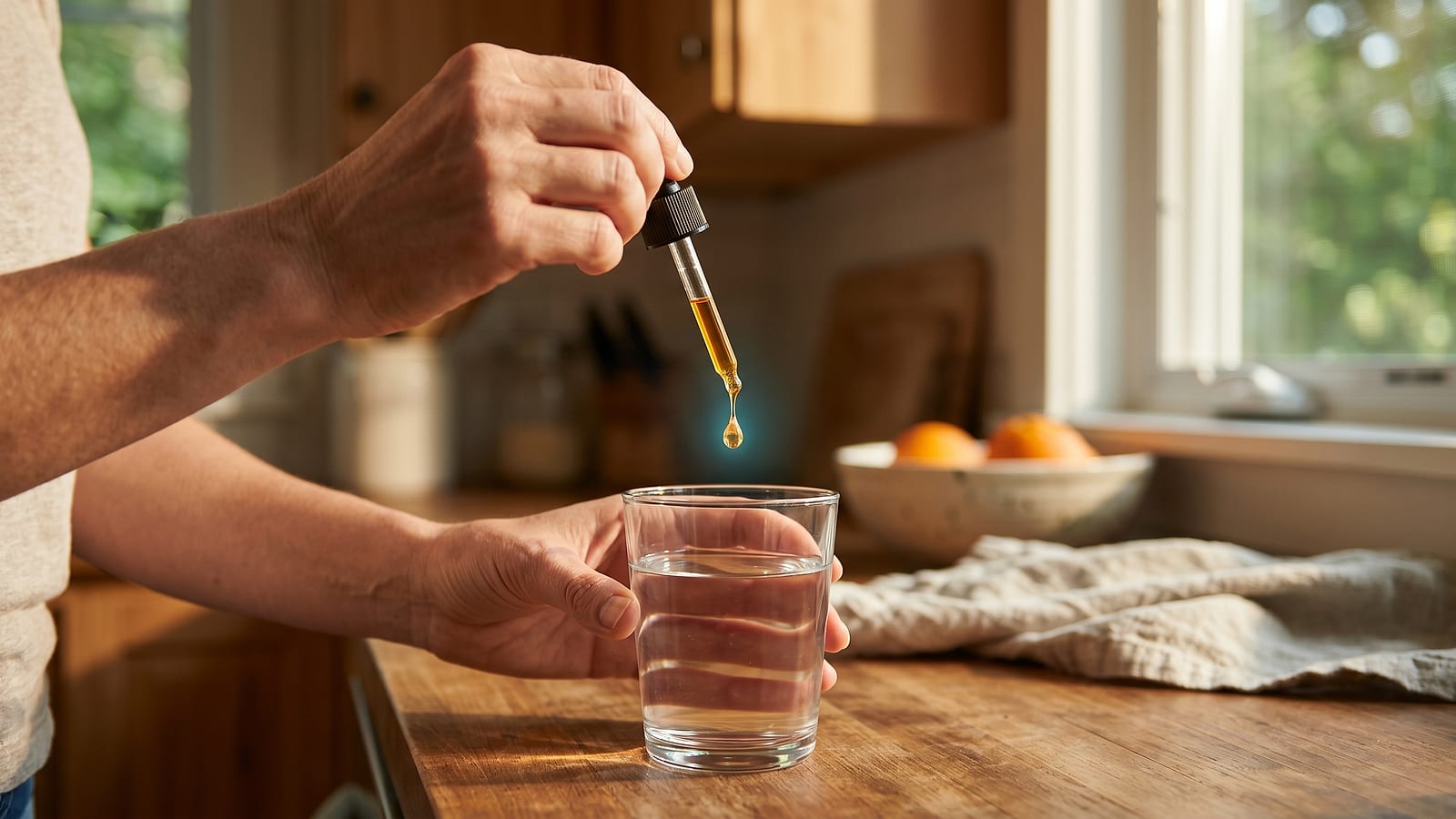
High-dose thiamine has also been studied for its effects on blood sugar handling and how much energy the body burns at rest. A small randomized, double-blind crossover trial — where neither participants nor researchers knew who got what, and each person tried both options — found that 300 mg per day of thiamine for six weeks was linked to a significant drop in resting energy expenditure in people with high blood sugar. This drop was seen compared to both their starting point and a placebo (an inactive pill). No significant change in body weight or waist size was seen [PMID: 32550179]. This suggests high-dose thiamine may help support blood sugar metabolism in people with elevated glucose levels. However, this trial included only twelve participants, so the findings should be interpreted with caution.
Thiamine is not just a passive helper molecule. A review of how thiamine is made and regulated in the body notes that thiamine diphosphate (ThDP) is essential for all living organisms and plays a central role in keeping metabolism balanced [PMID: 21234302]. Restoring adequate thiamine levels may allow these metabolic pathways to work more efficiently, though specific performance claims for healthy individuals are not directly supported by the sources reviewed here.
The Complete Protocol
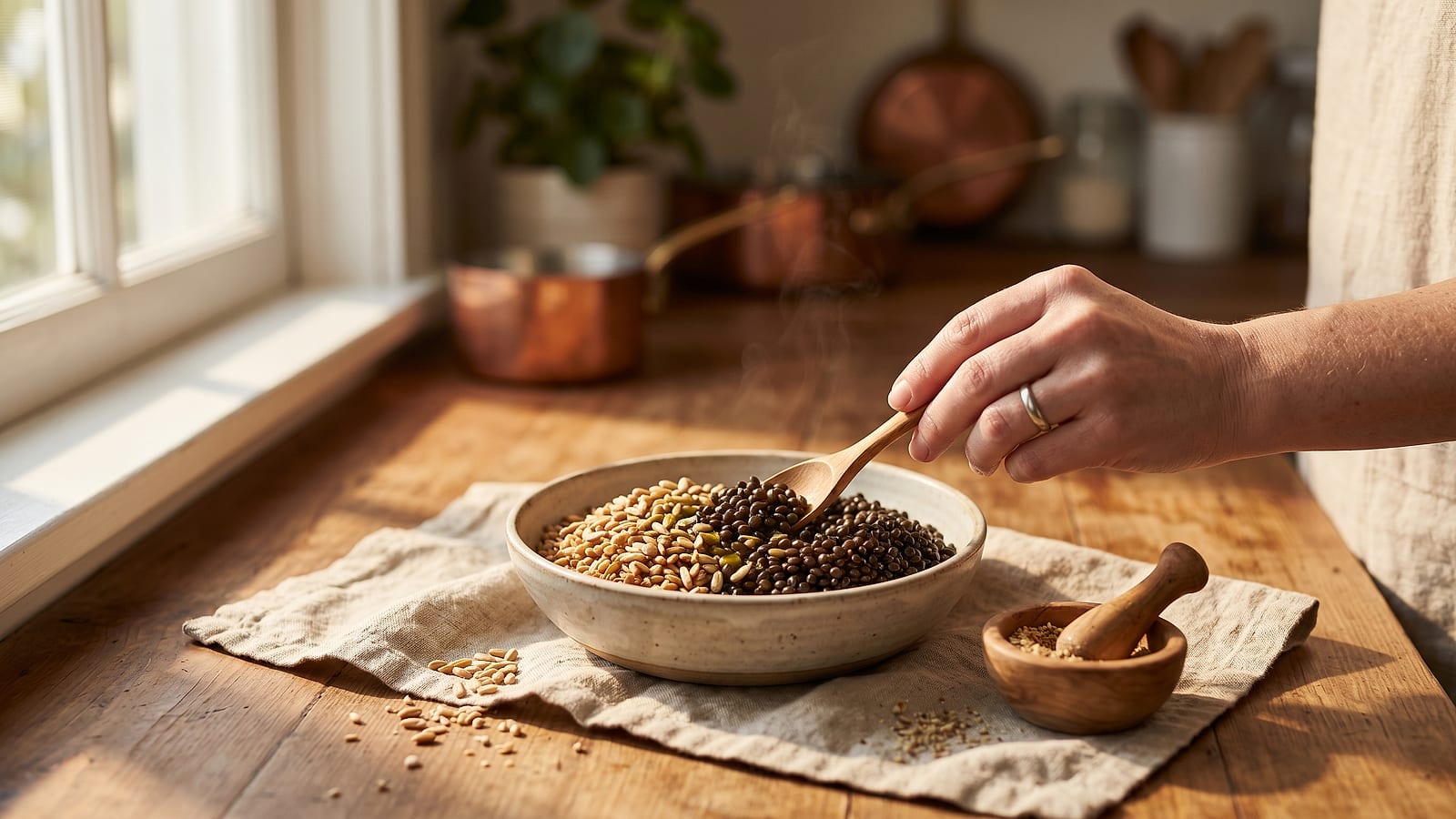
Start with the food source
To support your baseline thiamine levels, consider adding whole foods that are naturally rich in thiamine to your diet.
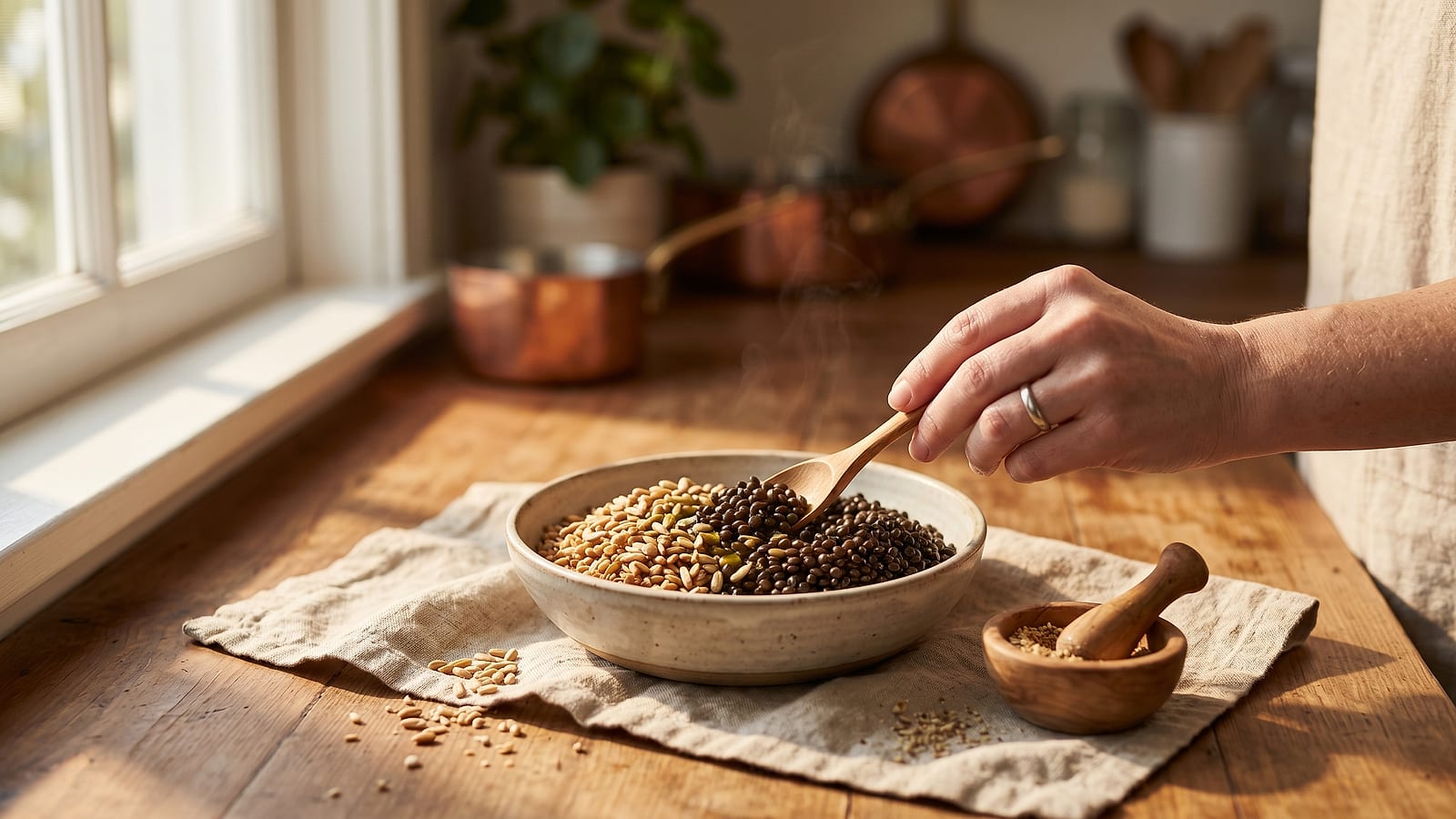
- Sprouted sunflower seeds: A small daily portion can contribute to your thiamine intake. Soaking seeds beforehand is a traditional preparation method sometimes used to reduce phytic acid — a compound that can block nutrient absorption.
- Pasture-raised pork loin: Pork is one of the richest animal sources of thiamine. Gentle cooking methods are generally recommended to limit heat-related nutrient loss.
- Nutritional yeast (non-fortified): A small daily serving can contribute to your overall B-vitamin intake.
Move to the concentrated natural form
To potentially reach thiamine levels beyond what diet alone can quickly deliver, some practitioners suggest concentrated extracts. The specific points below reflect general knowledge about these forms. The sources reviewed here do not directly compare these forms in controlled human trials.
- Garlic-thiamine conjugate (Allithiamine): This is a fat-soluble form of thiamine — meaning it dissolves in fat rather than water — derived from garlic. It is sometimes used at doses around 50 mg daily. Fat-soluble thiamine forms are thought to be absorbed differently than standard water-soluble thiamine, though the size of this difference in humans has not been directly measured in the sources reviewed here. Consult a healthcare provider for guidance on dosing and how long to use it.
Some practitioners suggest pairing thiamine supplementation with magnesium. Magnesium is a helper mineral involved in converting thiamine into its active form, thiamine pyrophosphate. Consult a healthcare provider before adding new supplements.
Optional: the supplement form
If you prefer a standardized supplement, forms that the body absorbs more easily are available.
- Benfotiamine: This is a fat-soluble thiamine derivative. It is thought to reach higher levels in the blood than standard thiamine hydrochloride, though direct comparison data from the sources reviewed here are not available. The randomized trial reviewed here used 300 mg per day of standard thiamine in people with high blood sugar for six weeks [PMID: 32550179]. Specific dosing for benfotiamine in healthy individuals is not established by the sources reviewed here. Consult a healthcare provider for appropriate dosing guidance.
When NOT to do this
Thiamine is generally considered safe because it is water-soluble and excess amounts leave the body in urine. Even so, certain people should use caution.
- Active thiamine-dependent tumors: Some researchers have raised theoretical concerns about high-dose thiamine when cells are dividing rapidly. If you have a history of cancer, consult an oncologist before using high-dose protocols.
- Severe kidney impairment: People on dialysis or with significant kidney disease should consult a specialist before starting any supplementation protocol.
Stop taking high-dose thiamine and consult a healthcare provider if you experience a rapid heart rate, extreme irritability, or skin flushing. These reactions are uncommon but need professional evaluation.
Frequently Asked Questions
Can I combine this protocol with my morning cup of coffee?
Some sources suggest that tannins — naturally occurring compounds found in coffee and tea — may interfere with thiamine absorption in the digestive tract. As a precaution, spacing your thiamine supplement away from coffee or tea is a reasonable step. However, how significant this interaction is at typical dietary amounts is not firmly established by the sources reviewed here. Consult a healthcare provider for personalized guidance.
What if I miss a dose — do I need to restart the entire protocol?
There is no established evidence that missing a single dose means you need to start over. Simply continue with your regular dose the next day. Because thiamine is water-soluble, your body does not store large reserves, but missing one day is unlikely to matter clinically. Do not double your dose the following day to make up for it.
How does this approach compare to taking a standard B-complex supplement?
Standard B-complexes typically contain water-soluble thiamine mononitrate. Fat-soluble thiamine forms such as benfotiamine or allithiamine are thought to be absorbed and distributed in body tissues differently. However, a direct comparison showing a specific size of benefit is not supported by the sources reviewed here. Talk to a healthcare provider about which form may be most appropriate for you.
Is the supplement form absolutely necessary if I eat nutritional yeast every day?
Whether you need a thiamine supplement depends on your individual situation — including your diet, health status, and whether you have an underlying deficiency. A healthcare provider can assess whether supplementation makes sense for you.
Verified Sources
- High-dose thiamine supplementation may reduce resting energy expenditure in individuals with hyperglycemia: a randomized, double – blind cross-over trial. — Journal of diabetes and metabolic disorders, 2020 (PMID 32550179)
- Thiamin (vitamin B1) biosynthesis and regulation: a rich source of antimicrobial drug targets? — International journal of biological sciences, 2011 (PMID 21234302)
- Efficacy of thiamine (vitamin B1) in sepsis and septic shock: A meta-analysis of randomized controlled trials. — Clinics (Sao Paulo, Brazil), 2026 (PMID 41863966)
- High-Resolution Plasma Metabolomics and Thiamine Status in Critically Ill Adult Patients. — Research square, 2023 (PMID 38014088)
Crashing every afternoon? Tired but wired?
Get The 3 PM Crash Killer free — a science-backed guide to steady, all-day energy without more caffeine. Drop your email and we’ll send it straight to your inbox.
No spam. Unsubscribe anytime. Educational content, not medical advice.