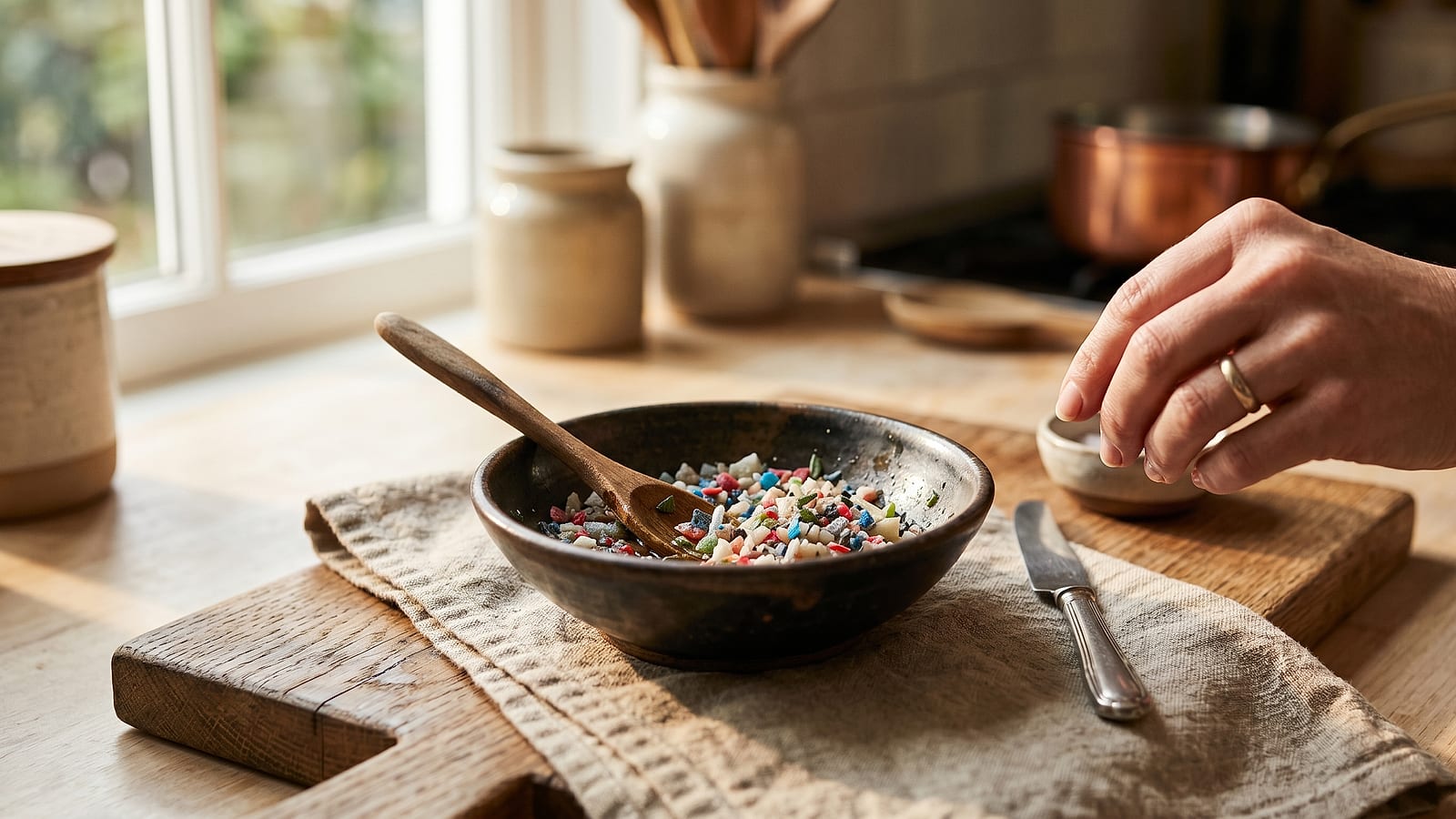
The plastic that touches your food is shedding particles into your arteries — and 2024 research tied them to far more heart attacks
That plastic container you just microwaved? It may have done more than heat your soup. Research shows it can shed tiny particles into food. Those particles have now been found in human blood and artery tissue.
For years, scientists assumed these plastic fragments simply passed through us without harm. New evidence challenges that idea. Below, we summarize what current research says about how microplastics and nanoplastics (MNPs) may affect heart and blood vessel health. We also outline practical, evidence-informed steps to reduce your ongoing exposure.
Why This Matters Today
Concern about microplastics has moved from environmental science into clinical research. A 2024 study tracked 304 patients who had surgery to clear blocked neck arteries. Researchers examined the fatty buildup (called plaque) removed during surgery. They found polyethylene plastic in the artery plaque of 58.4% of patients, and polyvinyl chloride plastic in 12.1% of patients [PMID: 38446676].
In that same study, patients whose plaque contained detectable microplastics or nanoplastics had a significantly higher rate of heart attack, stroke, or death over an average follow-up of about 34 months. This was compared with patients whose plaque showed no detectable MNPs [PMID: 38446676].
A broad review of many studies found links between exposure to plastic-associated chemicals — including plasticizers, bisphenols, and PFAS — and a range of harmful health outcomes. The authors note that the strength of evidence varies depending on the chemical and the health outcome [PMID: 39183960]. Separately, a 2025 analysis pooling 43 studies found that exposure to microplastic pollutants was linked to higher overall cancer rates in case-control studies (OR = 1.10, 95% CI 1.01–1.19). However, this link was not statistically significant in cohort studies (studies that followed large groups of people over time), so the evidence is still early and needs more research [PMID: 40540244]. Together, these findings suggest that reducing unnecessary plastic exposure is a reasonable precautionary goal.
The Science Behind It
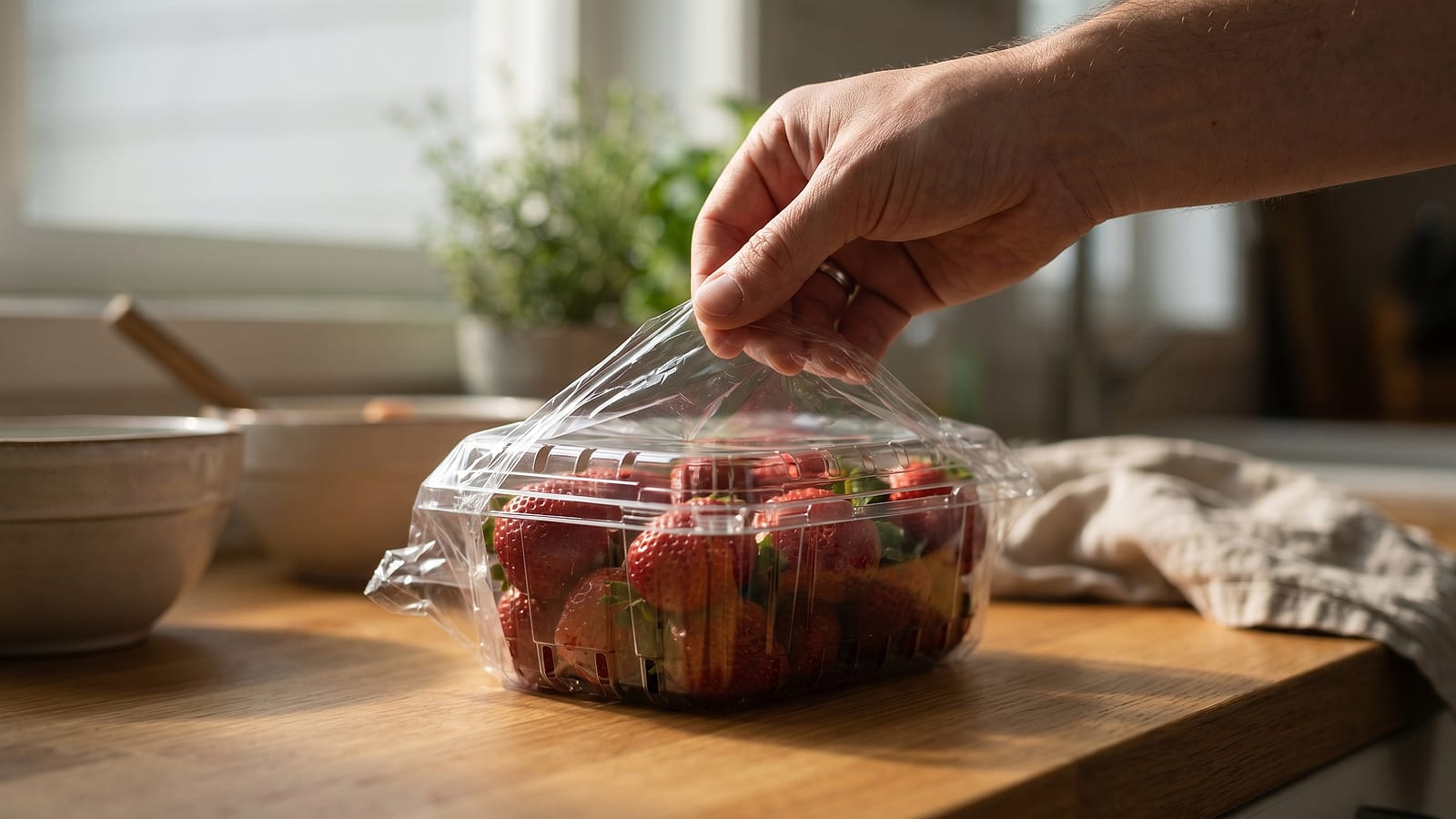
How does a microplastic particle from food packaging end up in artery tissue? The journey starts in the gut. When food is stored in, heated in, or in long contact with plastic packaging, microplastics and nanoplastics can be swallowed. A 2025 review found that once inside the digestive tract, these particles do not simply pass through harmlessly. They may break down, potentially damaging the gut’s protective lining and triggering pathways that cause inflammation (the body’s immune response that, when chronic, can harm tissues) [PMID: 41228684].
The same review notes that MNPs are now commonly found in the digestive tracts of humans and animals. Researchers are actively studying whether they may contribute to conditions including inflammatory bowel disease, diabetes, obesity, and allergic reactions [PMID: 41228684].
Once particles enter the bloodstream, the immune system cannot break down synthetic plastic fragments. A narrative review (a study that summarizes and analyzes existing research) of the heart and blood vessel evidence describes a proposed chain of events: immune cells called macrophages try to engulf the particles and release inflammatory signals into vessel walls [PMID: 40642717]. This review notes that studies in animals and humans suggest MNPs may promote inflammation, damage blood vessels, and disrupt normal heart and blood flow function. The authors emphasize that current evidence is not fully conclusive and that more research is needed [PMID: 40642717].
The same review also highlights that MNPs have been found in human artery plaques and blood clots. Their tendency to attract fats may allow them to build up alongside other environmental contaminants in tissues [PMID: 40642717]. Researchers note that the full extent of the heart and blood vessel risk these particles pose remains an open question requiring further study [PMID: 40642717].
The Complete Protocol
Start with the food source
The most direct step is cutting down on ongoing exposure. Consider switching plastic food storage containers for borosilicate glass or stainless steel, especially for hot or acidic foods where plastic particles are more likely to transfer. Cutting back on single-use plastic water bottles is another practical move.
Filtering your drinking water through a high-quality filter rated to remove fine particles may also help reduce how much you swallow. Eating cruciferous vegetables such as broccoli sprouts is a reasonable general dietary habit. Broccoli sprouts contain glucoraphanin, a compound that the body converts to sulforaphane, which is linked to activating the body’s own antioxidant and detox pathways. That said, there is not yet direct evidence that eating broccoli sprouts clears microplastics from the human body.
Avoid microwaving food in plastic containers. Even containers labeled “microwave safe” may shed particles when heated. That label refers to whether the container holds its shape — not whether particles migrate into your food.
Move to the concentrated natural form
Milk Thistle (Silybum marianum) seed extract, standardized for silymarin content, is widely used to support liver function. Silymarin has shown liver-protective properties in various studies. However, there is currently no direct clinical evidence linking silymarin supplementation specifically to microplastic clearance in the body. If you choose to use this supplement, follow the dosing guidance on the product label and consult a healthcare provider, especially if you take prescription medications.
Optional: the supplement form
Modified Citrus Pectin (MCP) is a soluble fiber supplement that has been studied for its binding properties in the digestive tract. If you choose to use MCP, follow the manufacturer’s dosing instructions. Consult a healthcare provider before starting, especially if you take prescription medications, since soluble fibers can affect how well some drugs are absorbed. No current source directly establishes a specific dose or duration of MCP use for reducing microplastics in humans.
When NOT to do this
Do not make significant changes to your supplement routine if you are pregnant, nursing, or undergoing active medical treatment without first consulting your healthcare provider. Modified Citrus Pectin and other fiber-based supplements may affect how your body absorbs prescription medications. If you take blood pressure, heart, or other regular medications, speak with your doctor or pharmacist before adding any new supplement.
Standard pitcher-style carbon filters may not remove the smallest nanoplastic particles. Look for filters with independently verified ratings for fine particle removal if reducing microplastics is a priority for you.
Frequently Asked Questions
Can I combine this protocol with a heavy metal detox?
MCP has been studied for its binding properties in the digestive tract, and some research suggests it may bind to certain heavy metals as well. However, combining multiple supplement approaches can raise the risk of nutrient or medication interactions. Consult a healthcare provider before combining approaches, and make sure to stay well hydrated.
What if I accidentally eat out of a plastic container — do I restart?
A single exposure is unlikely to meaningfully change your overall exposure over time. The goal of reducing plastic contact with food is to lower your cumulative, ongoing exposure — not to achieve zero exposure in any one instance. Simply continue your reduced-exposure habits going forward.
How does this compare to standard cardiovascular prevention like taking low-dose aspirin?
Standard heart and blood vessel prevention strategies have a well-established evidence base from large clinical trials. The evidence linking microplastic reduction specifically to improved heart health outcomes in humans is still emerging. Reducing plastic exposure should be seen as a complementary precautionary step, not a replacement for evidence-based cardiovascular care. Always follow your physician’s guidance on standard prevention therapies.
Is the supplement form necessary if I eat broccoli sprouts daily?
No supplement is strictly necessary. Dietary changes — including eating more vegetables linked to antioxidant and detox pathway support — are a reasonable first step. Supplements such as MCP may offer additional binding capacity in the digestive tract. However, the two approaches address different potential mechanisms and are not directly comparable based on current evidence.
Verified Sources
- Microplastics from Food Packaging: Polymer Degradation Pathways, Environmental Distribution, and Effects on the Human Gastrointestinal Tract. — Polymers, 2025 (PMID 41228684)
- An Umbrella Review of Meta-Analyses Evaluating Associations between Human Health and Exposure to Major Classes of Plastic-Associated Chemicals. — Annals of global health, 2024 (PMID 39183960)
- Microplastics and Nanoplastics in Atheromas and Cardiovascular Events. — The New England journal of medicine, 2024 (PMID 38446676)
- Microplastics, plastics, and their products exposures and cancer: a pooled analysis. — International journal of surgery (London, England), 2025 (PMID 40540244)
- Evidence, Mechanisms, and Clinical Implications of Microplastics and Nanoplastics As Emerging Cardiovascular Risk Factors: A Narrative Review. — Cureus, 2025 (PMID 40642717)
Bloated, tired, foggy, or fighting cravings?
Get The Gut Reset free — a science-backed guide to go from “off” to clear, light and energized. Drop your email and we’ll send it straight to your inbox.
No spam. Unsubscribe anytime. Educational content, not medical advice.