
The seed called “a remedy for everything but death” for 1,400 years is finally being decoded by modern labs — and the data is stunning
My grandmother kept a small, dented tin of tiny black seeds in her kitchen pantry. She called them Habbatul Barakah—the seed of blessing. She swore they could soothe everything from winter coughs to stubborn fatigue. For over fourteen centuries, healers across the Silk Road used this plant as a universal remedy. These stories were once seen as charming folklore—until researchers began studying the seed’s chemistry.
Today, clinical trials are testing what ancient physicians observed. This article gives you a practical overview of how the raw powder and concentrated oil have been studied, along with general guidance on supplementation based on current evidence.
Why This Matters Today
Many people today deal with blood sugar swings and low-grade, ongoing inflammation. Modern life’s constant stress can leave the body’s defenses out of balance. Drugs that target only one problem often miss the broader support that some traditional plants may offer.
That is where Nigella sativa (black seed) has drawn growing scientific interest. A review of many studies found that black seed is linked to a wide range of health benefits, especially for metabolism and inflammation. However, the authors warned that the quality of the underlying research was often poor, and results should be read carefully [PMID: 37057067]. Rather than hitting one single target in the body, the active compounds in black seed may help support the body’s own balancing processes. A randomized trial (the strongest kind of study), which was placebo-controlled and double-blind, tested black seed powder in young healthy volunteers. It found that 1 gram per day for four weeks produced meaningful changes in certain immune markers. Other doses tested did not reach the same level of significance [PMID: 37901256]. Black seed is not a cure. But evidence suggests it may act as a biological regulator for certain body systems. Let us look at how these tiny seeds interact with the body at a cellular level.

The Science Behind It
The most studied active compound in black seed is thymoquinone (TQ). It is a natural chemical found in the seed’s volatile oils. A comprehensive review found that thymoquinone can reduce oxidative stress (cell damage caused by harmful molecules) and calm inflammation. It also appears to support cell survival and energy use, based on lab studies and some human trials [PMID: 34073784]. The same review noted that, despite real progress in research, using black seed and its active compounds in everyday clinical care is still at an early stage.
Researchers have also looked at how black seed affects heart health and blood pressure. A review and analysis of 11 randomized controlled trials found that black seed supplementation was linked to lower blood pressure. Average systolic pressure (the top number) dropped from about 132.85 to 125.19 mmHg. Average diastolic pressure (the bottom number) dropped from 82.63 to 77.74 mmHg. The average treatment period across those trials was about 8.3 weeks [PMID: 27512971]. The analysis also looked at whether seed powder versus oil made a difference in outcomes. Readers should check the full paper for the details of those findings.
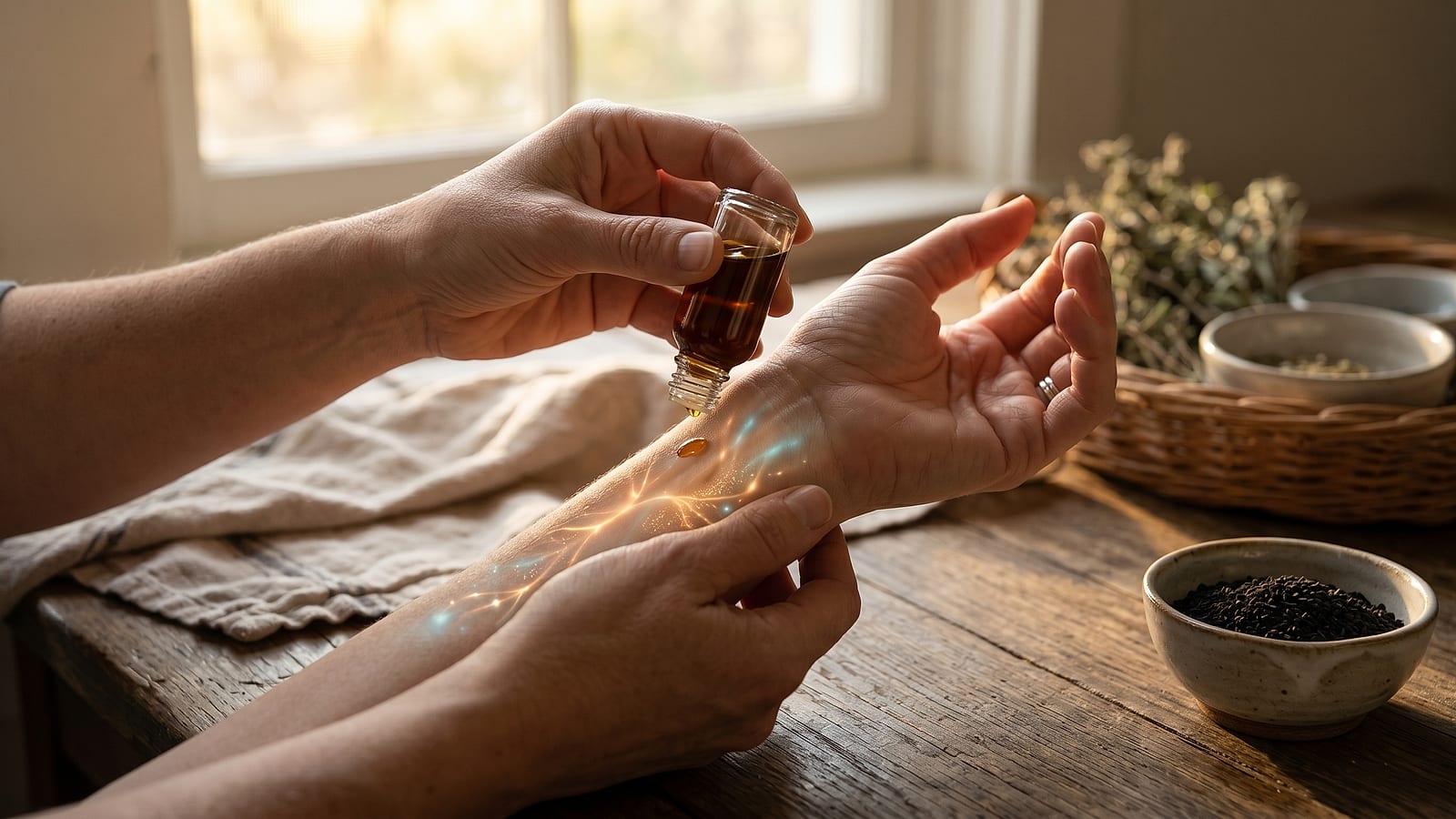
On the immune side, reviews suggest thymoquinone may help balance inflammatory signals (called cytokines) while supporting cell survival and energy use [PMID: 34073784]. The randomized trial in healthy volunteers found that 1 gram of black seed powder per day produced meaningful changes in certain immune markers compared to a placebo. The authors noted the study was small and short [PMID: 37901256].
Overall, the evidence points to a plant with real biological activity across several body systems. At the same time, much of the research is still early-stage, and larger, higher-quality trials are needed [PMID: 37057067].
Practical Supplementation Guidance
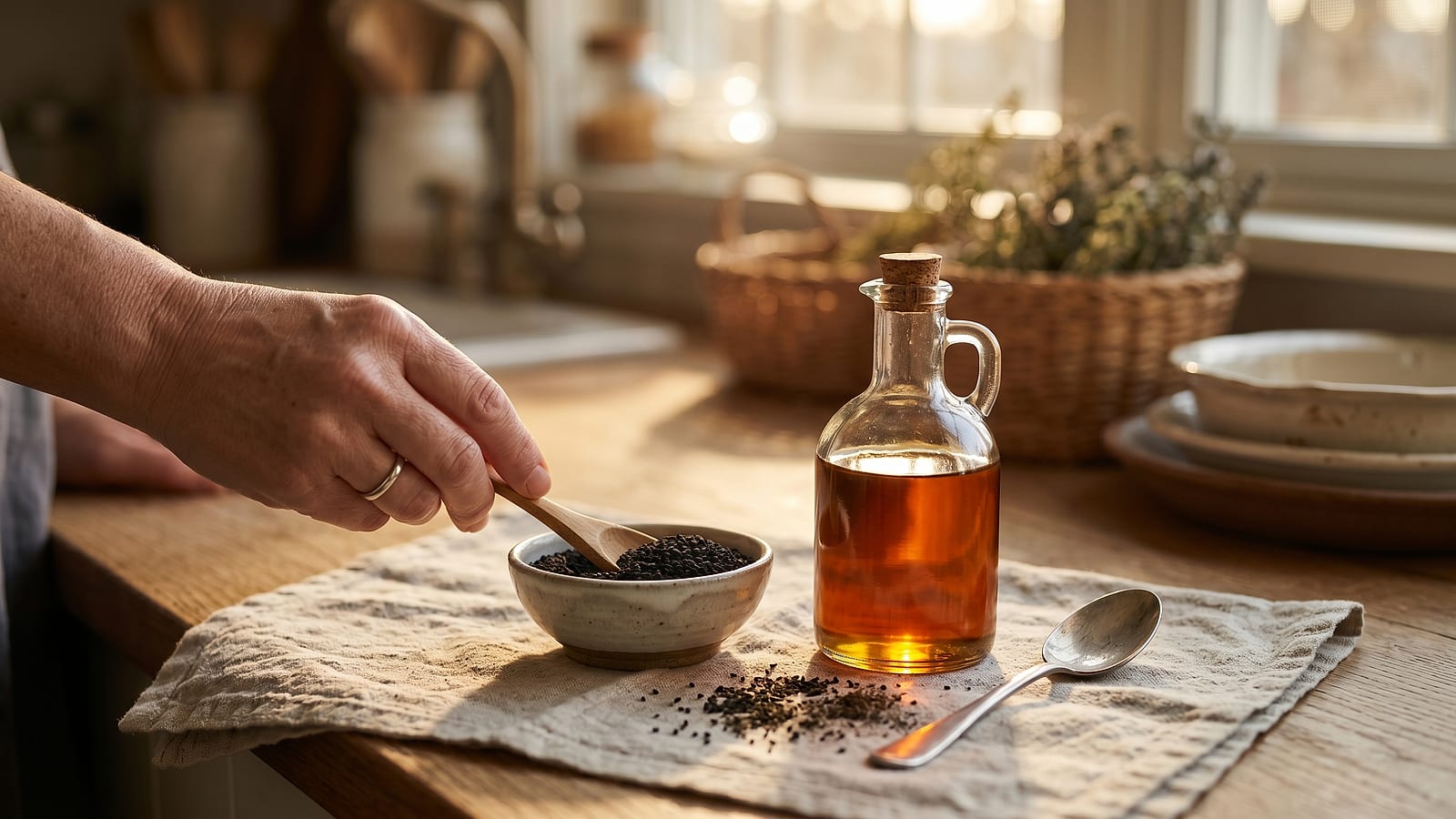
The guidance below reflects doses and forms that have appeared in published clinical research. It is not a personalized medical plan. Always talk to a qualified healthcare provider before starting any new supplement.
The seed powder form
- Studied dose: Clinical trials have used between 0.5 g and 2 g of black seed powder per day. The randomized trial in healthy volunteers found that 1 g per day was the dose linked to meaningful immune marker changes [PMID: 37901256].
- Preparation: You can grind the seeds with a mortar and pestle or a clean coffee grinder. Taking the freshly ground powder with food or honey is a common traditional approach.
- Duration: The immune-focused trial used a four-week period [PMID: 37901256]. The blood pressure review reported an average treatment length of about 8 weeks across the included trials [PMID: 27512971].
The cold-pressed oil form
- General guidance: Cold-pressed, unrefined black seed oil is the form most often used in research and traditional practice. Taking it with a meal that contains some fat may help your body absorb the fat-soluble compounds.
- Storage: Keep it in a cool, dark place. Light and heat can break down thymoquinone and reduce its potency.
Always buy cold-pressed oil packaged in dark amber glass bottles. Light and heat can degrade the delicate thymoquinone, reducing potency.
The supplement capsule form
- General guidance: Standardized capsules give you a consistent dose and may be easier for people who find the taste of raw seeds hard to tolerate. Look for products that list their thymoquinone content. A healthcare provider can help you choose the right dose.
When NOT to use this
Do not use black seed oil if you are pregnant, as it may stimulate uterine contractions. Because it may affect blood pressure and clotting, avoid it if you take blood thinners such as warfarin, or blood pressure medications, without medical supervision. Tell your healthcare provider or surgeon if you are using this supplement before any scheduled procedure.
Frequently Asked Questions
Can I combine the raw powder with the cold-pressed oil?
Combining forms is possible, but you may want to adjust doses to avoid stomach discomfort. No clinical trial in the reviewed evidence has specifically studied a combined powder-plus-oil regimen, so precise dosing for this combination has not been established. Talk to a healthcare provider for personalized guidance.
What should I do if I miss a day of supplementation?
Do not double your dose the next day to make up for it. Simply resume your normal dose the following day. If you have questions about your specific regimen, consult a healthcare provider.
Is a periodic break from supplementation advisable?
Some practitioners recommend taking breaks from concentrated botanical supplements. However, the clinical evidence reviewed here does not establish a specific cycling schedule for Nigella sativa. No evidence-based recommendation on break timing can be made. Talk to a healthcare provider for guidance suited to your situation.
How does black seed oil compare to fish oil for inflammation?
They may work through different mechanisms in the body. Fish oil provides EPA and DHA, two types of omega-3 fatty acids. Reviews suggest that thymoquinone may help reduce oxidative stress and calm inflammatory pathways [PMID: 34073784]. However, no direct head-to-head clinical trial comparing the two is included in the reviewed evidence, so no claim about which is better can be made. Whether they can be safely combined should be discussed with a healthcare provider.
Is the supplement form necessary if I eat the ground seeds daily?
Not necessarily. Whole ground seeds have been used in clinical research, including the randomized trial that found immune marker effects at 1 g per day [PMID: 37901256]. Standardized capsules may offer convenience and consistent dosing. The best form depends on your personal preference and health goals. A healthcare provider can help guide that choice.
Verified Sources
- A systematic review and meta-analysis of randomized controlled trials investigating the effects of supplementation with Nigella sativa (black seed) on blood pressure. — Journal of hypertension, 2016 (PMID 27512971)
- Black Cumin (Nigella sativa L.): A Comprehensive Review on Phytochemistry, Health Benefits, Molecular Pharmacology, and Safety. — Nutrients, 2021 (PMID 34073784)
- Effect of Nigella sativa on general health and immune system in young healthy volunteers; a randomized, placebo-controlled, double-blinded clinical trial. — F1000Research, 2021 (PMID 37901256)
- Nigella sativa and health outcomes: An overview of systematic reviews and meta-analyses. — Frontiers in nutrition, 2023 (PMID 37057067)
Bloated, tired, foggy, or fighting cravings?
Get The Gut Reset free — a science-backed guide to go from “off” to clear, light and energized. Drop your email and we’ll send it straight to your inbox.
No spam. Unsubscribe anytime. Educational content, not medical advice.