The ‘anti-aging’ molecule from the 2023 headlines: what taurine actually does in humans — and what’s still just mice
In 2023, headlines called it the “anti-aging molecule.” Taurine — the amino acid in your energy drink — was said to reverse aging. The story spread fast.
The full truth is more interesting, and more useful. Part of the hype is real. Part of it happened in mice. And the thing taurine actually does in people is something the headlines barely mentioned.
Where the “anti-aging” idea came from
A 2023 study found that taurine levels fall as we age. In animals, topping taurine back up extended healthspan — and, in some species, lifespan [PMID: 38435677]. The researchers suggested low taurine may be one driver of aging, and a possible marker of it [PMID: 38435677].
That is a genuinely exciting finding. But read the fine print. The lifespan results were in animals like mice. In humans, we have associations — taurine drops with age, and lower levels track with worse health — not proof that taking taurine makes people live longer [PMID: 38435677]. Human lifespan trials take decades. They have not been done.
So if someone tells you taurine is proven to extend human life, that is the mouse data wearing a human costume.
What taurine actually does in humans (the proven part)
Here is what the headlines skipped — and it is the strongest part. In people, taurine has been tested in dozens of randomized trials. The results for heart and blood sugar are solid.
A 2025 analysis pooled 34 randomized trials. Taurine lowered fasting blood sugar (about 6 mg/dL), HbA1c (a three-month blood sugar average), insulin resistance, triglycerides, total and LDL cholesterol, and blood pressure [PMID: 41275513].
A separate 2024 analysis of 25 trials reached the same place: taurine reduced markers of metabolic syndrome, including blood pressure, at doses of about 0.5 to 6 grams a day [PMID: 38755142].
This is real human evidence — not mice. Taurine is even approved in Japan as a treatment for heart failure [PMID: 37231728].
How taurine works in the body
Taurine is not a typical amino acid — it does not build proteins. It acts more like a background regulator. It sits in high amounts in the heart and muscles, where it helps manage calcium, steady cell membranes, and buffer oxidative stress (damage from unstable molecules) [PMID: 20804594].
Think of it less as fuel and more as a stabilizer that keeps the machinery running smoothly [PMID: 37231728]. That fits why the human benefits show up in blood pressure, blood sugar, and cholesterol — not as a dramatic energy surge.
What this means for you
Drop the “live forever” framing. That part is mice and maybes. Keep the part that is earned: in humans, taurine modestly improves blood sugar, cholesterol, and blood pressure across many trials [PMID: 41275513][PMID: 38755142].
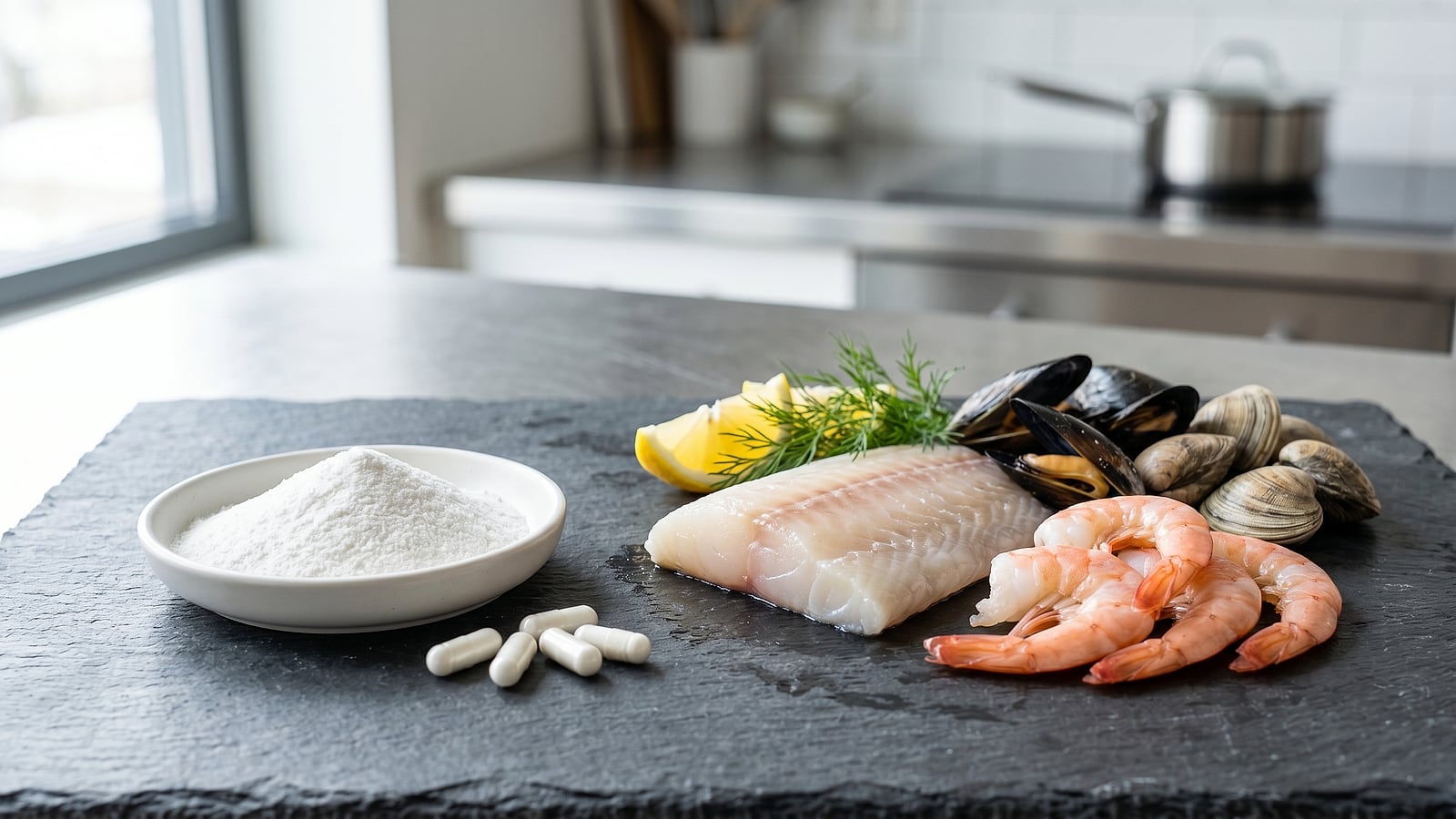
Trial doses ran from about 0.5 to 6 grams a day [PMID: 38755142]. Taurine is found naturally in shellfish, fish, and meat. Check with a doctor first if you are pregnant, take blood-pressure or diabetes medicine (taurine can add to their effect), or have kidney problems. And skip the “energy drink as a taurine source” idea — the sugar and caffeine there work against the benefits.
Frequently Asked Questions
So does taurine actually slow aging?
In animals, supplementing taurine extended healthspan. In humans we only have associations — lower taurine tracks with age and worse health — not proof it extends human life [PMID: 38435677]. The honest answer: promising, but unproven in people.
Is the taurine in energy drinks doing anything?
The taurine itself may help heart and blood sugar markers, but it is paired with sugar and caffeine that undercut those gains. The trial evidence is for taurine on its own, not energy drinks [PMID: 41275513].
How much was used in the studies?
Human trials used roughly 0.5 to 6 grams a day [PMID: 38755142]. More is not automatically better. Check with a doctor, especially if you take heart or diabetes medicine.
Verified Sources
- Taurine as a biomarker for aging: A new avenue for translational research. — Advances in biomarker sciences and technology, 2023 (PMID 38435677)
- Effects of Oral Taurine Supplementation on Cardiometabolic Risk Factors: A Meta-analysis and Systematic Review of Randomized Clinical Trials. — Nutrition reviews, 2025 (PMID 41275513)
- Taurine reduces the risk for metabolic syndrome: a systematic review and meta-analysis of randomized controlled trials. — Nutrition & diabetes, 2024 (PMID 38755142)
- Physiological roles of taurine in heart and muscle. — Journal of biomedical science, 2010 (PMID 20804594)
- Biological Effects and Mechanisms of Taurine in Various Therapeutics. — Current drug discovery technologies, 2023 (PMID 37231728)
Crashing every afternoon? Tired but wired?
Get The 3 PM Crash Killer free — a science-backed guide to steady, all-day energy without more caffeine. Drop your email and we’ll send it straight to your inbox.
No spam. Unsubscribe anytime. Educational content, not medical advice.
professional before changing your diet, supplements, or treatment. These statements have not been
evaluated by the Food and Drug Administration and are not intended to diagnose, treat, cure, or prevent any disease.