
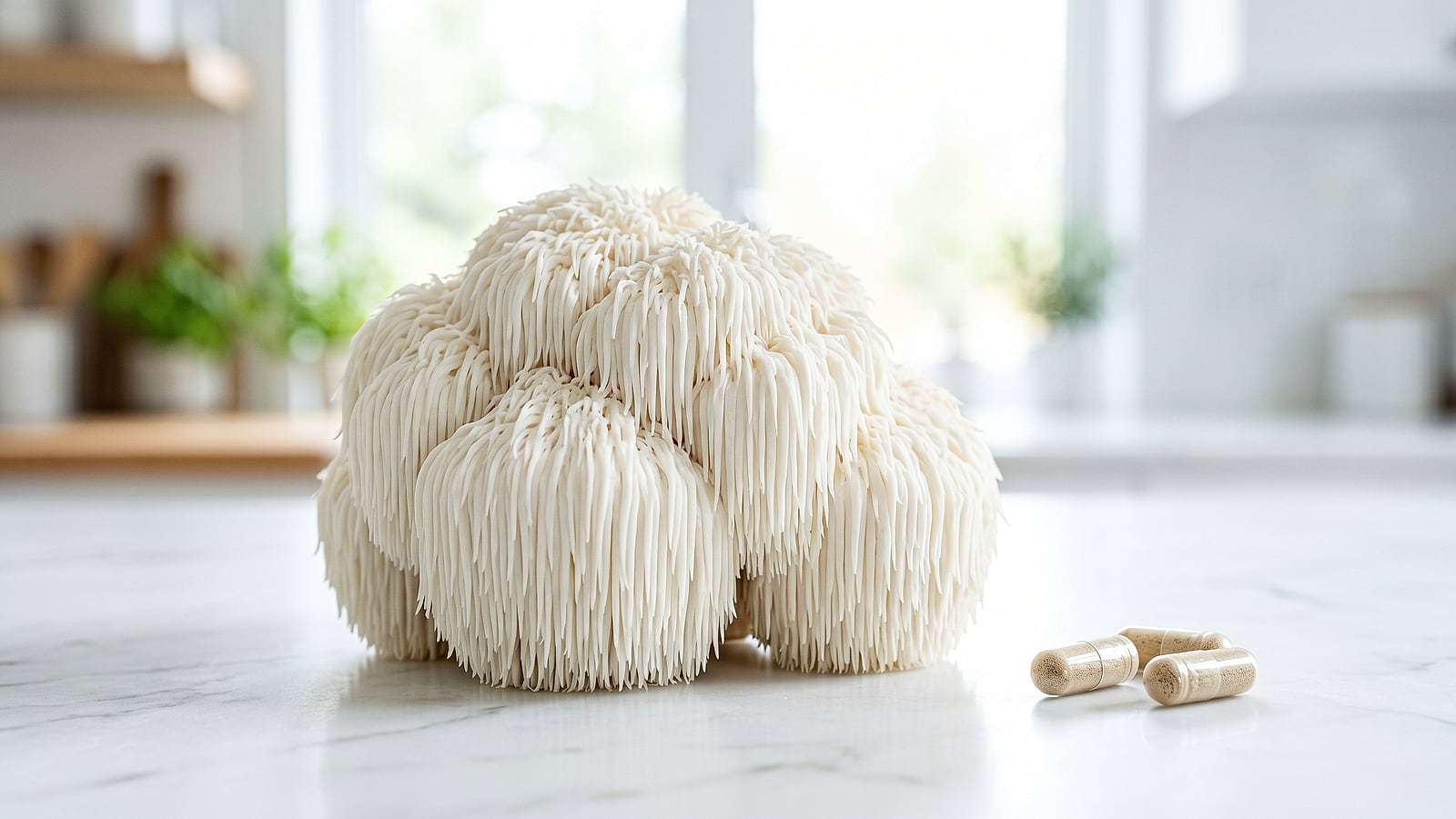
The strange-looking mushroom that may help your brain repair itself — what the science says about lion’s mane
It looks like something from the bottom of the ocean — a white, shaggy mushroom that grows in cascading icicle-like strands, more like a sea creature than a forest food. It’s called lion’s mane, and over the last few years it has quietly become one of the most talked-about supplements for the brain: for memory, for focus, for that frustrating mental fog so many of us live with. The claims online are enormous. The real science is more modest — but genuinely intriguing, and unlike most “brain boosters,” there’s a plausible biological reason it might actually do something.
If you’ve been forgetting names mid-sentence, losing your train of thought, or just feeling that your mental sharpness isn’t what it was, this is worth eight honest minutes. By the end you’ll understand the one mechanism that makes lion’s mane different from caffeine and the rest, what the human studies actually found, who might benefit most, how to choose a product that isn’t a waste of money, and where the hype outruns the evidence.

What makes lion’s mane different from every other “brain booster”
Most things sold for focus are just stimulants — caffeine and its cousins. They push your brain harder for a few hours, then wear off. Lion’s mane is interesting for a completely different reason, and it comes down to one phrase you should know: nerve growth factor, or NGF.
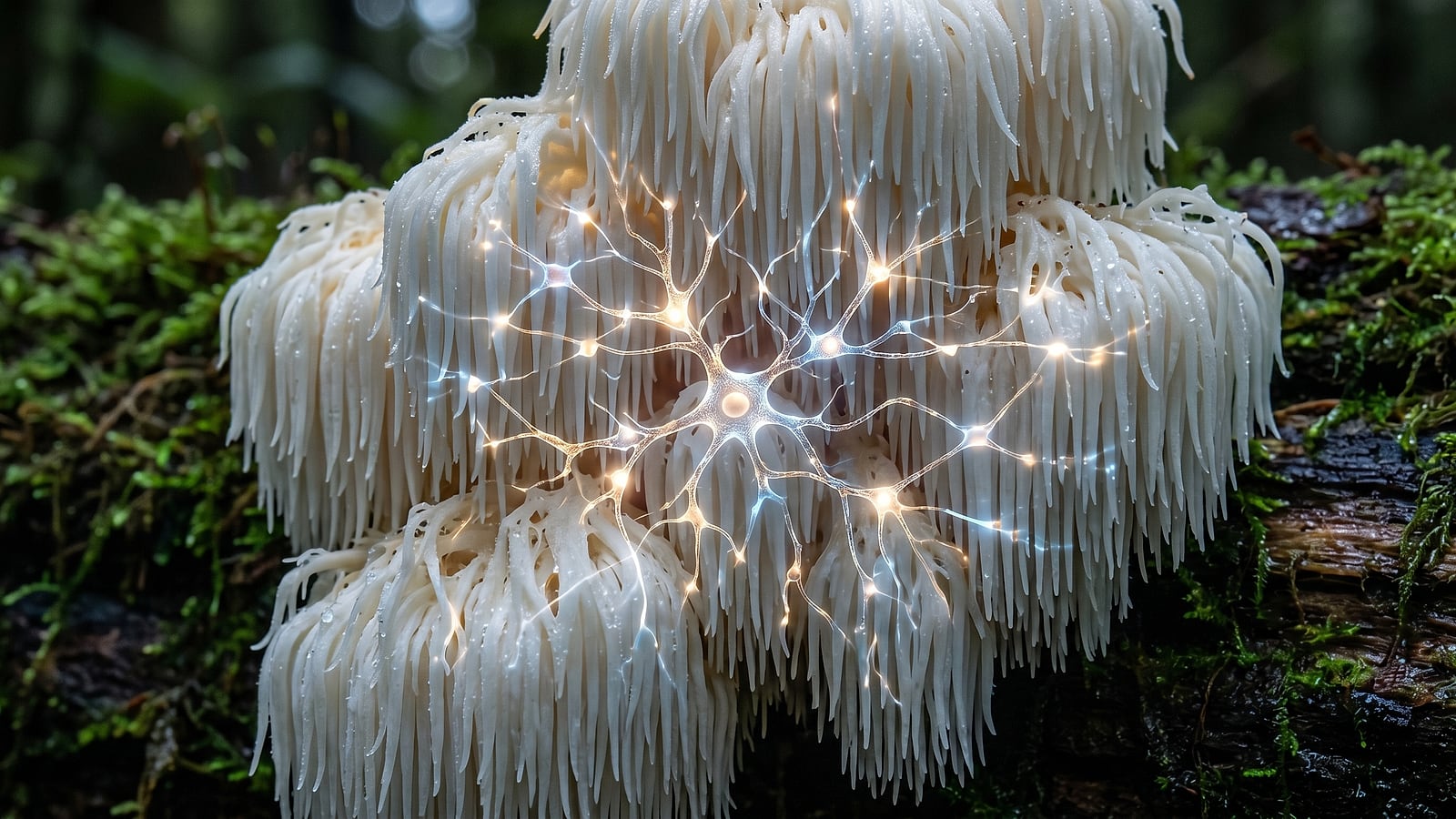
NGF is one of your body’s own proteins that helps brain cells grow, repair themselves and form new connections. It’s a bit like fertilizer for your neurons. The remarkable thing researchers found is that compounds in lion’s mane — called hericenones and erinacines — appear able to stimulate the production of NGF [PMID: 29953363]. In other words, instead of just flogging your brain to work harder today, lion’s mane may support the underlying machinery your brain uses to maintain and rebuild itself over time. That’s a fundamentally different and more interesting idea than a stimulant — and it’s why scientists keep studying it for the nervous system specifically.
What the human studies actually found
Here’s where honesty matters, because the gap between the hype and the evidence is real. Much of the most dramatic research is still in cells and animals, not people — important early science, but not proof of what it’ll do for you. That said, the human studies that do exist are encouraging. The most cited is a Japanese trial in older adults with mild cognitive difficulties: those who took lion’s mane regularly showed measurable improvements on cognitive tests compared with placebo — and, tellingly, the benefit faded after they stopped taking it, which suggests it was the mushroom doing the work [PMID: 29953363]. More recent reviews summarizing its use as a supplement conclude it’s a promising area with a good safety profile, while honestly noting we need larger, longer human trials before making strong claims [PMID: 40959699].
So the fair summary is this: a real, plausible mechanism, encouraging early human results, and not yet the settled, blockbuster proof the marketing implies. Promising — not proven. That’s exactly the kind of nuance the supplement aisle erases.
Who might benefit most
Be realistic about expectations and you’ll be a better judge of it. The people most likely to notice something are those starting from a deficit: older adults experiencing the normal, mild slowing of memory and recall that comes with age — the group the strongest trial actually studied. People grinding through chronic brain fog, mental fatigue or high-stress mental work sometimes report clearer thinking too, though that’s more anecdotal. If you’re a healthy young person already sharp and well-rested, be honest: you may notice little or nothing, because there’s less room to improve. The biggest gains usually go to those with the most to recover.
How to use it, step by step
- Check what you’re actually buying. This is the single most important tip. Many cheap products are made from mycelium grown on grain, which is largely filler — you’re paying for starch. Look for a supplement made from the actual fruiting body (the mushroom itself), ideally one that mentions standardized active compounds.
- Be consistent and patient. Lion’s mane is not a stimulant you feel in an hour. Its proposed benefit builds gradually as it supports your brain over time. Take it daily and give it a real trial of at least 8 to 12 weeks before judging.
- Take it with food. It’s generally well tolerated; taking it with a meal reduces the small chance of stomach upset.
- You can also eat it. Lion’s mane is a genuine culinary mushroom with a seafood-like, almost crab or lobster taste when cooked. Adding it to your diet is a pleasant, food-first way to include it.
- Don’t stack it with hype. Skip the loaded “nootropic blends” that bury a tiny amount of lion’s mane among a dozen flashy ingredients. A clean, single-ingredient product tells you what you’re getting.

How to know it’s working
Because the effect is subtle and gradual, you need a way to judge it that isn’t just vibes. Before you start, notice your baseline honestly: how often do you lose your train of thought, forget a word, or hit that wall of mental fatigue in the afternoon? After 8 to 12 weeks of consistent use, check again. The realistic win is incremental — a little less fog, recalling names a beat faster, holding focus a bit longer on demanding work. It will not feel like a switch flipping. And remember the clue from the research: if it’s helping, some of that clarity may quietly slip back if you stop — a sign the mushroom, not your imagination, was contributing.
The honest cautions
Lion’s mane has a strong safety record, but a few sensible cautions apply. Because it’s a mushroom, people with mushroom allergies should avoid it. There are scattered reports of skin reactions or breathing issues in sensitive individuals — stop if you react. It may have mild effects on blood sugar and on blood clotting, so talk to your doctor first if you take diabetes or blood-thinning medication, or if you have surgery coming up. And the universal rule holds: a supplement supports a healthy brain, it doesn’t replace the real foundations — sleep, movement, real food and managing stress still do the heavy lifting.
Where this could leave you
Realistically: not the genius-in-a-capsule the internet promises, but one of the few “brain” supplements with a genuinely interesting mechanism and encouraging early human evidence behind it. Picture a daily habit of a real fruiting-body capsule — or a pan of that odd, seafood-flavored mushroom — and, a few months on, a mind that fogs a little less and holds its focus a little longer. Promising, honest, and worth a careful try — especially if age or relentless mental load has dulled your edge — as long as you keep your expectations as clear as the thinking you’re hoping to get back.
Frequently Asked Questions
Does lion’s mane really improve memory and focus?
The evidence is promising, not proven. A trial in older adults with mild cognitive difficulties found measurable improvement versus placebo that faded after stopping [PMID: 29953363], and it has a plausible mechanism — stimulating nerve growth factor. But most research is still early, and larger human trials are needed [PMID: 40959699].
How long does lion’s mane take to work?
It’s not a stimulant you feel in an hour — its benefit builds gradually. Take it consistently every day and give it a genuine trial of at least 8 to 12 weeks before deciding, tracking your focus and recall before and after.
How do I choose a good lion’s mane supplement?
Look for one made from the actual fruiting body (the mushroom), not mycelium grown on grain, which is mostly starch filler. A clean, single-ingredient product that mentions standardized active compounds is far better than a flashy ‘nootropic blend.’
Is lion’s mane safe?
It has a good safety record for most people. Avoid it if you have a mushroom allergy, and stop if you notice skin or breathing reactions. Talk to your doctor first if you take diabetes or blood-thinning medication or have surgery coming up, as it may mildly affect blood sugar and clotting.
Verified Sources
- Dietary Supplementation of Lion’s Mane Medicinal Mushroom, Hericium erinaceus, and Spatial Memory in Wild-Type Mice / cognitive function in humans. — Journal of Medicinal Food / Phytotherapy Research, 2018 (PMID 29953363)
- Benefits, side effects, and uses of Hericium erinaceus (lion’s mane) as a supplement: a review. — Frontiers in Nutrition, 2025 (PMID 40959699)
Bloated, tired, foggy, or fighting cravings?
Get The Gut Reset free — a science-backed guide to go from “off” to clear, light and energized. Drop your email and we’ll send it straight to your inbox.
No spam. Unsubscribe anytime. Educational content, not medical advice.
professional before changing your diet, supplements, or treatment. These statements have not been
evaluated by the Food and Drug Administration and are not intended to diagnose, treat, cure, or prevent any disease.