
Creatine and brain function: what 16 trials show, who may benefit, and how much to take
Most people file creatine under gym supplements. The brain is a different story: it is one of the hungriest organs you have, and creatine is part of how its cells handle energy. Trials now exist, including a recent one in sleep-deprived adults, and the pooled results point to a modest memory benefit. They also come with real limits. Here is what the research shows, who might benefit, what dose was studied and who should ask a clinician first.
Why a brain would need creatine at all
Every thought costs energy, and cells spend that energy in the form of ATP. Creatine works as a short-term buffer in that system. Inside cells it is converted to phosphocreatine, which can hand its phosphate back to ADP to regenerate ATP quickly when demand spikes. A 2021 review of creatine metabolism describes this creatine kinase and phosphocreatine system as rapid, local energy support in tissues with high energy demands [PMID: 33918657].
Your body makes some creatine and you also take it in through food, mostly meat and fish. A pharmacology review notes that when people supplement, stores of creatine and phosphocreatine rise in muscle and in the brain, which is the basis for the idea that it might help when brain energy is under pressure [PMID: 11356982]. That is a plausible mechanism. Whether it turns into a noticeable difference in daily thinking is a question for trials, so that is where we turn next.

What the trials found
The oldest piece of the puzzle is a 2003 double-blind, placebo-controlled crossover trial from the University of Sydney. It gave 45 young adult vegetarians 5 g of creatine a day for six weeks. Creatine had a significant positive effect on working memory (backward digit span) and on a reasoning test (Raven’s Advanced Progressive Matrices), both of which depend on speed of processing [PMID: 14561278]. It is a single small trial, so it is a starting point rather than proof.
Since then, researchers have pooled the evidence. Two meta-analyses are worth knowing:
- Memory in healthy people (2023). Ten randomized trials met the criteria for review and eight went into the pooled analysis. Overall, creatine improved memory measures versus placebo (standardized mean difference 0.29). The authors found the effect was larger in older adults aged 66 to 76 than in people aged 11 to 31, and that dose, duration, sex and geography did not change the result [PMID: 35984306].
- Cognition in adults (2024). Sixteen randomized trials with 492 participants, aged about 21 to 76, all used creatine monohydrate. Memory improved (standardized mean difference 0.31), and attention time and processing speed also improved, but overall cognitive function and executive function did not change significantly. The authors rated the certainty of the memory finding as moderate and the others as low [PMID: 39070254].
A quick comparison of the key studies:
| Study | Who | What was tested | What it found |
|---|---|---|---|
| Rae et al., 2003 PMID 14561278 | 45 young adult vegetarians | 5 g/day for 6 weeks vs placebo (crossover) | Better working memory and reasoning scores |
| Prokopidis et al., 2023 PMID 35984306 | Healthy people, 8 trials pooled | Creatine vs placebo, about 2.2 to 20 g/day | Better memory overall, larger in ages 66 to 76 |
| Xu et al., 2024 PMID 39070254 | 492 adults, 16 trials | Creatine monohydrate vs control | Better memory (moderate certainty); no significant change in overall or executive function |
| Gordji-Nejad et al., 2024 PMID 38418482 | Adults during sub-total sleep deprivation | One dose of 0.35 g/kg vs placebo | Better cognitive performance and processing speed; changes in brain energy markers |
| Marshall et al., 2026 PMID 40971619 | Older adults, 6 studies (1,542 people) | 2 supplement trials plus 4 diet surveys | 5 of 6 reported a positive link, mainly memory and attention; quality mostly fair to poor |
| Naeini et al., 2025 PMID 41199218 | 12 studies in the pooled analysis | Creatine vs control, kidney markers | Small rise in serum creatinine; no significant change in GFR |
Creatine and sleep deprivation
This is the part that made creatine interesting beyond the gym. The reasoning in a 2024 Scientific Reports paper was straightforward: sleep loss lowers high-energy phosphates in the brain, creatine supplementation raises them, so creatine might soften the cognitive hit. The obstacle is that the brain takes up creatine slowly, which is why most studies run for weeks.
The researchers tried a different design. They gave participants a single high oral dose of creatine monohydrate, 0.35 g per kg of body weight, or placebo during sub-total sleep deprivation of about 21 hours. They ran brain scans (31P-MRS and 1H-MRS) and cognitive tests at baseline and again 3, 5.5 and 7.5 hours after the dose. Creatine changed the brain energy markers (PCr/Pi, ATP, tCr/tNAA), prevented a drop in pH, and improved cognitive performance and processing speed. The authors concluded that a high single dose can partially reverse metabolic alterations and fatigue-related cognitive deterioration [PMID: 38418482].
Three points keep this in proportion:
- It is one lab experiment. The finding needs replication in more people before anyone should lean on it.
- “Partially” is the operative word. The abstract describes a partial reversal, not a return to normal.
- It tested a night without sleep, not months of short sleep. We found no trial in the sources reviewed that tested creatine against ordinary chronic short sleep. Sleep itself is still what restores a tired brain; for a sleep-focused option, see our piece on glycine before bed.
The dose in that study also scales with body weight. For a 70 kg adult, 0.35 g per kg works out to roughly 25 g in one sitting, several times the usual daily amount. We do not recommend copying that outside a research setting.
Who might benefit most
The research does not point to a single winner group, and some findings pull in different directions. Here is the honest picture by group.
- Older adults. The 2023 meta-analysis found a larger memory effect at ages 66 to 76 [PMID: 35984306]. A 2026 systematic review of older adults found a positive relationship in five of six studies, mainly for memory and attention, but only two were supplement trials and the authors rated the methodological quality of most as fair or poor. Their conclusion was that evidence is limited and better trials are needed [PMID: 40971619]. The 2024 meta-analysis, by contrast, saw more benefit in the 18 to 60 age group [PMID: 39070254]. Age effects are not settled.
- Vegetarians and vegans. The 2003 trial enrolled vegetarians and found benefits [PMID: 14561278]. It did not compare them with meat eaters, so it cannot tell us that plant-based eaters benefit more. It simply shows an effect in that group.
- Women. In subgroup analyses of the 2024 meta-analysis, creatine was reported to be more beneficial in females [PMID: 39070254]. Subgroup findings are weaker than main results, and the 2023 analysis found no difference by sex [PMID: 35984306]. We did not find menopause-specific brain trials in the sources reviewed for this article, so we are not making claims about it.
- People with specific diseases. The 2024 meta-analysis found larger benefit in participants with diseases [PMID: 39070254]. That is a reason to talk to your own clinician, not a reason to self-treat.
- People short on sleep or mentally taxed. The sleep-deprivation trial above is the best direct evidence, with the caveats already noted [PMID: 38418482].
If memory and mental clarity are your main interest, you may also want to read our review of lion’s mane and memory, which goes through a different supplement with similar honesty about what is and is not proven.
Dose, form and timing
What was studied is clearer than what is optimal, so here is the practical summary.
| Question | What the research supports |
|---|---|
| Which form? | Creatine monohydrate. Every trial in the 2024 meta-analysis used it [PMID: 39070254]. No fancy form is needed. |
| How much per day? | The 2003 trial used 5 g a day [PMID: 14561278]. The 2023 meta-analysis covered roughly 2.2 to 20 g a day and found dose did not change the memory result [PMID: 35984306]. Many people use 3 to 5 g a day. |
| Loading phase? | No evidence in these reviews that a high loading dose improves cognitive results. Starting with 3 to 5 g a day is a reasonable approach. |
| How long? | Trials ran from about 5 days to 24 weeks, and the 2023 review found duration did not change the result [PMID: 35984306]. The 2003 trial lasted six weeks. The 2024 meta-analysis found no significant difference between shorter (under 4 weeks) and longer studies [PMID: 39070254]. |
| What time of day? | We did not find evidence that timing matters for brain effects. Take it when you will remember it. |
| Single high dose? | Only tested under supervision, during sleep deprivation, at 0.35 g/kg [PMID: 38418482]. Not a home recommendation. |
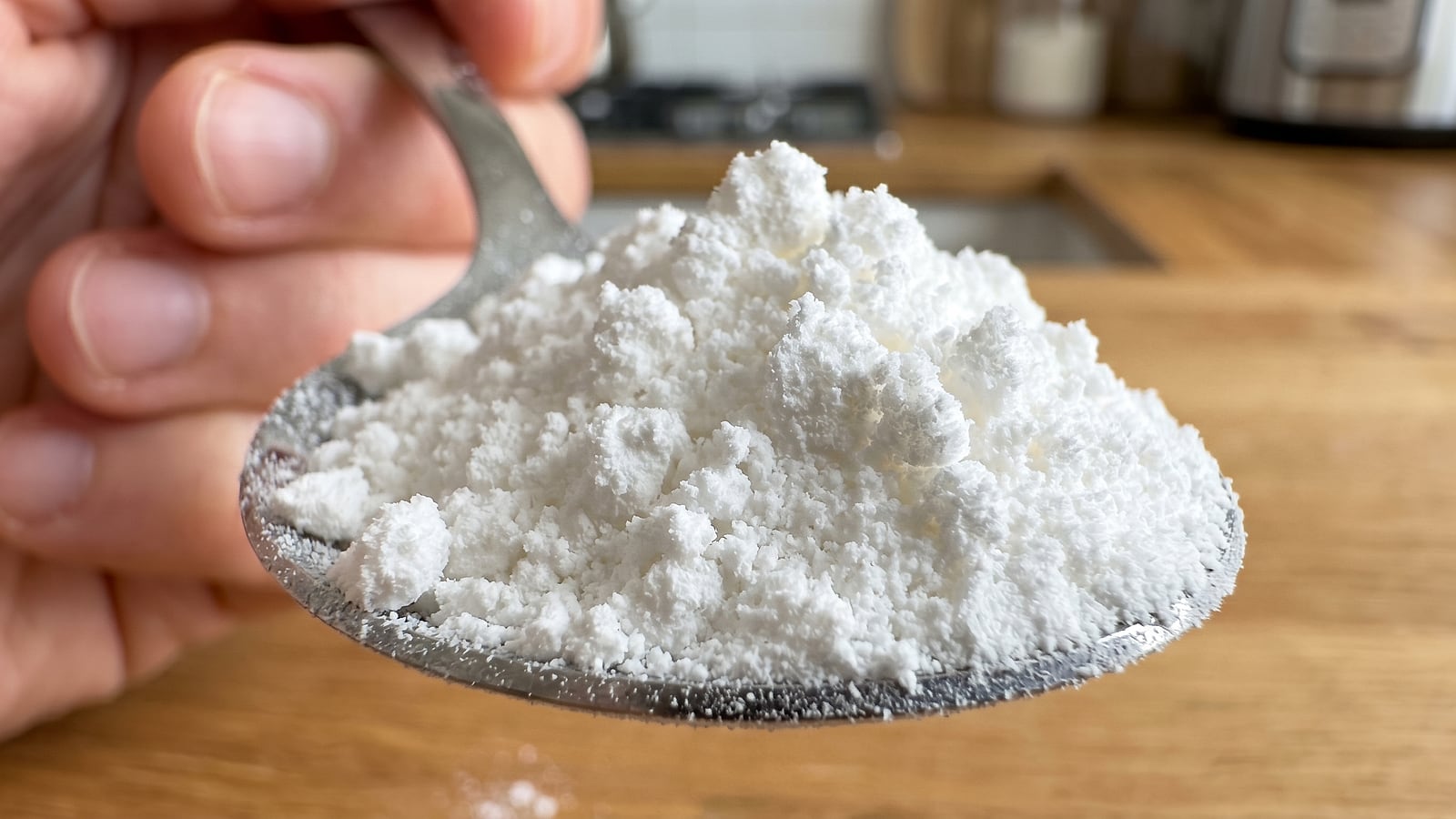
A few practical notes. Creatine powder dissolves best in warm liquid, and plain powder with no added ingredients keeps it simple. Choose a product that is third-party tested if you can, since supplements are not reviewed by the FDA before they are sold. If you miss a day, take your usual amount the next day. There is no reason to double up.
Safety and the kidney question
Creatine is one of the most researched supplements, and the pharmacology review that covers its side effects is one reason it has a good reputation [PMID: 11356982]. The one question people most often raise is the kidneys, because creatine intake raises serum creatinine, the marker doctors use to estimate kidney function.
A 2025 systematic review and meta-analysis in BMC Nephrology looked at exactly this. Of 21 studies in the review, 12 (177 people on creatine and 263 controls) went into the creatinine analysis. Creatine was associated with a small but statistically significant rise in serum creatinine. In follow-ups of 1 to 12 weeks the difference was not significant, and it became significant again beyond 12 weeks. GFR, the direct estimate of kidney filtration, did not change significantly. The authors concluded the rise is likely due to metabolic turnover rather than kidney impairment [PMID: 41199218].
The practical consequence is simple. If you have a blood test coming, tell the clinician or lab that you take creatine, so a mild creatinine rise is not misread. If you already have kidney disease, the meta-analysis does not settle whether creatine is safe for you, so ask your nephrologist before starting.
The review that covers side effects does not give figures we can quote in this article, so we will not invent numbers. Some people report mild stomach upset or water retention with creatine, so starting at a lower dose and taking it with food is a sensible habit, but treat that as general guidance rather than a trial finding.
Who should skip or ask first
- Kidney disease or a history of kidney problems. Talk to your doctor before starting.
- Daily medication. Ask a pharmacist or physician, especially for drugs that affect the kidneys.
- Pregnant or breastfeeding. We found no evidence in the sources reviewed for this article, so ask your clinician.
- Under 18. The trials reviewed here were in adults. Check with a pediatrician.
- Cognitive decline or a diagnosed neurological condition. Creatine is not a treatment for these. Work with your care team rather than substituting a supplement.
- Anyone with an upcoming kidney blood test. Let the clinician know so the result is read in context.
What to expect, honestly
Do not look for a jolt. Creatine is not a stimulant, and its effects in trials were measured with memory and speed tests, not with a buzz you can feel. A realistic expectation is a small edge in memory-heavy tasks that builds over weeks, and perhaps a smaller dip in performance on bad-sleep days, though that last point rests on one small experiment.
If you try it, give it a fair run of several weeks, keep your sleep, exercise and food habits steady so you can tell what changed, and stop if you notice side effects. For context on another supplement people often add to a brain-health routine, our overview of what fish oil really does is a useful companion. Nothing here replaces sleep, and the evidence does not support using creatine to ignore a bad night.
Questions people ask
Does creatine really help the brain, not just muscles?
The best pooled evidence says it may modestly improve memory in healthy adults. A 2024 meta-analysis of 16 trials found improved memory with moderate certainty, while overall and executive function did not change significantly [PMID: 39070254]. The effect is small, and larger trials are still needed.
Does creatine help after a night of no sleep?
One small trial found a single dose of 0.35 g/kg partly reversed the drop in cognitive performance and brain energy markers during about 21 hours of sleep deprivation [PMID: 38418482]. It is a single experiment, and the dose is far above a usual daily amount.
How much creatine should I take for brain health?
Studies used creatine monohydrate, often around 5 g a day [PMID: 14561278]. A meta-analysis found dose in the range of roughly 2.2 to 20 g a day did not change the memory result [PMID: 35984306]. Many people use 3 to 5 g a day without a loading phase.
Is creatine better for older adults?
Results differ. One meta-analysis found a larger memory effect at ages 66 to 76 [PMID: 35984306], and a 2026 review of older adults found mostly positive but limited and lower-quality evidence [PMID: 40971619], while another meta-analysis saw more benefit at ages 18 to 60 [PMID: 39070254].
Is creatine safe for the kidneys?
A 2025 meta-analysis found a small rise in serum creatinine but no significant change in GFR, and the authors concluded kidney function appeared preserved [PMID: 41199218]. If you have kidney disease, ask your doctor first, and tell labs you take creatine.
Do vegetarians get more from creatine?
A 2003 trial in 45 vegetarians found better working memory and reasoning scores [PMID: 14561278]. It had no meat-eating comparison group, so it cannot show that vegetarians benefit more.
Should I take it with coffee?
We did not find trial evidence in the sources reviewed for this article on combining creatine with caffeine for cognition, so we cannot give a data-based answer.
Keep reading
Verified sources
- Rae C, Digney AL, McEwan SR, Bates TC. Oral creatine monohydrate supplementation improves brain performance: a double-blind, placebo-controlled, cross-over trial. Proc Biol Sci. 2003;270(1529):2147-2150. PMID 14561278
- Bonilla DA, Kreider RB, Stout JR, et al. Metabolic Basis of Creatine in Health and Disease: A Bioinformatics-Assisted Review. Nutrients. 2021;13(4):1238. PMID 33918657. Several authors disclose industry ties to creatine suppliers.
- Persky AM, Brazeau GA. Clinical pharmacology of the dietary supplement creatine monohydrate. Pharmacol Rev. 2001;53(2):161-176. PMID 11356982
- Gordji-Nejad A, Matusch A, Kleedorfer S, et al. Single dose creatine improves cognitive performance and induces changes in cerebral high energy phosphates during sleep deprivation. Sci Rep. 2024;14(1):4937. PMID 38418482
- Prokopidis K, Giannos P, Triantafyllidis KK, et al. Effects of creatine supplementation on memory in healthy individuals: a systematic review and meta-analysis of randomized controlled trials. Nutr Rev. 2023;81(4):416-427. PMID 35984306
- Xu C, Bi S, Zhang W, Luo L. The effects of creatine supplementation on cognitive function in adults: a systematic review and meta-analysis. Front Nutr. 2024;11:1424972. PMID 39070254
- Marshall S, Kitzan A, Wright J, Bocicariu L, Nagamatsu LS. Creatine and Cognition in Aging: A Systematic Review of Evidence in Older Adults. Nutr Rev. 2026;84(2):333-344. PMID 40971619
- Naeini EK, Eskandari M, Mortazavi M, Gholaminejad A, Karevan N. Effect of creatine supplementation on kidney function: a systematic review and meta-analysis. BMC Nephrol. 2025;26(1):622. PMID 41199218
This article is for education only and is not medical advice. Talk to a qualified clinician before starting any supplement, especially if you have kidney disease, take medication, or are pregnant or breastfeeding. These statements have not been evaluated by the Food and Drug Administration and are not intended to diagnose, treat, cure, or prevent any disease.
Crashing every afternoon? Tired but wired?
Get The 3 PM Crash Killer free — a science-backed guide to steady, all-day energy without more caffeine. Drop your email and we’ll send it straight to your inbox.
No spam. Unsubscribe anytime. Educational content, not medical advice.