

Wired but exhausted? The honest, step-by-step way to use ashwagandha to calm a stuck stress system
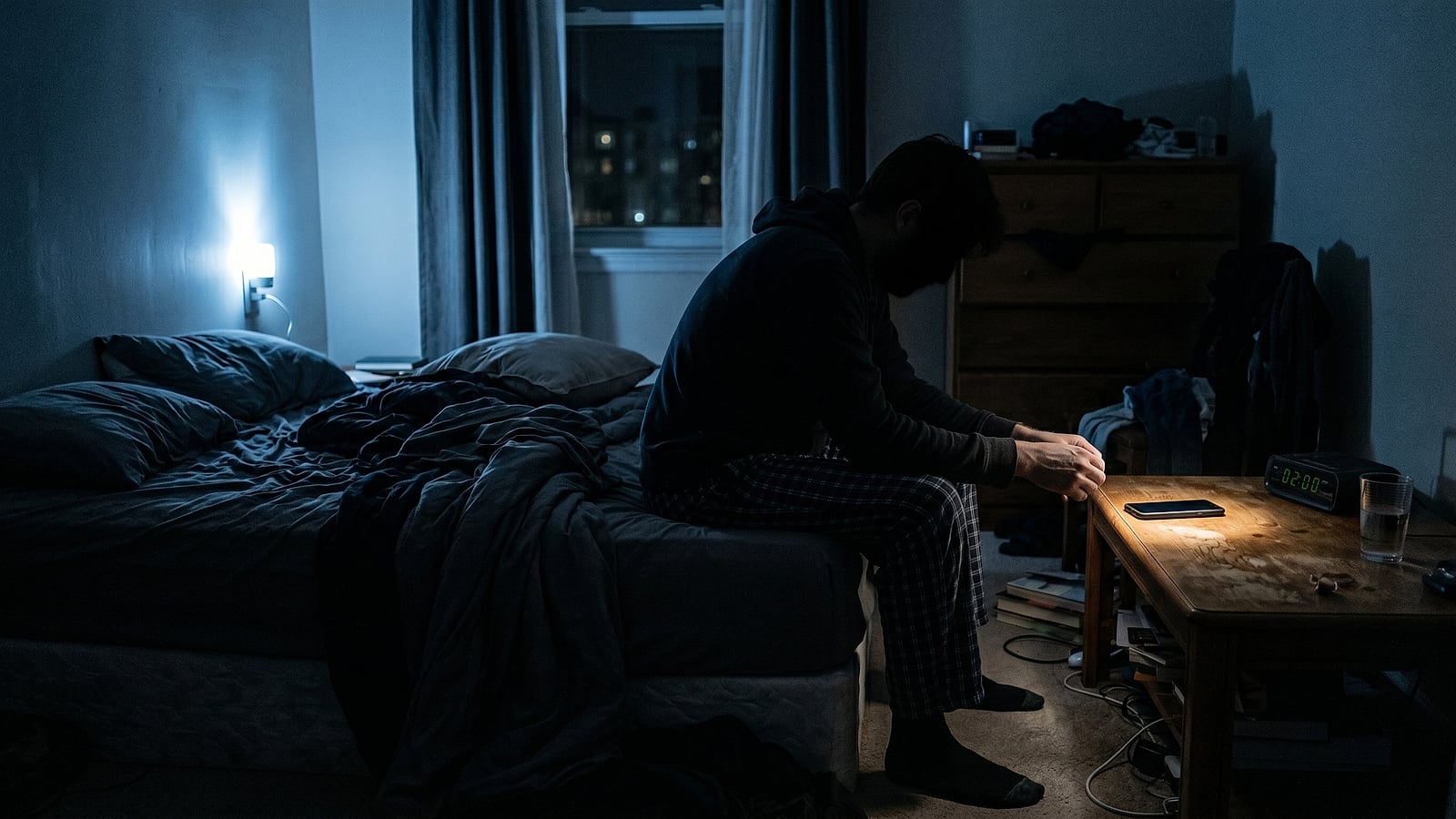
It is 2 a.m. and your brain will not switch off. You are exhausted but wired. Your jaw is tight, your patience is thin, and “just relax” feels impossible. If that is you, this is not a willpower problem — your stress system is stuck in the “on” position, pumping out cortisol when it should be winding down.
Here is the good news, and the plan. There is a well-studied herb — ashwagandha — that helps turn that system back down. By the end of this article you will know exactly how to try it the way the trials did: the right product, the dose, when to take it, how to tell if it is actually working, and when to stop. The goal is simple — to help you move from “wired and frazzled” to genuinely calmer over a few weeks, honestly, without hype.
What it does — and why that matters for you
Most stress advice is vague. Ashwagandha has real numbers behind it. A 2022 analysis pooled 12 randomized trials with about 1,000 people and found it significantly lowered both stress and anxiety compared with placebo [PMID: 36017529].
But here is the part that matters for you: a 2023 double-blind trial found that after 60 days, ashwagandha not only improved people’s stress and anxiety scores and quality of life — it lowered their salivary cortisol, the main stress hormone [PMID: 37832082]. In plain terms, it is not just distracting you from stress. It appears to dial down the actual alarm signal your body is stuck blasting. That is why people describe feeling less “on edge,” not just numbed.
Your step-by-step plan
This is how to give ashwagandha a fair, trial-matched shot — not guesswork.
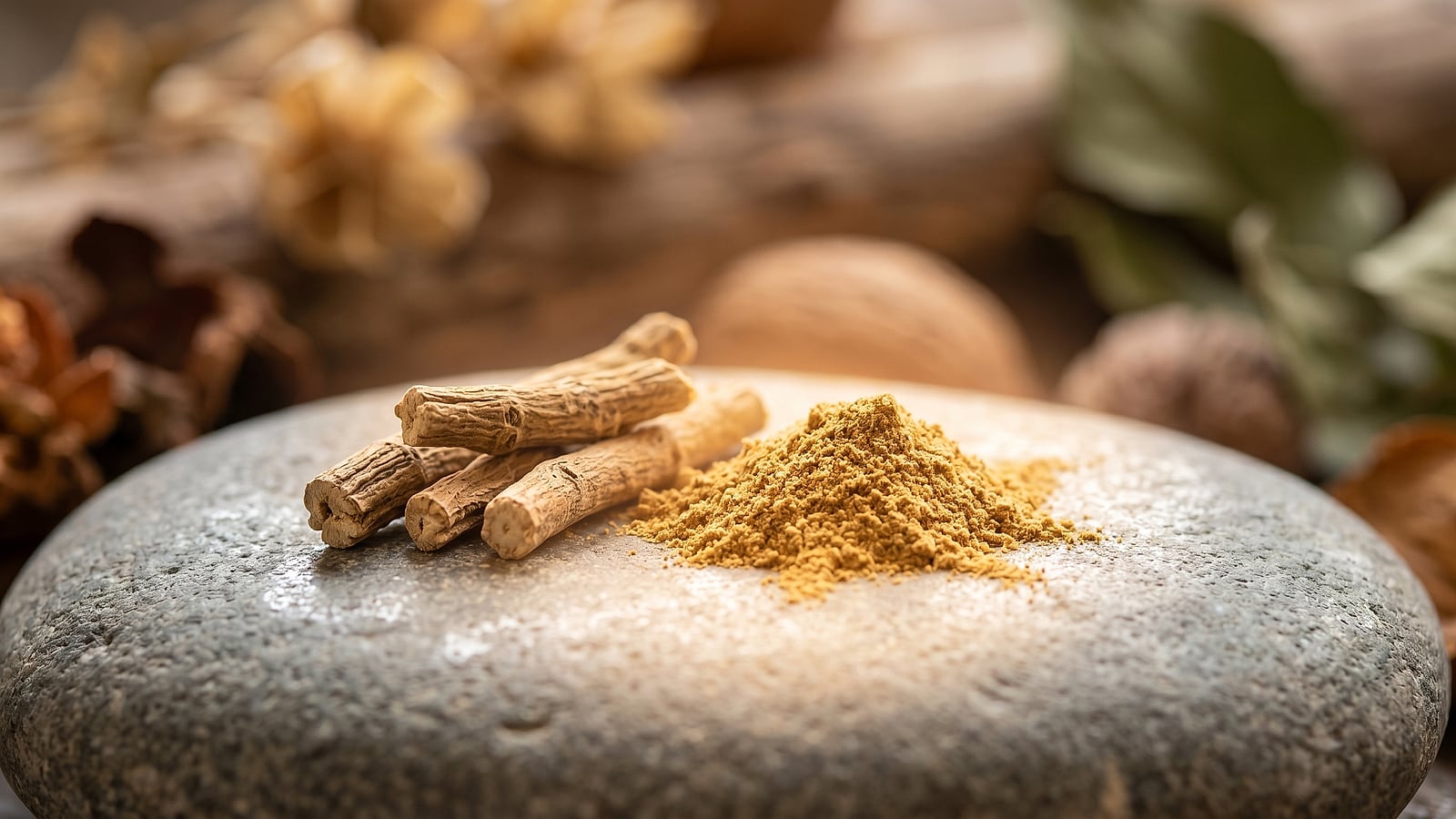
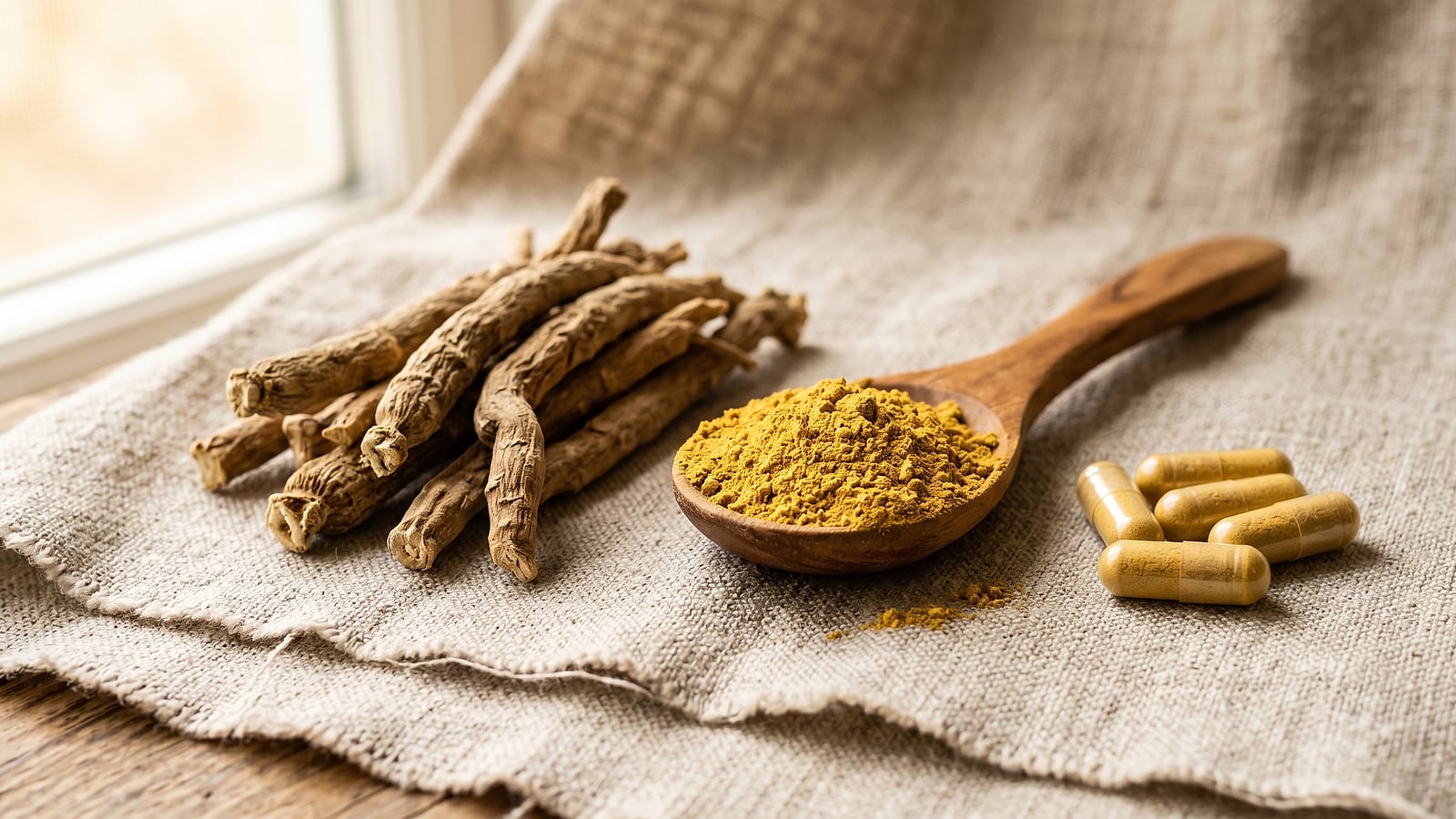
- 1. Pick the right product. Choose a standardized root extract that lists its “withanolide” content (the active compounds). The trials used standardized extracts, not random bulk powder [PMID: 37832082]. This single choice decides whether it works.
- 2. Dose it like the studies. 300 to 600 mg a day [PMID: 36017529]. More is not better — stay in that range.
- 3. Take it at night. Evening dosing fits most routines and may also help sleep, which is often the first thing to improve.
- 4. Pair it with one basic. It is a tool, not a magic pill. Give it a 10-minute screen-free wind-down before bed. The herb plus the habit beats the herb alone.
How to know it is working
Do not just “see how you feel” — track two simple things so you get a real answer:
- How fast you fall asleep and whether the 2 a.m. mind-racing eases.
- Your afternoon tension (that 2-4 p.m. clenched feeling).
Give it 2 to 4 weeks. In the trials, the clearest gains in stress and cortisol showed up around the 8-week mark [PMID: 37832082], so be patient. Many people notice calmer evenings and less “wired” feeling before the bigger shift.
What if it does not work?
Honesty matters here. If you feel nothing by 8 weeks, stop — it genuinely does not work for everyone, and the evidence quality is rated low [PMID: 36017529]. If it makes you drowsy in the day, take it earlier. Because product quality varies a lot, it is worth trying one different standardized brand before giving up [PMID: 41356880]. And the honest truth: a capsule will not fix a genuinely overwhelming life situation — if your stress comes from something real, ashwagandha can take the edge off while you deal with the cause, not instead of it.
A bonus you will feel: clearer thinking
Stress and brain fog travel together, so this helps. A 2026 analysis of 20 trials (about 1,250 people) found ashwagandha improved memory, attention, and processing speed — the exact skills that crumble when you are frazzled [PMID: 42199854]. A calmer brain simply thinks more clearly.
Who should NOT use it
Talk to a doctor first if you are pregnant or breastfeeding (traditionally avoided in pregnancy), have a thyroid condition (it can raise thyroid hormone), have an autoimmune disease, or take sedatives, thyroid, or diabetes medicine. There have been rare reports of liver problems with some products — stop and see a doctor if you notice yellowing skin, dark urine, or unusual tiredness. Buy from a brand that tests its products.
What “better” realistically looks like
Let us be honest about point B. This is not euphoria. In the trials, after about 8 weeks people had lower stress and anxiety scores, better quality of life, and lower cortisol [PMID: 37832082][PMID: 36017529]. In real life that feels like a softer baseline: the 2 a.m. spin slows down, you bounce back from a hard day faster, and the constant low hum of tension drops a notch. For a cheap, well-tolerated herb, that is a genuinely meaningful change — and now you know exactly how to go after it.
Frequently Asked Questions
How long until ashwagandha works?
The trials measured benefits around 8 weeks [PMID: 37832082]. Give it at least 4 to 8 weeks of daily use, and track your sleep and afternoon tension so you can tell. It is not a same-day calm pill.
Will it make me sleepy during the day?
It is not a strong sedative — it lowers the stress response rather than knocking you out [PMID: 41356880]. If you do feel drowsy, take it earlier in the day. Many take it at night because calmer evenings can mean better sleep.
What should I look for on the label?
A standardized root extract with a stated withanolide percentage, from a brand that tests its products. The trials used standardized extracts, and quality varies widely between products — this is the difference between working and wasting your money [PMID: 37832082].
Verified Sources
- Does Ashwagandha supplementation have a beneficial effect on the management of anxiety and stress? A systematic review and meta-analysis of randomized controlled trials. — Phytotherapy research, 2022 (PMID 36017529)
- A standardized Ashwagandha root extract alleviates stress, anxiety, and improves quality of life in healthy adults by modulating stress hormones: a randomized, double-blind, placebo-controlled study. — Medicine, 2023 (PMID 37832082)
- Ashwagandha as an Adaptogenic Herb: A Comprehensive Review of Immunological and Neurological Effects. — Cureus, 2025 (PMID 41356880)
- Effects of Withania somnifera (Ashwagandha) on cognitive and physical function in adults: a systematic review and meta-analysis. — Frontiers in pharmacology, 2026 (PMID 42199854)
Crashing every afternoon? Tired but wired?
Get The 3 PM Crash Killer free — a science-backed guide to steady, all-day energy without more caffeine. Drop your email and we’ll send it straight to your inbox.
No spam. Unsubscribe anytime. Educational content, not medical advice.
professional before changing your diet, supplements, or treatment. These statements have not been
evaluated by the Food and Drug Administration and are not intended to diagnose, treat, cure, or prevent any disease.