

The food industry lied about aspartame: this “diet” chemical actually ruins your glucose tolerance while doing absolutely nothing for weight loss.
You were told that swapping real sugar for blue, pink, or yellow packets was the ultimate metabolic cheat code. It felt like getting away with murder—all the sweetness with zero consequences.
But the science is more complicated than that. By the end of this article, you will understand what the current peer-reviewed evidence actually shows about how aspartame may affect your metabolism, and you will find a general dietary protocol aimed at supporting gut health.
Why This Matters Today
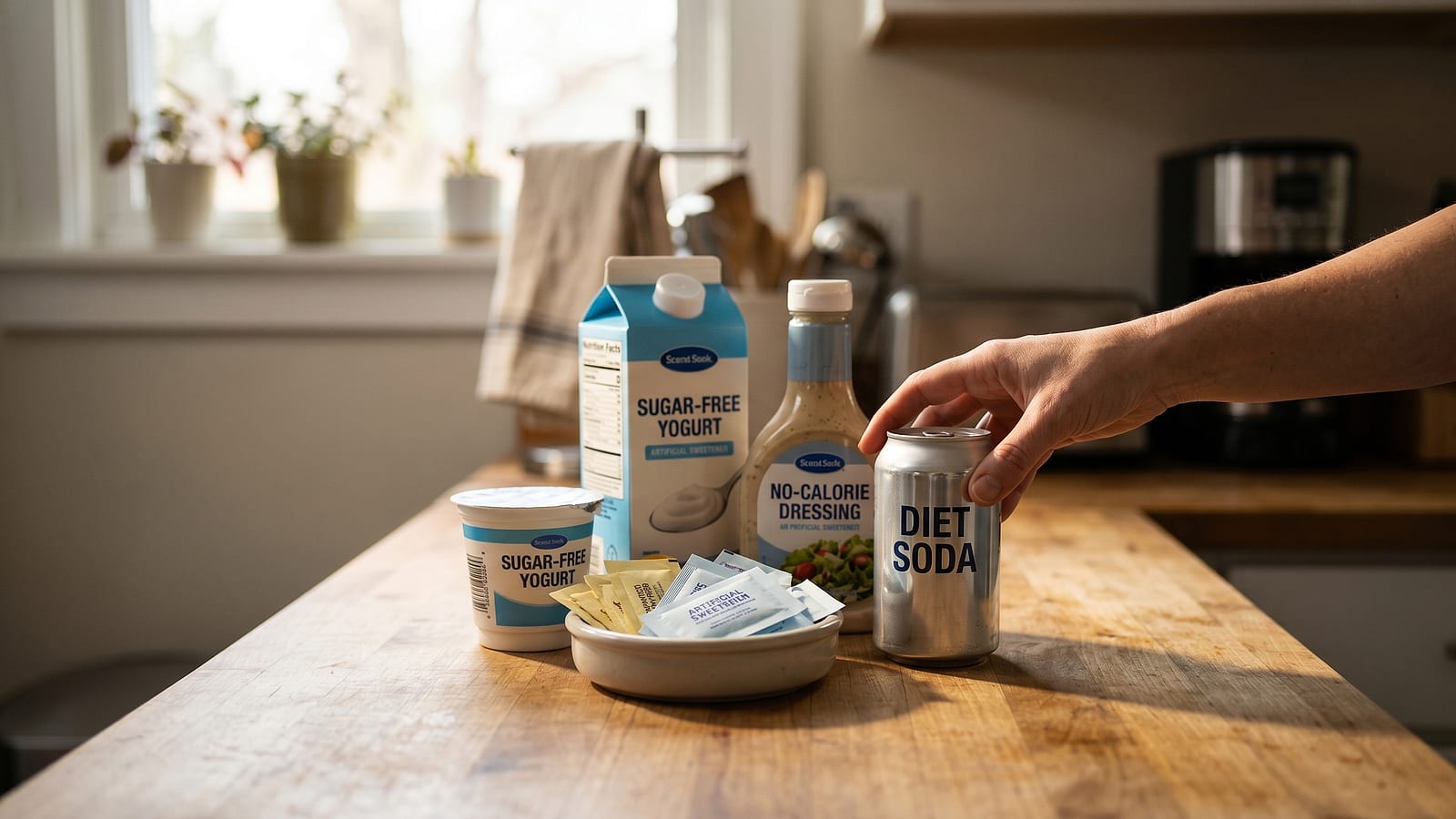
The evidence on artificial sweeteners and metabolic health remains genuinely mixed, and that complexity is worth understanding. For decades, these compounds were promoted as tools for weight management. Millions of people swapped sugar for diet sodas and low-calorie sweeteners. What does the research actually show?
A 2024 animal study found that chronic administration of aspartame did not significantly reduce body weight or fat mass compared to water in mice on a regular chow diet [PMID: 38977130]. The same study found that aspartame was associated with decreased glucose tolerance under normal dietary conditions in that animal model [PMID: 38977130]. It is important to note that these findings come from an animal study and may not directly translate to humans. At the same time, a large human cohort study found no evidence of broad metabolomic disruptions associated with real-world intakes of aspartame [PMID: 40791081], and a systematic review and meta-analysis of randomized controlled trials in humans found that aspartame consumption did not significantly alter fasting blood glucose, insulin levels, body weight, or other key metabolic parameters compared to controls [PMID: 28394643]. Taken together, the human evidence on metabolic harm from typical aspartame consumption is not conclusive.
The Science Behind It
When you ingest aspartame, your tongue registers sweetness. Inside your digestive tract, the compound undergoes breakdown and its metabolites interact with the intestinal lining. Whether this interaction is harmful at typical dietary doses in humans remains an active area of research.
A 2026 laboratory study using gut epithelial cell cultures, organoids, and gut-on-a-chip models found that aspartame induced cytotoxic effects and disrupted the epithelial barrier at concentrations corresponding to doses found in commonly consumed food products [PMID: 41137210]. The same study found that aspartame triggered proinflammatory cytokine release in these gastrointestinal cell models and activated the NF-κB pathway via oxidative stress [PMID: 41137210]. RNA sequencing in the gut-on-a-chip models showed upregulation of pathways involved in the unfolded protein response and inflammatory processes, and downregulation of pathways related to DNA repair and replication [PMID: 41137210]. These are cell and tissue model findings, and it is not yet established whether the same effects occur in the intact human gut at typical dietary exposure levels.
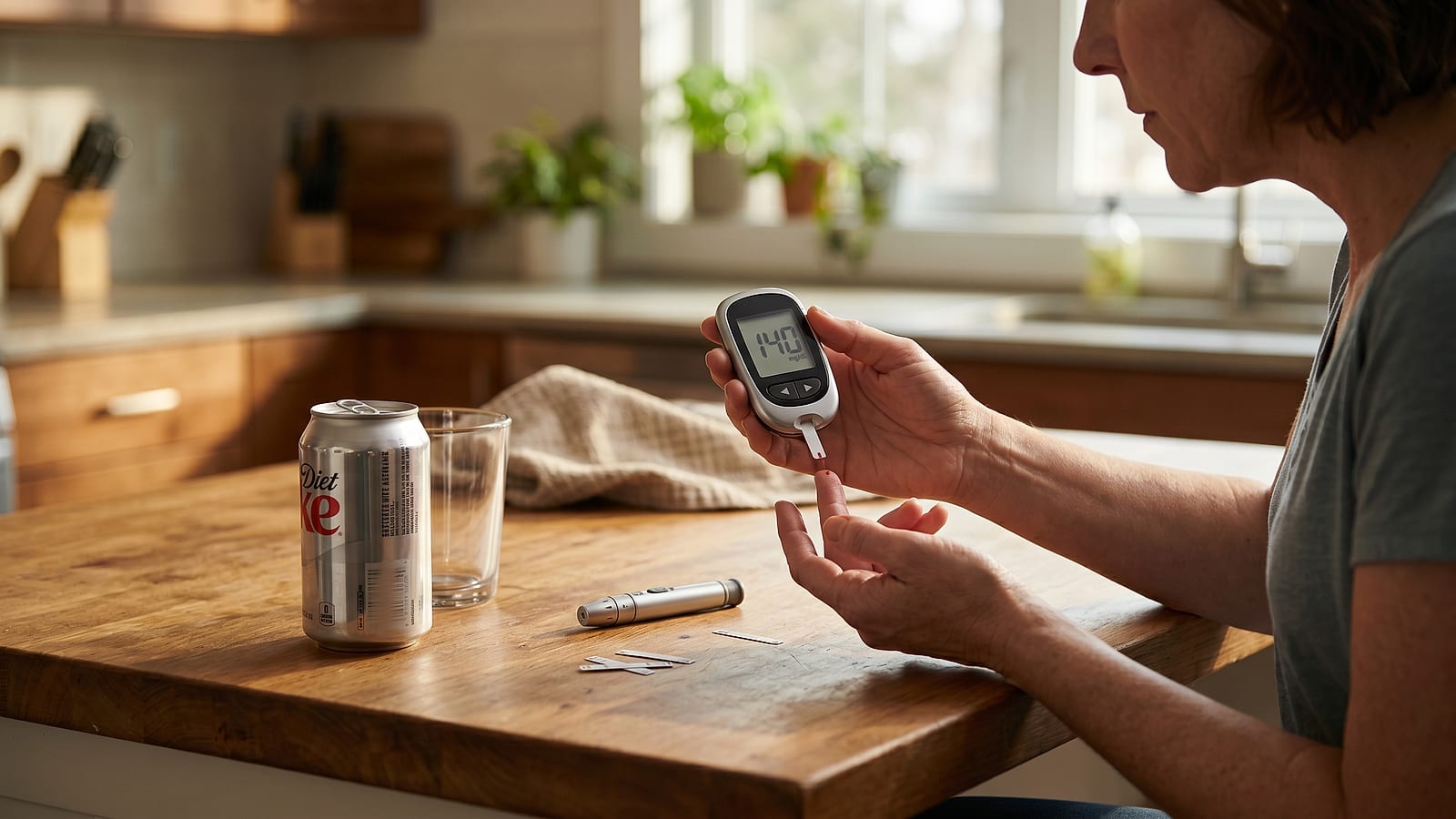
This is one reason the overall picture is complex. A systematic review and meta-analysis of randomized controlled trials found that aspartame consumption in humans did not significantly alter fasting blood glucose, insulin, cholesterol, triglycerides, body weight, or energy intake compared to control conditions [PMID: 28394643]. Similarly, a large prospective cohort study found no evidence of meaningful metabolomic disruptions associated with real-world aspartame intakes in plasma [PMID: 40791081]. A Spanish multicase-control study found no overall association between aspartame consumption and cancer risk across colorectal, breast, prostate, stomach, or chronic lymphocytic leukaemia cases, though among participants with diabetes, high consumption of other artificial sweeteners was associated with colorectal cancer risk [PMID: 37323037]. The authors noted this subgroup finding requires cautious interpretation.
In short, short-term human trials and large epidemiological studies have generally not found significant metabolic harm from typical aspartame consumption, while cell and animal studies raise questions about potential gut-level effects that warrant further research in humans.
The Complete Protocol

The following is a general dietary support protocol for those who wish to reduce their intake of artificial sweeteners and support gut and metabolic health. The specific ingredients and amounts below are not directly validated by the sources cited in this article; they reflect general dietary guidance. Consult a healthcare provider before making significant dietary changes.
Start with the food source
- Consider incorporating bone broth into your daily diet. Bone broth is a source of amino acids including glycine and proline, which are components of connective tissue and the gut lining.
- Consider including fermented foods such as sauerkraut with meals. Fermented foods provide live cultures and organic acids that may support microbiome diversity.
Move to the concentrated natural form
- Consider adding Ceylon cinnamon to meals or warm beverages. Ceylon cinnamon contains polyphenols that have been studied in relation to insulin sensitivity, though the evidence in humans is mixed. Always source true Ceylon cinnamon (Cinnamomum verum) rather than the common Cassia variety, which contains higher levels of coumarin, a compound that may be harmful to the liver in large doses.
Always source true Ceylon cinnamon (Cinnamomum verum) rather than the common Cassia variety, which contains high levels of coumarin, a compound toxic to the liver in large doses.
Optional: the supplement form
- Gymnema Sylvestre extract is an herbal supplement that has been studied in relation to glucose metabolism. If you choose to use it, follow the manufacturer’s guidance on dosing and timing, and consult a healthcare provider, as individual responses vary.
When NOT to do this
Do not use this protocol if you are pregnant, lactating, or currently taking prescription glucose-lowering medications like metformin or insulin, as Gymnema and Ceylon cinnamon can cause hypoglycemia. Always consult your primary care provider before starting any new herbal protocol.
Frequently Asked Questions
If short-term clinical trials show neutral blood sugar effects, why should I worry about aspartame?
Short-term randomized controlled trials in humans have generally not found significant effects of aspartame on fasting blood glucose or insulin [PMID: 28394643], and a large cohort study found no metabolomic disruptions at real-world intake levels [PMID: 40791081]. However, cell and animal studies have raised questions about potential gut barrier effects [PMID: 41137210] and glucose tolerance changes in animal models [PMID: 38977130] that have not yet been fully resolved in long-term human studies. Whether these findings translate to meaningful harm in humans at typical dietary doses remains an open research question.
Can I swap aspartame for stevia or monk fruit instead during this protocol?
Reducing overall reliance on any non-nutritive sweetener during a dietary reset period is a reasonable approach. Replacing sweetened beverages with water, herbal teas, or black coffee is a straightforward way to reduce intake.
I have been drinking diet soda daily for ten years. Is this gut barrier damage permanent?
The gut epithelial lining is known to be highly regenerative, with epithelial cells turning over regularly. Whether long-term aspartame consumption causes lasting gut barrier changes in humans has not been established by the current evidence. If you have concerns about your gut health, consult a healthcare provider.
Should I expect a “sugar withdrawal” headache when I stop aspartame cold turkey?
Mild headaches when stopping diet sodas are often associated with caffeine withdrawal rather than aspartame specifically. Staying well hydrated is generally advisable during any dietary change.
Why does the protocol recommend bone broth instead of just taking a collagen supplement?
Bone broth is a whole-food source of amino acids and other compounds. Whether it is superior to isolated collagen supplements for gut health has not been established in clinical trials. Both may contribute to overall protein and amino acid intake.
Verified Sources
- Metabolic effects of aspartame in adulthood: A systematic review and meta-analysis of randomized clinical trials. — Critical reviews in food science and nutrition, 2018 (PMID 28394643)
- Cellular Stress, Inflammation and Barrier Damage in Gut Epithelial Cells Caused by Aspartame. — Allergy, 2026 (PMID 41137210)
- Consumption of aspartame and other artificial sweeteners and risk of cancer in the Spanish multicase-control study (MCC-Spain). — International journal of cancer, 2023 (PMID 37323037)
- No Evidence of Metabolomic Disruptions From Real-World Intakes of Aspartame or Saccharin: The Coronary Artery Risk Development in Young Adults Study. — Journal of diabetes, 2025 (PMID 40791081)
- Long-term metabolic effects of non-nutritive sweeteners. — Molecular metabolism, 2024 (PMID 38977130)
Bloated, tired, foggy, or fighting cravings?
Get The Gut Reset free — a science-backed guide to go from “off” to clear, light and energized. Drop your email and we’ll send it straight to your inbox.
No spam. Unsubscribe anytime. Educational content, not medical advice.